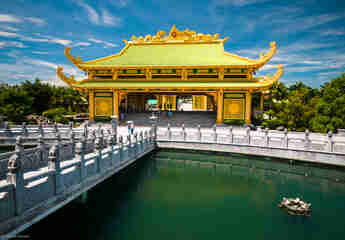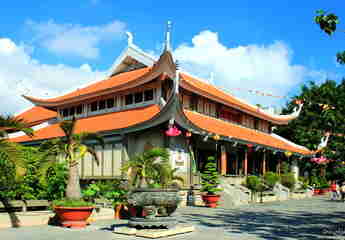
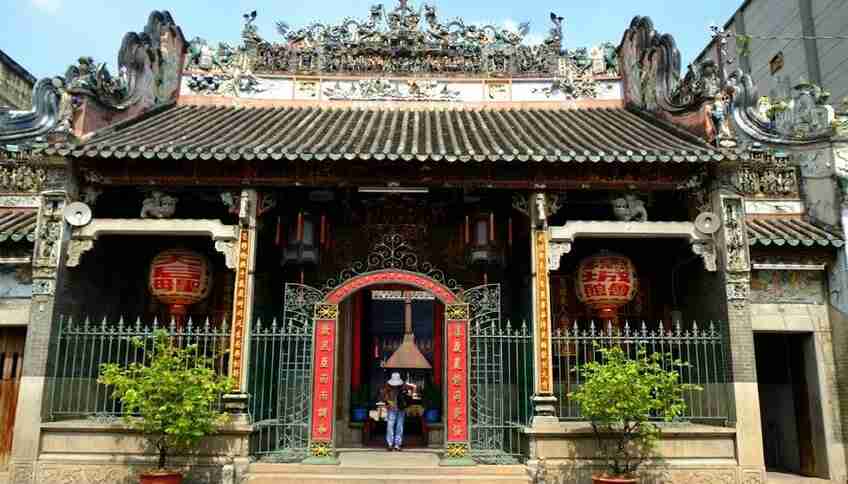
This pagoda was built by the Chinese in 1760. All the ancient canons and traditions of building ancient Chinese temples were observed; moreover, all the decorative materials were brought from China - wood for carved ornaments, metal, porcelain bas-reliefs, and panels.
The pagoda is indeed very richly decorated: along the entire inner and outer perimeter, the building is adorned with elaborate and highly detailed dioramas with figurines and patterns in the Chinese style. Even the roof is lavishly decorated - it contains hundreds of figurines arranged into scenes from Chinese myths and religious legends.
Inside, you will be enveloped by clouds of fragrant incense smoke, intended to appease the gods. You can even buy a special spiral and hang it inside the temple – it will smolder for more than one day and bring you good luck and the fulfillment of your wishes.
The pagoda is dedicated to the goddess of all travelers, especially sailors and fishermen, Thien Hau. According to legend, the father and brothers of a girl named Lin went out to sea to fish. A terrible storm began, and Lin started praying for their return, but she became distracted, and all her brothers died; only her father returned. Stricken with grief, she decided to atone for her guilt and, in any weather, went out to the ocean shore in red clothes to pray for the safety of everyone who had gone to sea and for a large catch. After her death, Lin began to be revered as the goddess Thien Hau, and the pagoda in Ho Chi Minh City was built in gratitude for a safe journey from China to Vietnam.