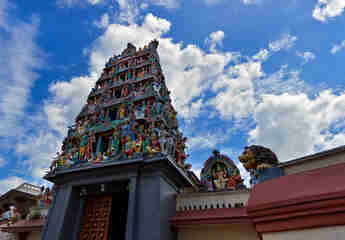
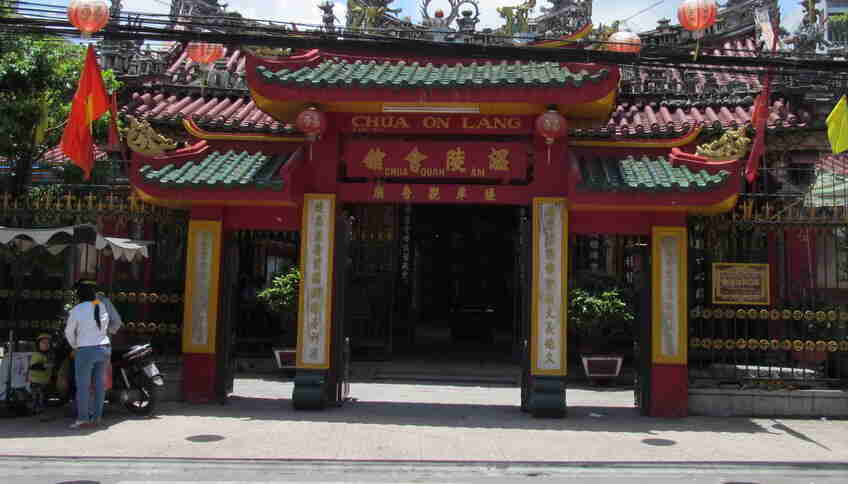
This pagoda is unique in many ways. To begin with, it is divided into two parts by Lao Tu Street, but both are part of the temple grounds and a sacred place. On one side of the road there is a magnificent pond with a fountain and a decorative grotto. Behind it rises a colorful triptych bas-relief, whose panels skillfully depict the Jade Emperor, Chinese musicians, and a traditional dragon. The pond is separated from the dusty road by a small square where you can rest by the fountain or perform a ritual.
Crossing the street, you will find yourself in the courtyard of the temple complex. Quan Am Pagoda was built around 1816 with money donated by Chinese merchants. The goddess to whom this temple is dedicated is the patroness of women, mothers, children, and the family. Quan Am embodies mercy, understanding, and compassion, helps all those in need, protects the weak, and heals. Her name translates as "the one who hears all prayers." That is why Quan Am is revered in Buddhism almost more than all other bodhisattvas, and the stream of worshippers in this temple never runs dry.
In the first hall of the pagoda there is a richly decorated altar of Buddha, next to which stand rotating columns. Worshippers make a donation and attach a plaque with their name to one of them. It is believed that with each turn of the column Buddha hears the believer's prayer and will surely grant it.
The main altar depicts Quan Am surrounded by other deities. In front of it, incense and ritual candles are lit, and the goddess is asked for mercy. And on either side of the altar there are furnaces for burning ritual money - Buddhists believe that this is how the "banknotes" reach their deceased loved ones and spirits.