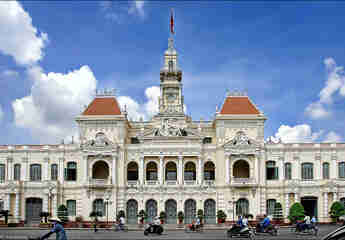
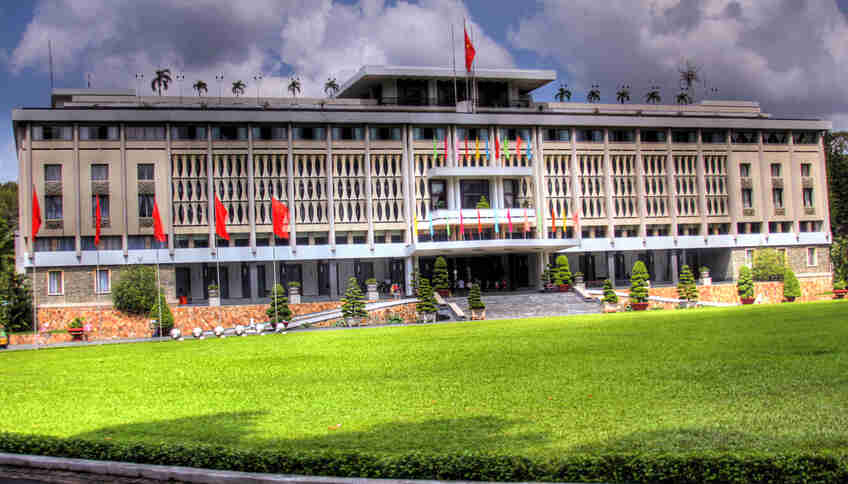
The Independence Palace, also known as the Reunification Palace, is now open to everyone interested in the history of Vietnam.
Previously, the residence of the French governors stood on this site, and it repeatedly became the official government residence for each new regime in Vietnam. In 1962, the old palace was almost completely destroyed by bombers, and for 4 years it was rebuilt according to the design of architect Ngo Viet Thu. The renovated building became the new residence of the country's president, but in 1975 it was bombed again. It was this attack on the ruler's palace that proved decisive in bringing the fighting in South Vietnam to an end.
A few years after the end of the war and the reunification of the country, the Independence Palace was opened to visitors. Tourists can walk through the parliament meeting halls, see several themed exhibitions, visit a museum of cutting-edge technology from the 1960s - giant teletypes and telephones seem like real dinosaurs compared with an iPhone or a laptop. One of the most visited exhibitions is dedicated to the Vietnam War; a photographic chronicle of events, objects from those times, and even a film about the bombing of the Independence Palace will tell you a great deal about those sad events.
An old peaceful park stretches around the building, with fountains, green lawns, and ancient trees. It is a little unexpected to see a couple of tanks here, as if they had just driven out of hiding, or a bomber standing on the lawn - bombs were dropped on the Reunification Palace from one just like it.