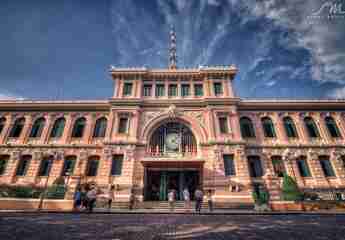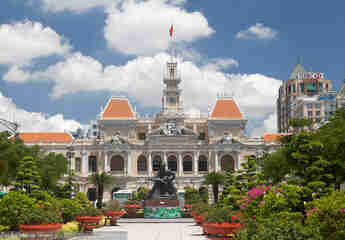
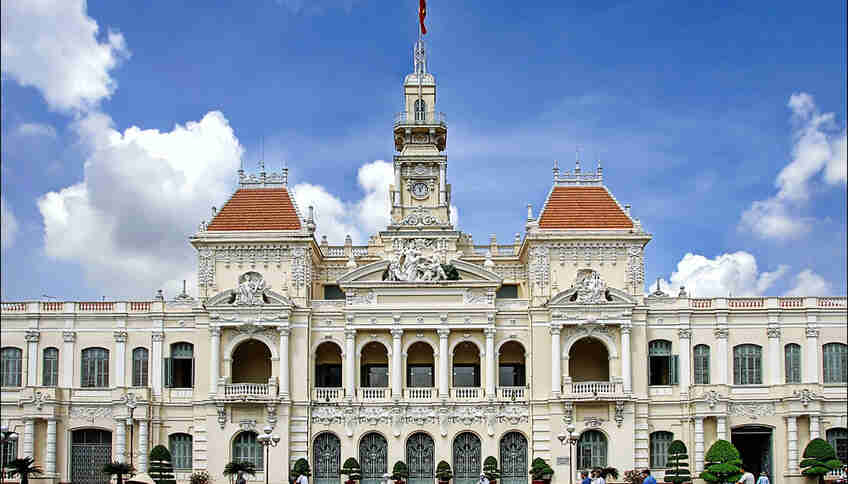
This building took an entire decade to construct, from 1898 to 1908. For some time after it opened, it served as a hotel and was aptly called the "Hotel de Ville."
Even back then, it attracted the attention of Saigon residents and visitors with its unusual appearance. A vivid example of colonial Vietnamese architecture: Corinthian columns adorn the facade, placed between arched windows, while the ornate stucco is done in the late Baroque style.
After the signing of the Geneva Accords in 1954, according to which Vietnam became an independent state, the building came under the authority of the city and was used as the headquarters of the mayor of Saigon. However, after the end of the Second Indochina War, it changed hands again and became the residence of the People's Committee of Vietnam.
Today, one of the most outstanding buildings in the center of Ho Chi Minh City is an administrative building, and access to it is closed to outsiders. However, it is worth coming here both during the day and after dark not only to admire the architecture, unusual for Vietnam, but also to see how wonderfully the building and the small square in front of it are illuminated in different colors in the evenings. By the way, there you will notice the monument "Uncle Ho and Children," depicting the Vietnamese leader Ho Chi Minh holding a child in his arms.