Jamek Mosque

Flickr, 黄清华 WongCW
Jamek (Malay: Masjid Jamek) is the oldest mosque in Kuala Lumpur. It was built to the design of the English architect Arthur Hubback in 1909 at the confluence of the Klang and Gombak rivers, where the first settlement of the future capital was established[1]. An elegant Moorish-style structure dominated by red and white tones, with numerous little towers, two minarets, and three domes nestled among coconut palms. One side of the prayer hall opens onto an inner courtyard, where there is a mausoleum with the graves of prominent figures. The then Sultan of Selangor officially opened the mosque in 1909, two years after construction had been completed. The mosque was founded on the site of the city's first Malay burial ground. Until the National Mosque, Masjid Negara, opened in 1965, Jamek Mosque was the main mosque of Kuala Lumpur.

asiaexplorers.com
Another example of the legacy of the British colonists in Kuala Lumpur is St. Mary's Cathedral. Built in 1895, it is a fine example of the early period of English Gothic architecture. Concise, serious in the English way, without superfluous details - exactly what a place for reflection and communion with the Almighty should be.
The main украшением of the cathedral is an old wind organ. It was created by the famous organ builder Henry Willis in 1898. By the way, he was the one who made instruments for such famous organ venues as St. Paul's Cathedral and Albert Hall in London.
The interior of the cathedral corresponds to the traditional style of Anglican religious spaces - white stone walls are decorated with beautiful shaped windows with multicolored stained glass. The atmosphere in the cathedral hall is peaceful and solemn.
In the past, services were held in the cathedral for the English colonizers, who after Mass usually headed straight to the Royal Selangor golf club, which is located quite close to the cathedral. Now there are many local parishioners from different ethnic groups of the country here.

Flickr, baldrick2dogs
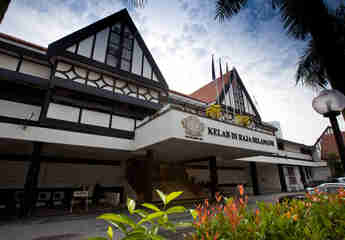
The history of the Royal Selangor Club began in January 1893 with a short notice in a local newspaper placed by local coffee plantation owners. Wealthy British colonists decided that the time had come to open the first golf club in Kuala Lumpur, and invited anyone interested in playing golf to Petaling Hill.
The cream of the local colonial society who came to the meeting decided that this beautiful hill, with its interesting terrain and natural water hazards, would make an excellent golf course. The first official meeting of Royal Selangor members took place in June of the same year. At that time, the club consisted of one small golf course, and the only shelter from the heat was a tent where drinks were served.
But Royal Selangor developed rapidly, and over 120 years of its existence it turned into a prestigious and fashionable club. Today there are three golf courses here - with 9, 18, and 45 holes, tennis and squash courts, swimming pools, gyms, and a martial arts school. Several restaurants and cafes operate on the club grounds, offering European, Malay, and other Asian cuisines.
The Royal Selangor Club constantly hosts international tournaments for professionals, and beginners are welcomed here by experienced instructors and coaches.

Flickr, T.E.R.84
The main square of Kuala Lumpur used to be a simple cricket field where colonizers from Britain loved to play. Now it is Independence Square, where the flag of Malaysia was raised for the first time on August 31, 1957. This happened immediately after the flag of the United Kingdom was lowered, and therefore this place is historically very important for Malaysians. By the way, the local flagpole is 95 meters high, which is an absolute world record.
Around Independence Square, also known as Merdeka Square, are concentrated the most interesting sights of Kuala Lumpur. First of all, this is the Sultan Abdul Samad Building, built by the British in 1897 to the design of Arthur Charles Norman, inspired by Mughal architecture. Mr. Norman also took a direct part in organizing the Selangor Cricket Club, located here as well. Cricket is a very popular sport in Kuala Lumpur, especially among affluent Malays.
You can also see St. Mary's Cathedral here, which currently belongs to the Diocese of West Malaysia.
Annual parades dedicated to Independence Day are held in the square. If you are lucky enough to visit Kuala Lumpur at the end of August, try not to miss this spectacle.
Sultan Abdul Samad Building

Flickr, yuslers
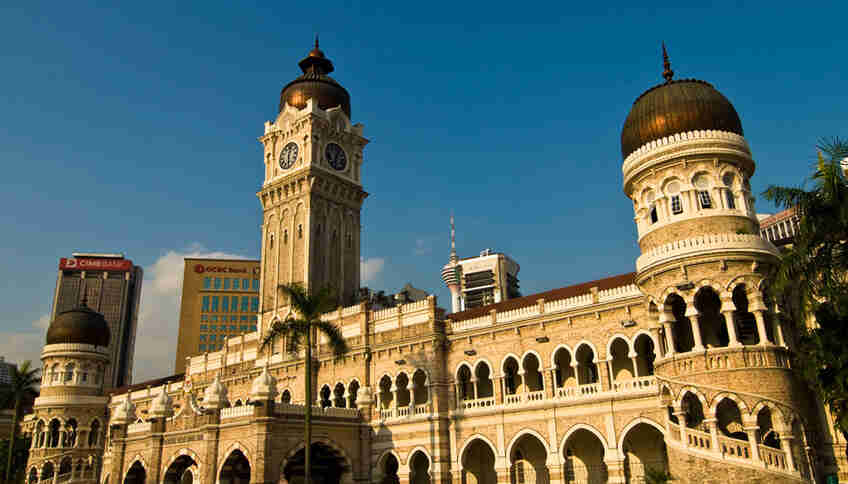
The Sultan Abdul Samad Building (Malay: باڠونن سلطان عبدالصمد) is located at the front of Dataran Merdeka (Independence Square) in Kuala Lumpur, Malaysia. It is named after Sultan Abdul Samad, who ruled Selangor when construction began. Construction was started by the British in 1894 and completed 3 years later. The building's architect was the Englishman A. C. Norman. His name is visible on the stone foundation of the building. Sultan Abdul Samad and the provincial governor officially opened the building in 1897. Senior officials and journalists from Singapore were invited to the opening ceremony. Later the building was named after Abdul Samad - the reigning Sultan of Selangor. The cost of the project amounted to 152 thousand dollars.

Flickr, fredMin
The architectural ensemble of Independence Square, also known as Merdeka Square, is made up of the buildings of Kuala Lumpur City Hall, the Royal Selangor Club, the main post office, and the Sultan Abdul Samad Building, which now houses the country's government institutions. An exquisite adornment of the latter building is the 40-meter clock tower crowned by a beautiful gilded dome.
The architecture of the tower, however, like that of the entire building, combines two styles at once - Victorian and Moorish. They are so harmoniously intertwined in the arches, minarets, and unusual onion domes that they captivate travelers at first sight.
Many tourists and residents of Kuala Lumpur often call this magnificent tower the Malaysian 'Big Ben.' If you came to Merdeka Square during the day, be sure to come back here again in the evening. After dark, the entire building is illuminated by hundreds of multicolored lanterns, and many travelers get the feeling that they have stepped into an oriental fairy tale.

Flickr, Ricardo Viana BSB
The National Textile Museum reflects the entire history of the development of multinational Malaysia. Various examples of fabrics, patterns, and styles of traditional clothing from the most ancient times to the present day are collected here. You will be able to learn what outfits were worn by different social strata and various ethnic groups, and which fabrics and patterns indicated social differences between people.
The history of the production of many types of fabric, how exquisite designs were achieved on material in ancient times, and what was used and how textiles were dyed in every color of the rainbow - you will learn all this in the Textile Museum.
There are 4 exhibitions here in total: Pohon Budi presents the history of the textile industry from prehistoric times, Pelangi reflects the national features of the clothing of ethnic tribes. The Teluk Berantai Gallery will tell you about the history and technique of producing songket - the woven symbol of Malaysia and Indonesia, which is still often made by hand on special looms. And in the Ratna Sari Gallery thousands of ornaments, brooches, clips, and hairpins characteristic of various regions of the country are collected.
Separately, it is worth noting the incredibly beautiful building that houses the Textile Museum. It was built in 1896 and represents magnificent Neo-Moorish architecture - a light, airy structure with numerous decorative arches, towers, and spires.

panoramio.com, Andrey Sulitskiy
This market is located in the very center of Kuala Lumpur, so no tour of the city goes without a visit here. But it is still better to make it one of the final points of your route, because you definitely will not leave here without purchases! And carrying them around with you for the rest of the day is not very convenient.
Central Market took shape in the city in 1888. At first it was a food market, mostly selling seafood and spices. But then the bazaar was rebuilt and made more convenient for sellers and buyers. Now there are even air conditioners here, so many people first come in to cool off, and then do not even notice how they pick up all sorts of knickknacks. After all, Central Market in Kuala Lumpur now looks more like a cluster of souvenir shops: one sells unusual fabrics, another - indescribably beautiful tableware, a third - bags, wallets, and so on.
The building has two floors and several ethnic sectors. Each of them represents its own culture, for example China, India, or Malaysia. Prices vary greatly, so avid shopaholics will have to bargain like crazy. But in return, there is every chance of getting some truly exotic little thing for laughably little money.

Panoramio, Itxazne Artetxe
Chinatown can probably be found today in every major city, but everywhere it has its own distinctive features. Kuala Lumpur's is definitely the most crowded. The passages between the buildings are quite narrow, and there are so many people that at times it is impossible to push through. The streets are lined with stalls and hung with goods from top to bottom. So it is better to come here fresh and well-rested, so that you have enough energy to get around at least half of this buzzing 'anthill.'
The quality of the goods here is, of course, not the highest, but the prices can be bargained down mercilessly. For those who are interested in designer clothing, the number of counterfeits sold here at every step will be an unexpected discovery. Sometimes it seems that Giorgio Armani or Calvin Klein have not even come up with such outfits yet, and they are already being sold all over Chinatown in the middle of Kuala Lumpur.
In addition to buying clothes, shoes, accessories, and souvenirs, you can try Asian delicacies, teas, healing remedies, as well as dishes of traditional Chinese cuisine here. Some are sold directly from stalls, but it is better to look for more established eateries. At the same time, pay attention to there being a lot of people inside the establishment, preferably locals. They definitely know where truly tasty and inexpensive food is sold.