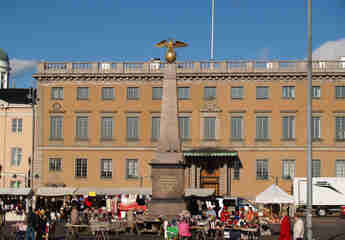
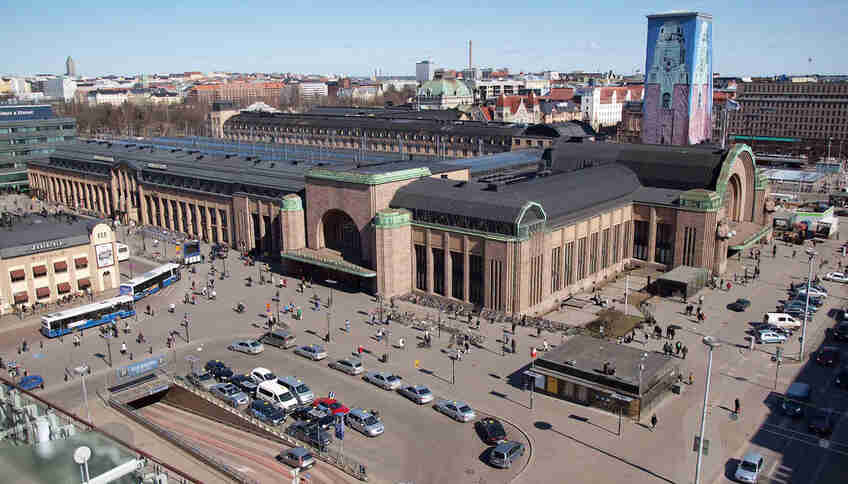
Rautatientori Square in Helsinki is a railway square both in meaning and in name. In the XIX century, they planned to dig a canal here that could connect the South Harbor with Teelenlahti Bay. But due to insufficient funding, the project was shelved, and a station was built on the square instead. Gradually, Rautatientori turned into a major transport terminal, where there is also a bus station and a taxi stand. Incidentally, that railway station, one of the first in the Russian Empire, still remembers visits by the Russian Tsar Alexander II and the Soviet leaders Khrushchev and Brezhnev.
In 1919, a new station was built on Rautatientori - a monumental granite building designed by architect Eliel Saarinen. And already in the XXI century, it was combined with the nearby printing house and hotel, turning them into a single architectural complex.
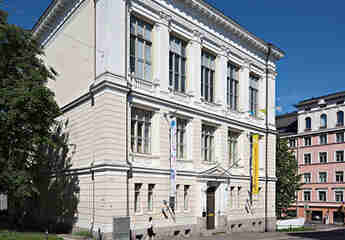
Among the other attractions on Rautatientori Square, one can single out the National Theatre, built in 1902 in the form of a castle, as well as the State Art Museum "Ateneum," built in 1887 and adorned with busts of Raphael Santi, Phidias, and Donato Bramante.
Behind the National Theatre lies the large Kaisaniemi Park, whose foundation was the Botanical Garden created at the beginning of the XIX century. The park is a favorite gathering place mainly for young people and students. Not far from it, you can find interesting bars and cafes, as well as small shops.