
Much has already been said and written about London; there is no point repeating it. Somewhere in the dark depths of the Tower there is surely the most powerful magnet in the world hidden away, one that has been drawing people to these not very welcoming lands for many hundreds of years. London, once the largest city not only in Europe but in the world, still retains key positions on the international stage. People come here for a better life, for a dream, for adventure, for knowledge, for the familiar pictures from school English textbooks. London is the capital of Great Britain, remember? Every visitor, of whom there are more here than native residents, has their own reason for coming to London.

Perhaps London is not as rich in compact urban vistas as some other cities in Europe. Lovers of Baroque and Gothic will surely be disappointed by its landmarks and, when they return, will tell everyone how dull London's architecture is. But nevertheless, London and its suburbs — all these small two-story towns and outskirts — together preserve in pure form that English culture whose signs we can find everywhere. London is interesting in its details. With all its telephone booths, double-decker red buses, and stylish navigation signs in the Underground. You hear the traditional “Mind the gap,” come up from the London Underground and, after looking right first, confidently stride across the road, just like the famous four on Abbyy Road. On the way, you will definitely get caught in the rain and take shelter in one of the cozy pubs. Of course, once you lose track of time, you will sit there until closing with a pint of lager and a plate of fish&chips. And that too will become one of your impressions of the city.

Walking out of Gatwick Airport, I first saw the words “Look right” carefully painted in white on the asphalt in front of a pedestrian crossing still wet from the recent rain and realized — welcome, this is London.
LONDON GOT CLOSER
London had always been on the Must see list, but it kept being pushed back indefinitely. Either I wanted to get to the sea sooner, or the right company never came together. But last spring, unexpectedly, the local low-cost carrier EasyJet started flying from Moscow to the capital of Britain, instantly leaving its competitors far behind with the bargain price of the flight. I couldn't resist and bought a Moscow-London-Moscow ticket for the price of a Sapsan trip to St. Petersburg. With all fees included, it came to 4600 rubles — not bad for a 3.5-hour flight. Soon, having obtained a visa without much trouble, I began working out the route. The ticket grew into plans, transfers, hotels. For such an occasion, I decided not to waste time and go to Scotland for a few days, where my longtime acquaintance Nick lives and studies. Meanwhile, I discovered that my photographer friend from an Eastern European country was in London and gladly promised to show me the city. London turned out to be closer than I had thought.

By the way, you can create your own itinerary for a trip to London using the interactive Ever.Travel map.


DEAR LONDONERS AND GUESTS OF THE CAPITAL
London. Early morning. I stayed at the stylish SafeStay hostel in the Elephant&Castle area, that is, “Elephant and Castle” in Russian. Why it is called that, I will, of course, explain a little later. The area is not right in the center, but 10 minutes away from it by Tube. In Moscow they would say, “within the Third Ring.” I walk down the street toward the Underground, watching people. One gets the impression that there are more newcomers than native townspeople on the streets of this truly cosmopolitan metropolis. In fact, the first impression is close to the truth, because, for example, only 30% of London schoolchildren call English their native language. Here is a Russian taxi driver behind the wheel of a cab, and over there a visitor from Romania has gathered a crowd on Westminster Bridge — playing the shell game for money. Here an Indian man is selling street food, and a dark-skinned Nigerian is selling Tube tickets.

My friend from an Eastern European country came here to finish his master's degree. Soon he will become a certified engineer. To the frequent question of whether he wants to stay, my friend answers categorically: he will look for work in his field, and if he finds it, then there is nothing to think about. According to him, he cannot find work in his home country, and London is the way out. For many. London resembles a black hole that pulls everyone in indiscriminately, and very few return from it. Some manage to rise up and even open their own business, while others remain at the bottom of this cauldron. It is strange that, at the same time, a British visa is rightly considered one of the most difficult to obtain (at least for citizens of Russia).

MIND THE GAP!
You can get around London by almost anything, very quickly and conveniently. Londoners themselves often complain about their Underground, bus traffic jams, and other inconveniences, but in fact the transport system in the capital of Britain works much better than most of its counterparts in other cities of Europe. The variety of transport types and ways to get from point A to point B is astonishing. There is the Underground, the driverless DLR system, buses, commuter trains, and taxis... Rental bicycles, which have become a fully fledged form of urban transport, and even a cable car.

The London Underground is unique. Everyone knows that this subway is the oldest in the world. The capital's underground, the Underground, or the famous London tube — the tube, as Londoners themselves call it — opened back in 1863. At that time serfdom had only just been abolished in Russia, and the total length of ordinary railways was still quite small. A century and a half has passed since then, and England's former superiority in the field of rail transport still makes itself felt. In 1987, the DLR line was opened here, where trains move without drivers. It is now 2013, and in Moscow and many other large cities of the world they are only talking about introducing such a system.


The first Underground lines were miniature. Small tunnels and tiny carriages. That is why today the central sections and old lines feel cramped. The carriage is so small that a person of average height can stand without worrying about their head only in its center. A transfer is a real labyrinth, an intricate weave of narrow tunnels where even 4 people can barely pass each other. Nevertheless, the navigation is beyond all praise. Thanks to clear stylish signs hanging exactly where they should be, and thanks to the clear, human language of all the explanations and announcements, even a child with a basic command of English will not get lost in the Underground. In Moscow they would write on a sheet, “Dear passengers! As of 22.01.2013, due to repair work, service between Kurskaya and Arbatskaya stations is closed. Please use surface transport,” and this notice would hang on the most unsuitable wall or column possible. If we were in London, we would see a sign like this:
“There is no service between Kurskaya and Arbatskaya from January 22. You can get to Arbatskaya via the Circle line or use bus 22, 33, trolleybus 77. To do this, follow the signs for ‘bus stop’. The stop is 2 minutes from here. Please keep in mind that the trip by bus will take 20 minutes longer.
Track repairs are underway on the Arbatsko-Pokrovskaya line, we are making your trip safer”.
Passengers are spoken to in human language, with the most important thing at the beginning and additional information at the end. That, rather than the bureaucratic “Dear passengers,” is where that very respect for city residents lies.


* * * I managed to test the Barclays London bike rental system. Boris Bikes — as residents call them after the mayor who gave London this system — can be seen everywhere. Their design is rather massive, but in practice the bikes are very easy to handle. Automatic rental points are scattered all over the city: in the center, almost every 300 meters; on the outskirts, every half kilometer. The rental costs 2 pounds per day, and you can ride one bicycle for half an hour without any extra charge. If half an hour is not enough for the trip, you have to leave it at any rental point and take a new one 5 minutes later. Payment is made by card. The 30-minute rule must be followed precisely, otherwise when you get home you may find your card half-empty — for each following overdue period, more and more money is charged.


I decided to ride from the new business district of Docklands, glittering with skyscrapers and located not far from Greenwich, all the way to Tower Bridge. Most of the road ran through residential areas, along rows of townhouses. There, cyclists do not bother anyone and travel on a special cycle superhighway, separated from the main road and painted blue. Closer to the center, the cycle superhighway ends, and you have to merge onto the main road — riding on sidewalks is prohibited in London, and you can get fined. My fears about riding alongside buses and cars turned out to be unfounded; cyclists are given way, noticed, and people are used to them. The only inconvenience came from not being used to left-hand traffic. So, after changing three bicycles, I leisurely made my way to the Tower. The test was a complete success.

LONDON IN THREE DAYS
I won't spend much time talking about the sights of London; instead, I would rather share my idea of how to optimize your time in the British capital and how, in three days, not only to see the main must-see pictures, but also to absorb the spirit of the city's other incarnations.
So that you don't miss anything interesting on your trip to London, we recommend downloading the free Ever.Travel mobile app. This personal guide will always tell you what worthwhile sights can be seen near you or, on the contrary, what is worth heading to the other end of the capital for.

So, where should you begin? If you arrived in the city in the evening, then you can immediately, without overthinking it, start with a pub. Pubs are the embodiment of Londoners' traditional culture of drinking and spending time. Any pub is not just a drinking establishment. It is a bar with its own customs, where the main customer is a regular patron. Pub names are a story in themselves. As a rule, they are original and almost always meaningless. Remember the Elephant&Castle area where I managed to stay? That is nothing other than the name of a local pub that once used to be the center of evening social life in these parts. Yes, the area is named after the pub. Moreover, even the Tube station is called the same. “Elephant and Castle” — very simple. And what do you think of “The Flying Spoon” or “The Frog and Nightgown” (The Frog and Nightgown), The Old Bull and Bush (The Old Bull and Bush).

An evening in a pub will immediately immerse you in a truly English atmosphere and set a pleasant mood so necessary for taking in the city. A large choice of delicious beer, old wooden interiors, English speech all around, which with every next sip turns into a pleasant unison to the ears, will do their job. And now you already feel yourself in London.

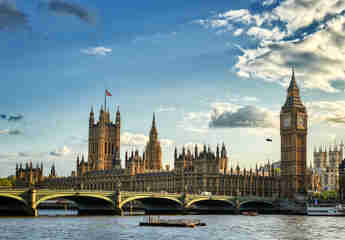
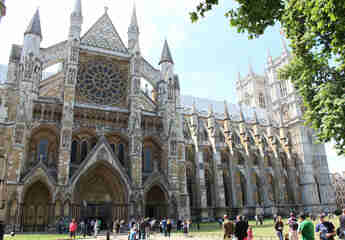
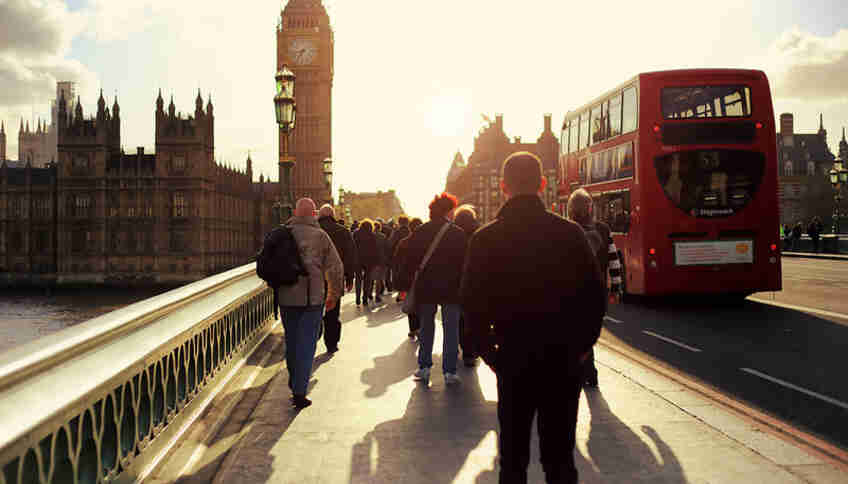
In the morning, you can walk through the classic sights: start with Trafalgar Square, walk on to Buckingham Palace, and then through the park to Westminster. Cross the river and there you will see one of the most photographed views in the world — the view of the Parliament building and the famous clock tower popularly known as Big Ben.

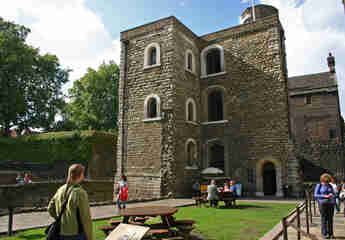
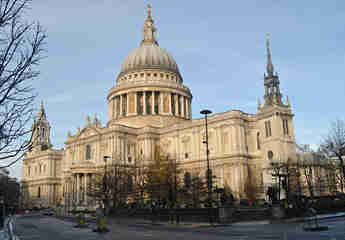
Then you can continue your walk along the embankment of the Thames toward Tower Bridge, passing the London Eye, the business quarter, and the futuristic egg-shaped City Hall building. If you are tired, you can take a bus to the bridge. Cross the bridge, and right behind it is the Tower of London, one of the oldest structures in London, a fortress that over its history has been a palace, a storage place for the royal jewels, an arsenal, a mint, a prison, an observatory, and even a zoo. After visiting the Tower, you can walk to St. Paul's Cathedral — it is very close. However, St. Paul impressed me especially at night, when the modern structures of the Millennium Bridge leading to the cathedral from the opposite side of the Thames create the illusion of a path lit in blue, and the bright colored lines look great in a photograph. Well then, we saw the very essentials in one day.


If you are a lover of nature and solitude, you will quickly get tired of slightly crazy central London. On the second day, you should either walk through Hyde Park or go to one of the many parks on the outskirts of the city. For example, to the royal Kew Gardens. These are enormous botanical gardens where it is simply pleasant to spend half a day in the shade. All the more so because they are located almost on the edge of the city, at the station of the same name in the third zone of the District line. This is a place where flowers bloom continuously, where peacocks roam freely across the lawns, and where you can reach the treetops with your hand — for this there is a special lift and platforms on supports, right above the leafy canopies.


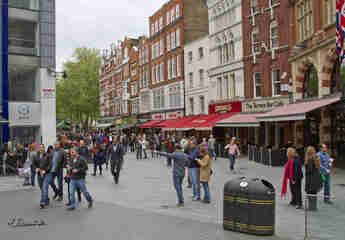
In the evening of the same day, you can head to Oxford Street for shopping, and from there walk to Picadilly Circus, the famous place where city residents gather and meet. There is an unbelievable concentration of eccentrics from all corners of London there. In general, it is worth noting that the city is full of interesting characters. Someone walks the streets in a leopard costume, someone hums jazz across the whole square, someone rides the Tube wearing almost nothing but swim trunks. People in London are very free. Spontaneity, the absence of any complexes and stereotypes, is a distinctive trait not only of London youth, but of people of all ages. An ordinary sight is an elderly woman with dreadlocks and tunnels in her ears or an old man with a mohawk and purple hair. Such breaks in expectations are taken for granted. You can walk down the street dressed in the most ridiculous things, and no one will point and say, “Oh, look what kind of guy is walking there, dressed in all sorts of ridiculous things.” In essence, no one cares about anyone else; everyone does what they want. In that freedom, of course, there is a negative side as well. Perhaps those very Soviet-Russian traits are at play in me, but many people in Britain, guys and girls, in my observation, do not take care of themselves at all and go too far in terms of freedom and decency. But that is their business, and we will return to the streets of London.


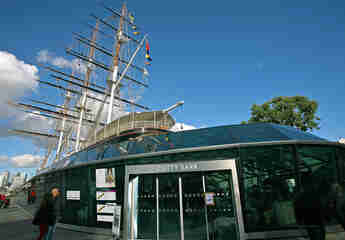
On the third day, you can get on the DLR somewhere at Bank station and head straight to the Greenwich area. Get off, for example, at cutty sark station, where you can see the museum sailing ship that once delivered tea to England from faraway colonial lands. They say it is the only such vessel that has survived to this day. Geography fanatics should visit Greenwich Park, through which the prime meridian runs. I did not go to look at the imaginary line, but walked a little through the two- and three-story quarters of Greenwich and headed to the opposite bank of the Thames, to the Docklands business district. You can cross the river through the old pedestrian tunnel, built back in the 19th century and representing yet another masterpiece of English engineering. There is not much to do in Docklands except get lost among the skyscrapers and marvel at how, in such a short time, the authorities of London managed to turn a depressed outlying district, once a major busy port and then almost abandoned, into the city's second business center.


At this point, the three-day forced march can be considered complete. Of course, you can see far from everything in three days. Besides, museum lovers will always want museums, and pub lovers will always want pubs. Nevertheless, this route, despite the fact that it bypasses some interesting central places, allows you to see not only the tourist face of London, but also its real life, life in a big city but without high-rise residential areas and crazy traffic.

Guides to London. A few more interesting options to explore: