
Get ready – this walk will be long. Very long. You will cover a lot of ground, so comfortable shoes are essential. We begin at St. Isaac's Square by the monument to Emperor Nicholas I. Then we pass the Astoria Hotel and St. Isaac's Cathedral on our way to Senate Square and the famous Bronze Horseman.
Then, passing the Admiralty, we come to the General Staff Building. It opens onto Palace Square, the Alexander Column, and the State Hermitage Museum. Think the walk ends there? Not at all!
We cross Palace Bridge, pass the Spit of Vasilyevsky Island, and arrive at the Peter and Paul Fortress.
After that, the most determined walkers can continue on to Peter the Great's Cabin and the famous cruiser Aurora. If that feels like too much, head back across Trinity Bridge, past the Field of Mars and the Summer Garden to St. Petersburg's tiniest monument – Chizhik-Pyzhik. And even there the route does not end. We still pass Mikhailovsky Castle, the Russian Museum, the Church of the Savior on Spilled Blood, walk out onto Nevsky Prospekt, and finish at Kazan Cathedral.
Before we begin our walk, we'd like to remind you that this tour is part of our mobile app – Travel Planner for iPhone and Android. Download it to use this route, offline maps, and GPS – and to plan your entire trip to St. Petersburg. Let's go!
Monument to Nicholas I

Flickr, heraldeixample
We begin our walk at the Monument to Nicholas I. It was installed in 1859 on St. Isaac's Square, between Mariinsky Palace and St. Isaac's Cathedral. Construction began in 1856 after the emperor's death, based on a design by architect Auguste de Montferrand, and the monument was unveiled on June 25, 1859. It is a 6-meter equestrian statue of Nicholas I by P. K. Klodt set on a pedestal. The emperor is shown in the ceremonial uniform of the Life Guards Cavalry Regiment. Four bas-reliefs on the pedestal depict key events from his reign. Montferrand's pedestal has an elliptical shape and is made of red Finnish granite, dark crimson Shoksha porphyry, and white Italian marble. The base is made of gray Serdobol granite.
Thank you! Every time you book hotels on Booking.com through our site, you help us describe one more place, create one more route, or develop one more city. Thank you for that!
banner booking
Astoria Hotel

Panoramio, aleks65
The Astoria (renamed several times in the Soviet era before returning to its historic name) is a five-star hotel in St. Petersburg, located in the city center on St. Isaac's Square beside St. Isaac's Cathedral. It is operated by Rocco Forte Hotels, whose collection of luxury five-star hotels and resorts around the world is known for a distinctive style that reflects local character and setting. The name Astoria is also used by hotels in other cities, including Vienna, Budapest, and Ufa.
St. Isaac's Cathedral

photoforum.ru, Alla C. (Allasa)
St. Isaac's Cathedral (officially the Cathedral of Saint Isaac of Dalmatia) is the largest Orthodox church in St. Petersburg. It stands on St. Isaac's Square and has museum status, although the church community registered in June 1991 may hold services there on special days with the museum's permission. It was dedicated to Saint Isaac of Dalmatia, a saint especially honored by Peter I because the emperor was born on the saint's feast day – May 30 in the Julian calendar. The cathedral was built between 1818 and 1858 to a design by Auguste de Montferrand; Emperor Nicholas I supervised the construction, and Karl Oppermann chaired the building commission. The solemn consecration took place on May 30 (June 11), 1858. Montferrand's masterpiece was the fourth church dedicated to Saint Isaac of Dalmatia to be built in St. Petersburg.
Heading to St. Petersburg? Sign up on Ever.Travel! It will help you plan your trip quickly and easily. Mark the places you want to see, save ready-made walking routes to your favorites, and invite friends to join your journey!
Senate Square

Flickr, ahvalj
Senate Square (known as Decembrists Square from 1923 to 2008) is one of the central squares of St. Petersburg. It lies at the western edge of Alexander Garden. The square received its name in 1763 after the Senate government institution was placed there, in a former mansion adapted for state needs. Today it is the seat of the Constitutional Court of the Russian Federation. Senate Square is one of the oldest squares in St. Petersburg: it began taking shape as early as 1704 as part of the glacis around the Admiralty. The Admiralty was conceived not only as a shipyard but also as a fortress, so an open area around it was necessary. The southern part of the future square was bordered by the Admiralty Canal, which carried logs to the shipyard. Once the Admiralty lost its defensive role, this section of the glacis became an urban square.
The Bronze Horseman

Flickr, fortinbras79
The Bronze Horseman is the monument to Peter I on Senate Square in St. Petersburg. It was unveiled on August 7 (18), 1782. The monument later took its name from Alexander Pushkin's famous poem of the same name, although it is actually made of bronze. The model for the equestrian statue of Peter was created by sculptor Étienne Falconet between 1768 and 1770. Peter's head was modeled by Falconet's student Marie-Anne Collot, while the snake was sculpted by Fyodor Gordeyev. The casting of the statue, completed in 1778, was carried out under the direction of foundry master Vasily Yekimov. Architectural planning and overall supervision were handled by Y. M. Felten. In August 1766, the Russian envoy in Paris, D. A. Golitsyn, signed a contract with Falconet, whom Diderot had recommended to Catherine II. Soon after Falconet arrived in St. Petersburg on October 15, 1766, work on the monument began in earnest.
The Admiralty

Panaramio, RMI2
The Admiralty building is a complex on the bank of the Neva that once housed the Main Admiralty of the Russian Empire and, since 2012, the headquarters of the Russian Navy. It stands on the Second Admiralty Island in St. Petersburg and is a major monument of Russian Neoclassical architecture. The little ship atop its spire is considered one of the city's symbols, along with the Bronze Horseman and the outline of the raised Palace Bridge against the Peter and Paul Cathedral. The St. Petersburg Admiralty was originally built as a shipyard from plans signed by Peter I himself. It was founded on November 16 (5), 1704. Preparatory work was completed in record time, and in early 1705 the main structures were already built and the first ships were laid down on the slipways.
You can also find this route in the Ever.Travel mobile app. Download it now – with a guide like this, exploring the city is even easier and more enjoyable. And yes, it's free!
General Staff Building

Alyona Chudanova
The General Staff Building is a historic structure on Palace Square in St. Petersburg. It was built between 1819 and 1829 to a design by Carlo Rossi, with sculptures by S. S. Pimenov and V. I. Demut-Malinovsky. Today it houses the command of Russia's Western Military District, the country's largest military district, covering Moscow, St. Petersburg, and most of the population. The building's central section consists of two wings joined by an arch, together forming a sweeping curve 580 meters long. In addition to the General Staff, the complex once housed the War Ministry, the Ministry of Foreign Affairs, and the Ministry of Finance in the eastern wing. After the October Revolution it was used by the People's Commissariat for Foreign Affairs and later by a police department. Part of the building still belongs to the Western Military District, while in 1993 the eastern wing was transferred to the Hermitage.
Palace Square

Flickr, hiroshiken
Palace Square (known as Uritsky Square from 1918 to 1944) is the main square of St. Petersburg, an architectural ensemble that took shape between the late 18th and early 19th centuries. The square is framed by federal landmarks: the Winter Palace, the Guards Corps Headquarters, the General Staff Building with its Triumphal Arch, and the Alexander Column. Its area is about 5 hectares (other sources say 8 hectares; for comparison, Red Square in Moscow covers 2.3 hectares). As part of St. Petersburg's historic center, the square is included on the World Heritage list. Its original name, Admiralty Meadow, is known from 1736 and referred to the nearby Admiralty shipyard. That name remained in use until 1772. The name Palace Square has been documented since 1766 and comes from the adjacent Winter Palace, whose southern façade faces the square.
Alexander Column

Flickr, The Photographer Berlin
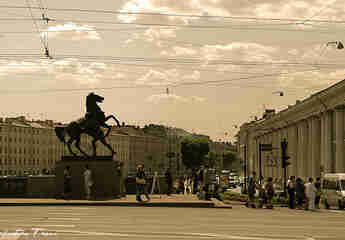
The Alexander Column (sometimes called the Alexandrian Column after a poem by Pushkin, though that name is debated) is one of St. Petersburg's best-known monuments. It is under the care of the State Hermitage Museum. Designed in the Empire style by Auguste de Montferrand, it was erected in 1834 at the center of Palace Square by decree of Emperor Nicholas I to commemorate his elder brother Alexander I's victory over Napoleon. The monument completed the composition of the General Staff Arch, which was dedicated to the victory in the Patriotic War of 1812. The idea for the monument came from the famous architect Carlo Rossi, who believed a monument should stand at the center of Palace Square. He rejected the suggestion of yet another equestrian statue of Peter I. An open competition was officially announced in 1829 in memory of the emperor's 'unforgettable brother.'
Plan your trip to St. Petersburg with the simple and convenient Ever.Travel service! We have already gathered everything you need: photos and descriptions of sights, opening hours and ticket prices, unusual places, and ready-made walking routes. All that is left is to mark what interests you!
State Hermitage Museum

bigmir.net
The State Hermitage Museum in St. Petersburg is the largest museum in Russia and one of the largest art and cultural history museums in the world. Its story began with the art collections privately acquired by Empress Catherine II. At first the collection was housed in a special palace wing known as the Small Hermitage (from the French ermitage – a place of solitude or retreat), and that name later came to define the entire future museum. In 1852, the greatly expanded collection was organized into the Imperial Hermitage and opened to the public.
Today's State Hermitage is a vast museum complex. Its main exhibition area occupies five buildings along the Neva embankment in central St. Petersburg, the best known of which is the Winter Palace.
Palace Bridge

Flickr, Saint-Petersburg 4 Life
Palace Bridge is a drawbridge over the Neva (the Bolshaya Neva) in St. Petersburg. It connects the city center on Admiralty Island with Vasilyevsky Island and lies on the axis of Palace Passage and Exchange Square. The bridge is 250 meters long (255 by some accounts) and 27.7 meters wide, with five spans. Its raised double-leaf central span is one of the city's symbols. The bridge takes its name from the nearby Winter Palace and Palace Embankment. After the change of power in 1917 it was renamed Republican Bridge, but in 1944 its historic name was restored.
Stock Exchange Building

Flickr, sftrajan
The Stock Exchange Building is the central structure in the architectural ensemble of the Spit of Vasilyevsky Island in St. Petersburg. It was built for the St. Petersburg Stock Exchange, though it was later used for various purposes. For many years it housed an exhibition of the Central Naval Museum before that museum moved to the Kryukov Barracks. Plans to develop the open space on the spit were approved in 1767, calling for a horseshoe-shaped square, which was duly created. Between 1783 and 1789, Giacomo Quarenghi designed the main Academy of Sciences building on the Bolshaya Neva as well as the curved northern warehouse wing, creating the buildings to the left and right of the future exchange. Quarenghi also designed the St. Petersburg Stock Exchange itself, and construction began in 1783.
See also these other self-guided walking routes in St. Petersburg:
Spit of Vasilyevsky Island

hostel-stella.ru
The Spit of Vasilyevsky Island is the island's eastern tip in St. Petersburg – one of the city's most captivating architectural ensembles and a perfect example of harmony between urban architecture and the landscape of the Neva embankments. Development of Vasilyevsky Island began in Peter the Great's time. In 1716, architect Domenico Trezzini's plan for a closed trapezoidal square surrounded by residential buildings was approved. Soon after, Peter I decided the spit should become the city's cultural and business center. Between 1719 and 1721, Trezzini created a new plan for government institutions, the Twelve Colleges building, the stock exchange, trading rows, and a cathedral. In the early 1720s, foundations were laid along the Bolshaya Neva for the Kunstkamera and the palace of Tsarina Praskovya Fyodorovna, which was transferred to the Academy of Sciences in 1727. The northern bank, however, remained a less developed port area.
Rostral Columns

Flickr, The Photographer Berlin
The Rostral Columns are architectural monuments in the center of St. Petersburg on the Spit of Vasilyevsky Island. In the 19th century they served as lighthouse beacons for the port of the northern capital. The columns were erected in 1810 to a design by the French architect Thomas de Thomon, who decorated them with ship prows. This imagery symbolizes the power and grandeur of the state's naval fleet and refers to the ancient Roman custom of decorating columns with the prows of defeated enemy ships. The renowned stonemason Samson Sukhanov, who came from a poor peasant family in Vologda Province, also worked on the project. The statues at the base were created by sculptors J. Camberlain and J. Thibaud. The columns were inaugurated in 1815, and the beacons were lit at night and in fog until 1885.
By the way, if you decide to stay in St. Petersburg for a couple more days, we recommend the tour 'Vasilyevsky Island – Familiar and Unknown.' This place is often considered the most remarkable spot in the city. Surprised? That is exactly why author-curated routes are so interesting – they tell you things you would never guess on your own ;)

PETRUSHANOV.LIVEJOURNAL.COM
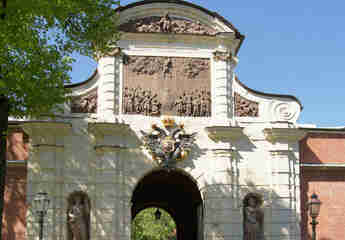
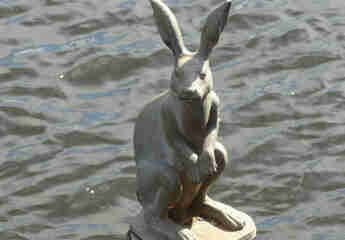
The history of St. Petersburg, one of the world's most beautiful cities, began with the laying of this fortress on Hare Island in 1703. The founding of Peter I's future capital is wrapped in legends and many theories about why this particular spot was chosen – including the myth of the hares, prophecies from a wise old man, and plenty of other speculation.
Most likely, the decisive factor was how convenient the island was for a fortress: at first the tsar feared Swedish attacks and built an imposing fort to stop the enemy from pushing farther inland.
Originally, the fortress was surrounded by earthen ramparts that were constantly washed away by the waters of the Neva, so the fortifications were soon rebuilt in stone and brick. The walls form an irregular hexagon, somewhat resembling a turtle in shape.
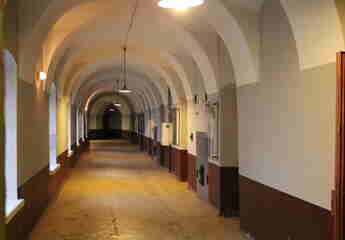
At each corner stands a bastion named after one of the tsar's close associates. The bastions are connected by curtain walls – broad walls that once contained service rooms and the infamous Peter and Paul casemates. Many well-known political prisoners passed through these cells.
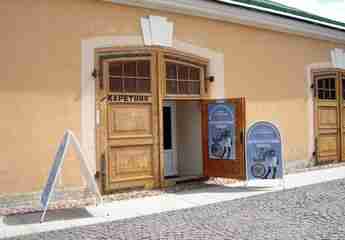
The Peter and Paul Fortress is part of the Museum of the History of St. Petersburg. Today, dozens of museums and exhibition halls operate within its grounds, along with unique historic monuments and fascinating sights to explore.
Peter the Great's Cabin

saint-petersburg.com
Peter the Great's Cabin was the first building in St. Petersburg and served as the tsar's summer residence from 1703 to 1708. This small 60 m² wooden house was built by soldier-carpenters near Trinity Square in just three days, from May 13 (24) to May 15 (26), 1703. On May 16 (27), celebrations were held here to mark the annexation of the land and the founding of the new city. In 1930, a museum opened inside the cabin, displaying artifacts from the era and personal belongings of Peter himself. The site was chosen behind the Peter and Paul Fortress so that strategically important points – the waterways, the surrounding land, and the fortress bastions – could be seen from its windows. The cabin was built from hewn pine logs in the style of a traditional Russian izba. A central hall divides it into two parts. Apart from that feature and the doors decorated with ornamental metal overlays – both typical of 17th-century Russian architecture – everything in the house reflects the tsar's fascination with Dutch design.
Cruiser Aurora

Flickr, Yuhyi
Aurora is a first-rank protected cruiser of the Baltic Fleet from the Diana class. It was named after the sailing frigate Aurora, famous for defending Petropavlovsk-Kamchatsky during the Crimean War. During the Russo-Japanese War, the ship took part in the voyage of the Second Pacific Squadron that ended in the Battle of Tsushima. Aurora also served in World War I. The blank shot fired from Aurora became the signal for the storming of the Winter Palace, and the cruiser turned into one of the symbols of the October Revolution. Today it is permanently moored on Petrogradskaya Embankment in St. Petersburg and is protected as a cultural heritage monument of the Russian Federation. The order for the Diana-class cruisers was driven by the foreign policy situation at the end of the 19th century, when growing tensions in the Baltic shifted from friction with Britain to an increasingly serious 'German threat.'
Another original route can be plotted... across the rooftops of St. Petersburg! From above, the city looks completely different, and if you want not only beautiful views but also a bit of adrenaline and danger, it is hard to imagine a better option!
Field of Mars

photoforum.ru, Alla C. (Allasa)
The Field of Mars is a square in the center of St. Petersburg. At the beginning of the 18th century, the undeveloped land west of the Summer Garden was known as the Amusement Field or simply the Great Meadow, and later as the Tsaritsa's Meadow. Military parades were held there. In 1798-1801, monuments to the commanders P. A. Rumyantsev and A. V. Suvorov were installed on the site. In 1818, the Rumyantsev obelisk was moved to Vasilyevsky Island, but the square retained the name Field of Mars, like the similarly named sites in ancient Rome and Paris. From 1918 to 1944 it was known as Revolution Victims Square, and between 1920 and 1923 a park was laid out there.
Summer Garden

kvartira-peterburg.ru
The Summer Garden is a park ensemble and a monument of early 18th-century landscape design in the center of St. Petersburg. It was laid out by order of Peter I in 1704 and was originally designed as a formal garden. From the start, it was intended as the tsar's summer residence, and part of Usaditsa Island was set aside for it. Peter chose 'an inhabited and advantageously located manor on this site, where the estate of Swedish Major Erich Berndt von Konow stood – a small house with a farmyard and a garden.' At that time, this part of the island also had a transport function, which disappeared once the Bolshaya Perspektivnaya road was laid out.
Chizhik-Pyzhik Monument

panoramio.com, Vladimir Batarin
The Chizhik-Pyzhik Monument is a tiny monument in St. Petersburg. It was installed on November 19, 1994, on the Fontanka River by Mikhailovsky (Engineers') Castle near the First Engineers' Bridge, opposite house No. 12/1. Not far away, at house No. 6 on Fontanka Embankment, the Imperial School of Law was located from 1835 to 1918. Its students wore green uniforms with yellow buttonholes and cuffs. According to a popular St. Petersburg legend, the color of those uniforms resembled the plumage of a siskin, and together with the students' traditional fur hats gave rise to the nickname 'chizhiki-pyzhiki' – the heroes of the famous little song.
Mikhailovsky Castle

tourspb.com
Mikhailovsky Castle, also known as Engineers' Castle, is a former imperial palace in central St. Petersburg at 2 Sadovaya Street. It was built for Emperor Paul I at the turn of the 18th and 19th centuries and later became the place of his death. The building is the largest architectural monument marking the close of 18th-century St. Petersburg architecture. The name Mikhailovsky comes from the church of Archangel Michael inside the palace, the patron of the Romanov dynasty, and from Paul I's habit – after becoming Grand Master of the Order of Malta – of calling all his palaces 'castles.' Its second name, Engineers' Castle, comes from the Main Engineering School, which was housed there from 1823. Some memoirists claimed the name was linked to a vision of Archangel Michael, or his messenger, appearing to a sentry at the site where the castle was later built. At the very least, that was how contemporaries interpreted the emperor's insistence on calling it 'Mikhailovsky' immediately after construction began.
Mikhailovsky Garden

strana.ru, Yevgeny Ptushka
Mikhailovsky Garden is one of St. Petersburg's best-known and best-kept parks. It lies right in the city center. To the south it adjoins Mikhailovsky Palace, the main building of the Russian Museum, along with the Ethnographic Museum and the Benois Wing. To the east the park is bounded by Sadovaya Street, to the north by the Moika River, and to the west by Griboyedov Canal. The Church of the Savior on Spilled Blood stands at the garden's northwestern edge. Mikhailovsky Garden is managed by the State Russian Museum. Back when all the lands along the Neva belonged to Sweden, this area was known as Peruzina. Its recreational role was defined by Peter I himself. The garden appeared at the same time as the Summer Garden and in the early 18th century was called the Third Summer Garden, distinguishing it from the two earlier gardens that belonged to the tsar. From 1712, a residence for Peter's wife Catherine I began to be built here.
State Russian Museum

Flickr, Retlaw Snellac Photography
The State Russian Museum (known before 1917 as the Russian Museum of Emperor Alexander III) is the largest museum of Russian art in the world. It is located in central St. Petersburg. The modern museum is a complex institution whose main exhibition spaces occupy five buildings: Mikhailovsky Palace with the Benois exhibition wing, Mikhailovsky (Engineers') Castle, the Marble Palace, the Stroganov Palace, and Peter I's Summer Palace. The museum also includes Mikhailovsky Garden, the Summer Garden, the garden of Mikhailovsky Castle, Peter the Great's Cabin on Petrovskaya Embankment, and several other buildings. As of January 1, 2012, the museum's collection comprised 407,533 items.
Church of the Savior on Spilled Blood

Alyona Chudanova
The Church of the Resurrection of Christ, better known as the Church of the Savior on Spilled Blood, is an Orthodox memorial church in St. Petersburg dedicated to the Resurrection of Christ. It was built in memory of the fatal attack on Emperor Alexander II that took place on this very spot on March 1, 1881 – the phrase 'on spilled blood' refers to the tsar's blood. The church was erected as a monument to the martyred emperor with funds collected across Russia. It stands in St. Petersburg's historic center on the bank of Griboyedov Canal near Mikhailovsky Garden and Konyushennaya Square, not far from the Field of Mars. The nine-domed church rises 81 meters high and can hold up to 1,600 people. Today it is both a museum and a landmark of Russian architecture. The church was built by decree of Emperor Alexander III between 1883 and 1907 from a joint design by architect Alfred Parland and Archimandrite Ignaty (Malyshev), who later withdrew from the project. The design is executed in the 'Russian style' and somewhat recalls St. Basil's Cathedral in Moscow.
Singer House

Flickr, Gösta Knochenhauer
Singer House, also known as the House of Books, is a landmark building at 28 Nevsky Prospekt in St. Petersburg and a federally protected architectural monument owned by the state. This six-story Art Nouveau building with an attic, covering about 7,000 m², was constructed between 1902 and 1904 to a design by architect Pavel Suzor for the Singer Company in Russia. The project was innovative in its engineering, style, and purpose. Singer, the sewing machine manufacturer, originally wanted to build a skyscraper like the one the company was putting up in New York at the time. But buildings in central St. Petersburg could not rise higher than 23.5 meters to the cornice. The architect solved the problem brilliantly by topping the six-story building and attic with an elegant tower crowned by a glass globe 2.8 meters in diameter.
Nevsky Prospekt

wikimedia.org
Nevsky Prospekt is St. Petersburg's main street, stretching 4.5 km from the Admiralty to Alexander Nevsky Lavra. It crosses the Moika River by the Green Bridge, Griboyedov Canal by Kazan Bridge, and the Fontanka by Anichkov Bridge. Its widest point is 60 meters, near Gostiny Dvor, and its narrowest is 25 meters, near the Moika. The façades of 240 buildings face onto Nevsky Prospekt. The right side with odd numbers is unofficially called the 'shady' side, while the even-numbered side is the 'sunny' one and a favorite for walks. The section from Vosstaniya Square to Alexander Nevsky Lavra is also informally known as Old Nevsky, partly because in the 1730s an attempt was made to straighten the avenue along what are now Goncharnaya and Telezhnaya streets. The avenue received its modern name in 1781 from Alexander Nevsky Lavra, itself named after the national hero and saint Prince Alexander Nevsky.
Kazan Cathedral

s-pb.in
Kazan Cathedral, officially the Cathedral of the Kazan Icon of the Mother of God, is one of the largest churches in St. Petersburg and a major monument of the Empire style. It was built on Nevsky Prospekt between 1801 and 1811 by architect A. N. Voronikhin to house a revered copy of the miraculous Kazan Icon. After the Patriotic War of 1812, it took on the significance of a monument to Russian military glory. In 1813, Field Marshal M. I. Kutuzov was buried here, and the keys to captured cities and other military trophies were placed inside.
In 1932 it was turned into the Museum of the History of Religion and Atheism. Since 1991 it has functioned again as an active church, coexisting with the museum exhibition for several years. Since 2000 it has served as the cathedral of the St. Petersburg diocese of the Russian Orthodox Church. Its rector is Archpriest Pavel Krasnotsvetov.
The cathedral gave its name to Kazanskaya Street, Kazan Island in the Neva delta, and Kazan Bridge at the intersection of Nevsky Prospekt and Griboyedov Canal.