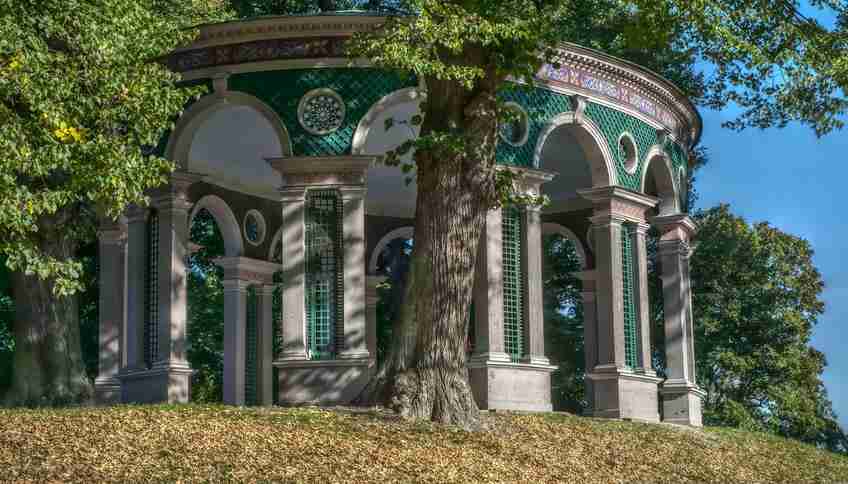
Royal Haga Park in Stockholm is an excellent example of how a truly English landscape can be adapted to a Scandinavian atmosphere. The creation of this park was initiated by King Gustav III, inspired by the ideas of the Enlightenment, which is why Haga Park is often also called Gustav's Park.
The main bulk of the work to develop the grounds took place in 1780-1797. Several architects worked on creating an “English atmosphere” in Haga, among them the famous specialist of the time Fredrik Magnus Piper.
Gustav III also had a hand in the project, creating many sketches of the park. However, the grand plans to plant trees and create artificial islets were thwarted by the king's murder in 1792.
At the beginning of the 19th century, when a trend emerged in Europe to open royal parks to ordinary people, Haga became very popular among the townspeople. Visitors were taken with the copper tents, the pavilion of King Gustav III, and even the ruins of his unfinished palace. The famous Haga Palace is no less popular — the residence of Crown Princess Victoria, heir to the Swedish throne.