Updated for 2026: Riga is still one of Europe's easiest capitals to explore on foot. Old Town remains compact and atmospheric, but it is worth leaving extra time for museum lines, seasonal events, and long cafe stops.
This Riga guide is not just something to read or print - you can save it to your phone, too. Open the interactive attractions map to tailor it to your trip: mark the places you want to see, spread them over a few days, then download the free Ever.Travel mobile app and sign in with the same account you use on the website. Your plans will sync between the web version and your phone, giving you a personal Riga guide that works even offline. Questions? Take a look at our overview - it explains how everything works.

Flickr, mark-jandejong
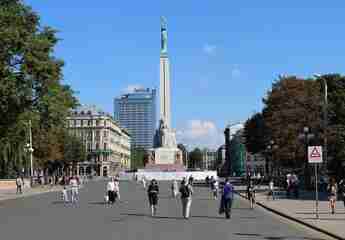
We start at Riga's Freedom Monument, a landmark honoring those who fought for Latvia's independence in 1918-1920. The 42-meter memorial stands in the center of the city on Brivibas Boulevard. It was unveiled in 1935 to a design by Karlis Zale, and the woman at the top holds three stars representing Latvia's historical regions.
At the base is a multi-level composition of 56 sculptures arranged in 13 groups. Architect Ernests Stalbergs translated Zale's ambitious idea into stone, weaving together work, family, faith, and national memory with real and legendary figures important to Latvian history.
Riga locals often call the monument "Milda." One popular story says the sculptor's model was a woman named Milda Winter. There is no solid proof, but the nickname stuck, and most locals know exactly what you mean when you say it.
From here on, we will not spell out every turn between sights - getting lost in central Riga is difficult. The whole route is already plotted on the map you will find in the free Ever.Travel mobile app. Open it during your walk to check the way from one stop to the next. The sights are arranged in an order that works well on foot.

Flickr, Peter Knöferl
"Let's meet by Laima..." can sound mysterious if it is your first time in Riga. Laima is not a person at all, but the city's famous clock - the classic meeting point in central Riga. And yes, the tower beneath it carries the branding of Latvia's beloved chocolate maker.
The story starts in the 19th century. There was first a wooden kiosk here, later joined by a tram stop and a clock. In 1924 the old structure was replaced with a neoclassical pavilion with a colonnade, and a separate clock tower was added nearby so hurried locals could keep an eye on the time.
In the 1930s the clock was redesigned in Art Deco style and began carrying Laima advertising. During the Soviet years the slogans changed, and in 1999 the clock was restored to its historic look - and to the Laima name everyone knows today.
Want more Riga walks? Start with these:

liveriga.com
Riga loves a good legend, and the Nymph Fountain comes with a romantic one. Sculptor August Volz created the fountain in the late 19th century beside the building now occupied by the Latvian National Opera and Ballet.
After a fire damaged the old theatre, the building had to be rebuilt, and Volz was involved in the decorative work. According to local lore, the fountain took suspiciously long to finish because the artist had fallen in love with the model posing for the nymph and did not want the project to end.
In the sweeter version of the story, he eventually finished the fountain - and married her. In the less dramatic version, she was already his wife. Either way, Riga got one of its prettiest sculptures.
The fountain shows a nude nymph lifting a shell above her head, with water spilling down around her. Children sit at her feet, and a dolphin and turtle complete the scene. It is elegant, playful, and easy to miss if you rush past.
Everything You Need to Know for Your First Trip to Riga - practical tips for independent travelers

Flickr, Janitors
The history of the Latvian National Opera reaches back well into the 19th century. The building opened as the City German Theatre in 1863 and was rebuilt after a fire in the 1880s. Latvia's national opera tradition later found its home here, and today it remains one of the city's cultural showpieces.
The opera house is beautiful inside and out, with a stately facade and richly decorated interiors that blend several historic styles. Guided tours usually cover both the grand public rooms and backstage spaces, which makes this a good stop even if you are not seeing a performance.
The auditorium is designed with comfort, sightlines, and acoustics very much in mind. Even if you are only visiting during the day, it is easy to imagine how impressive the space feels once the lights go down.
Riga also has a strong ballet tradition and has produced world-famous dancers, including Maris Liepa and Mikhail Baryshnikov.
What to see in Riga: top 10 attractions

Flickr, BeeFortyTwo
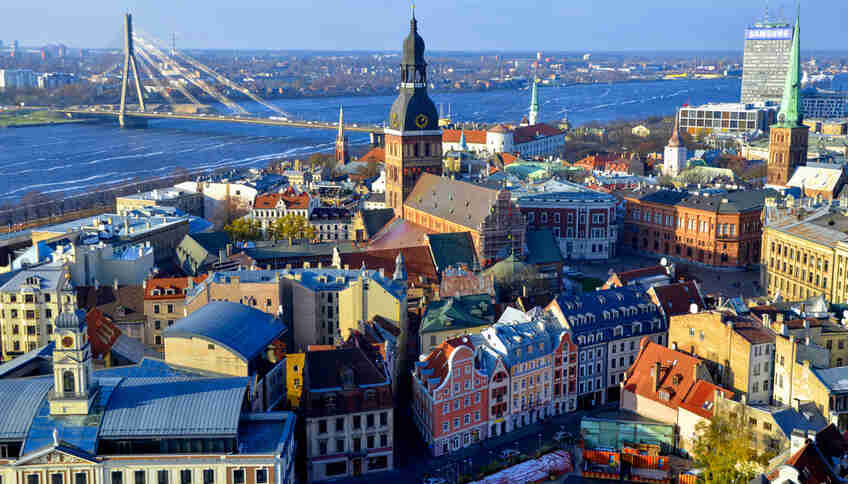
From the more modern center, the route brings you into Riga's historic heart - Old Town, or Vecriga. This entire quarter is part of a UNESCO World Heritage Site, and once you step inside, it is easy to see why.
Old Town sits on the right bank of the Daugava and is packed with medieval streets, church spires, courtyards, and merchant buildings. One walk is enough to fall for it, but not enough to see everything.
Among the highlights are Riga Castle, the Three Brothers, the Great and Small Guilds, the House of the Blackheads, and the city's major churches - including the Dome Cathedral, St. Peter's Church, and St. James's Cathedral, all crowned with the golden cockerels that have become a Riga signature.
This is the best part of the city for slow wandering. There are cafes, restaurants, museums, and souvenir shops everywhere, and vehicle access is limited, so the atmosphere stays pleasantly calm.
If you want to stay in the middle of the action, Old Town is a smart base. Most major sights are within walking distance, and you can compare hotels, apartments, and hostels on whatever booking platform you prefer.

otzyv.ru, ViknikK
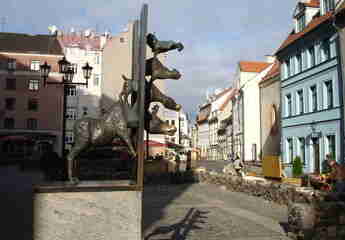
Most people know the Brothers Grimm tale of the Bremen Town Musicians, whether from the original story or from an animated version. So when you spot a donkey, dog, cat, and rooster stacked one on top of another in Old Riga, you will recognize them right away.
The monument was a gift from Bremen, Riga's sister city, and was installed near St. Peter's Church in 1990. Sculptor Christ Baumgartel gave the familiar fairy-tale scene a second layer of meaning: the animals are peering ahead as if through the Iron Curtain, a witty symbol for a rapidly changing Europe.
Most visitors do not dwell on the political symbolism now - they simply enjoy the statue. It is one of Riga's most photographed sights, and local folklore says rubbing the donkey's nose brings good luck. If you can somehow reach the rooster at the top, your biggest wish is supposed to come true.
Even without the backstory, it is one of those monuments that instantly lightens the mood of a walk through Old Riga.

livejournal.com, starevil
Riga's skyline would not be the same without the slim spire of St. Peter's Church. It is one of the city's defining landmarks and appears on countless postcards, guidebooks, and souvenir magnets.
Most visitors come for the views. An elevator takes you up to the observation platform, where you get a sweeping look over Old Town's rooftops, the Daugava, and the newer parts of the city beyond.
The church rises to more than 120 meters and for centuries ranked among Riga's most impressive structures. Its profile is still one of the easiest ways to orient yourself in the center.
The story of this church goes back to the 13th century. Financed by wealthy townspeople, it burned and was rebuilt several times. The last major destruction came in 1941, and the long restoration that followed returned the building to the skyline Riga knows today.
Inside, the atmosphere is spacious and restrained rather than lavish. The church hosts services as well as exhibitions, many of them connected to the history of Riga itself.

picasaweb.google, Alexey Vikhrov
Still with us? Good - Riga packs a lot into one day.
Mencendorff House looks, from the outside, like a typical old Riga townhouse. Step inside, though, and the story of the city becomes much more vivid.
The building was constructed in 1695 by the glassmaker Jorgen Helms. Later, one of Riga's earliest pharmacies operated here for nearly two centuries. According to local legend, this is also where Riga Black Balsam first appeared in the 18th century, thanks to pharmacist Abraham Kunze. Today there is even an attic exhibition devoted to that story.
From 1900 to 1939 the house belonged to the family of August Mencendorff, a prosperous Riga merchant who ran a shop here selling groceries, delicacies, and coffee. Locals said his coffee was some of the best in town.
After years of neglect, the building began to be restored in the late 1980s, and the museum opened in the early 1990s. The work was carried out by the Polish conservation company PKZ together with architect Peteris Blums.
You can explore the house from basement to attic. The rooms are filled with authentic furniture, objects, and decorative details, so the whole place feels less like a museum case and more like a lived-in fragment of old Riga.
The building still honors its original owner, too: there is a real glass workshop here, where visitors can watch glassmaking and sometimes even try parts of the process themselves.

Flickr, globetrotter_rodrigo
The House of the Blackheads is one of Riga's signature buildings, though what you see today is a meticulous reconstruction. The original structure was destroyed in World War II, and the building was rebuilt in the 1990s for Riga's 800th anniversary.
Now it draws visitors for both its striking facade and its lavish interiors. It hosts exhibitions and ceremonial events, and during the restoration of Riga Castle it even served for a time as the Latvian president's residence.
The house was originally built in the first half of the 14th century for the Brotherhood of the Blackheads, an influential association of unmarried merchants. The name comes not from a surname, but from Saint Maurice, the patron saint shown on the brotherhood's coat of arms.
Over the centuries the building was rebuilt more than once, so the facade combines different layers of history. One of its best-known additions is the 19th-century sculptural group representing figures such as Neptune and Mercury.

Flickr, Doctor Casino
The Museum of the Occupation of Latvia was founded in 1993 as a private, non-governmental institution. It was created largely through the efforts of Latvian scholars, members of the diaspora, and private donors who wanted a permanent place to document one of the country's most painful chapters.
One of the leading figures behind the museum was historian Paulis Lazda of the University of Wisconsin, supported by many other researchers and public figures.
The museum focuses on Latvia under the occupations of Nazi Germany and the Soviet Union, and on the impact those regimes had on the country and its people.
The exhibitions trace major events of the 20th century through documents, photographs, personal stories, and historical context, including Latvia's eventual restoration of independence in 1991.
It is a serious, often emotionally heavy museum, and like many places that deal with contested history, it can spark strong debate - which is part of what makes it worth visiting.

Flickr, fveronesi1
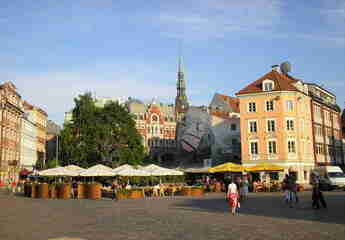
The real heart of Old Riga is Town Hall Square, where visitors naturally gravitate and locals still come to linger. After wartime destruction, the square was reconstructed and is once again one of the city's grandest gathering places.
This was once Riga's main market square, and over time it filled with handsome civic buildings that have since been carefully restored.
The square has seen both dark and festive moments. Public punishments once took place here, but it is also linked to Riga's famous claim of hosting one of Europe's earliest public Christmas trees more than five centuries ago.
At the center stands a statue of Roland, the legendary medieval knight who symbolized civic freedom and justice in many Hanseatic cities. The figure in the square is a copy; the original is kept in the museum collection of St. Peter's Church.

Flickr, Alex Segre
For centuries, Town Hall Square was the stage for Riga's public life, so it made perfect sense for the city government to be based here. From the town hall balcony, decrees were announced and major decisions were made in full view of the city.
The earliest town halls did not survive. One was lost to fire, another was destroyed during the wars of the early 18th century, and what we know about them today comes mostly from old drawings and descriptions.
A later town hall was rebuilt in a more classical form and then altered again in the 19th century by architect Johann Felsko, who added another floor and refined the overall silhouette.
World War II left the building in ruins, but a reconstruction completed for Riga's 800th anniversary brought it back to the square. The restored town hall opened in 2003 and now houses the Riga City Council.

Flickr, ritsch48
You do not need to go to London to visit Baker Street - Soviet television already found it in Riga. Jauniela Street famously appeared in the Sherlock Holmes films starring Vasily Livanov, with these old facades standing in for Victorian London.
That is part of why the street feels so familiar to travelers from across the former Soviet world. Riga has long been a cinematic stand-in for London, Paris, Bern, New York, and a surprising number of other cities.
Jauniela itself is a small street near Dome Cathedral, first laid out in the 16th century. Its name changed more than once before it finally settled into the simple meaning it has today: "New Street."
It is only 225 meters long, but it has an outsize place in pop culture. Sherlock Holmes was filmed here, and so was Seventeen Moments of Spring, which only added to the street's cult status.
The architecture has stayed wonderfully intact, making Jauniela one of the most atmospheric little detours in Old Riga - especially if movie nostalgia is part of the appeal.

Flickr, Khraym The Cheetah
Dome Cathedral is one of Riga's great landmarks and one of Latvia's most important churches. Building began in the 13th century and continued over several centuries, which is why the finished cathedral blends several architectural styles rather than sticking to just one.
The earliest version was relatively austere and Romanesque. Later additions expanded the church with new naves and chapels, and by the late Middle Ages the building had taken on a more Gothic character.
After damage during the 18th century, the cathedral was restored again, and its tall Gothic spire was eventually replaced by the Baroque tower silhouette seen today.
It is also famous for its organ. Built by the German company E.F. Walcker & Co. in 1883-1884, it was once among the largest and finest organs in the world, and it remains one of the cathedral's biggest draws for music lovers.

Flickr, Fearless Fred
Dome Square is relatively young by Old Riga standards, laid out in the second half of the 19th century and named, naturally, after the cathedral it frames.
The idea was simple: open up the area around the church, improve access, and let the cathedral breathe. Several older houses had to disappear to make that happen, but the result was one of the largest and most useful public spaces in the old city.
The square is surrounded by a mix of grand historic buildings, including the former stock exchange and the Latvian Radio building, many of them restored after wartime damage.
Because it is so spacious, Dome Square regularly hosts markets, concerts, festivals, and seasonal events. If anything public is happening in Old Riga, there is a good chance it is happening here.
There is also a famous spot on the square where you can see three of Riga's golden church cockerels at once - a small local detail worth looking for.

Flickr, christeldevelay
The Art Museum Riga Bourse introduces visitors to a wide-ranging collection of Western, Eastern, and ancient art, spanning everything from early antiquity to later European painting and decorative arts.
The museum occupies the former Riga Stock Exchange building on Dome Square, one of the city's grand 19th-century interiors. The setting suits the collection perfectly.
The displays are arranged by theme and region, making the museum easy to navigate even if you are short on time. One of its strengths is Northern European art, which features prominently in the galleries.
You will also find Western European porcelain, including valuable Meissen pieces, shown in richly decorated rooms that are almost as interesting as the objects themselves.
The Oriental collections add another layer, with art from Japan, China, and other parts of Asia. It is a polished museum and a very good rainy-day stop in the center.

Flickr, Frans.Sellies
On Maza Pils Street you will find three old houses pressed tightly together. They are known as the Three Brothers and are treated as a single architectural ensemble, even though they were built at different times and in different styles.
The nickname echoes Tallinn's "Three Sisters," and the comparison is not accidental - both cities like to turn their historic townhouses into memorable characters.
In Riga, the trio works almost like a crash course in domestic architecture from the 15th to the 18th century. The oldest, often called the White Brother, dates to the late 15th century and still shows Gothic features mixed with early Renaissance touches.
The middle brother arrived in the 17th century and reflects a more restrained Dutch-influenced mannerism that suited smaller urban houses of its time.
The youngest and smallest of the three is the Green Brother, whose pale facade and curving gable show the shift toward Baroque taste.
The complex was restored in the 1950s under architect Peteris Saulitis, when the rear spaces and courtyards were also combined.

Flickr, N.F.
One of Riga's main Catholic churches, Our Lady of Sorrows, took shape in a rather unexpected way. A modest church first stood on this site in the 1760s, and for a while that seemed good enough.
Then Emperor Joseph II visited Riga in 1780, stepped inside, and was unimpressed by what he saw. According to tradition, he helped set the rebuilding in motion by contributing funds for a new church.
Other donors followed, from nobles and rulers to ordinary parishioners, and the new church was consecrated in 1785.
Its final appearance took shape in the 19th century, when architect Johann Felsko expanded the building and added a new stone tower gate. By then the church had grown into the refined city landmark you see today.

Flickr, GHvilks
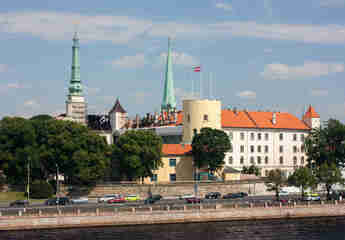
Riga Castle is one of those places where the layers of Latvian history are easy to feel. Different powers ruled from here over the centuries, and each left its own mark on the building. Today the castle again serves as the official residence of Latvia's president, alongside museum spaces.
The story of the castle begins in the 14th century, when it was built on the Daugava. It did not remain unchanged for long: conflicts between the city and the Livonian Order led to destruction and rebuilding, and later rulers kept adapting it to their own needs.
That constant reshaping explains the castle's slightly eclectic appearance. What you see is not the work of one era, but of many.
The castle complex has also housed major museum collections. A serious fire in 2013 damaged parts of the site and affected stored exhibits, after which restoration continued for years. Even so, it remains one of the key landmarks on any walk through Riga.

Flickr, HBarrison
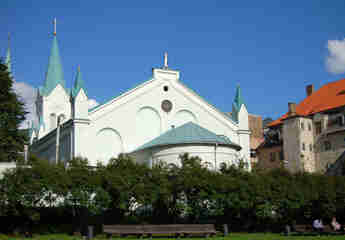
St. James's Cathedral is Latvia's principal Roman Catholic cathedral. It dates back to the 13th century, making it one of Riga's oldest churches, even if its architecture feels more restrained than some of the city's other great sacred buildings.
The main body of the church was completed by the early 14th century in the early Gothic style. Over the centuries it was rebuilt more than once and passed through different confessions as political power in Riga changed.
In the 16th century it became the first Lutheran church in Latvia, later returned to Catholic hands, passed to the Jesuits, and under Swedish rule shifted again. During the Napoleonic era it was even used as a storehouse. Since 1923 it has belonged to the Catholic Church.
Inside, the cathedral is pleasantly eclectic. Elements from different periods coexist here: a mahogany pulpit from the early 19th century, an organ installed in the early 20th century, and striking Art Nouveau stained glass.
The 80-meter tower is topped with one of Riga's trademark golden cockerels.

livejournal.com, starevil
The monument to those killed during the 1991 Barricades takes the form of a symbolic bonfire. Created by Ojars Feldbergs, it is stark and restrained - exactly the right tone for a memorial tied to grief, courage, and civic resistance.
January 1991 occupies a central place in Latvia's modern history. At a moment of enormous tension, people across the country came to Riga to defend key institutions and support Latvia's push to restore its independence.
The annual Day of Remembrance of the Barricades honors those who were killed or injured, as well as the hundreds of thousands who stood watch in the cold to protect the city.
Bonfires became the defining image of those days. They were built across Riga so people on the barricades could stay warm through the winter nights, and that is why the memorial takes this particular shape.
The events were chaotic and dangerous, and violence did break out. The memorial does not try to retell every detail; instead, it preserves the memory of solidarity, fear, and determination at a turning point in Latvia's return to independence.

Flickr, joeriksson
The Swedish Gate appeared in the 17th century as a shortcut through Riga's defensive walls. Whether it began as an official project or a practical arrangement tolerated by the city, it saved local residents from making a long detour - and from paying extra duties on the goods they carried.
Several such passages once existed, but only this one survives. At night the gate was locked; by day it reopened and folded back into the daily rhythm of the city.
Like most old gateways, it comes with a legend. One tale says a young woman slipped through the gate at night to meet a Swedish soldier she loved, only to be betrayed and punished. Since then, locals say, her cries can still be heard after dark.
The gate and adjoining buildings have been restored several times, especially in the 20th century. Today the complex houses cultural and professional organizations and remains one of the most atmospheric corners of Old Riga.

Flickr, Bernt Rostad
The longest building in Riga is Jacob's Barracks, a long military structure dating from the 18th century. It was built for Russian troops, though barracks had stood on this site earlier as well.
The name comes from the nearby Jacob's Bastion. When political control of Riga changed, the barracks changed hands too, and the complex was repeatedly adapted to suit new needs.
That flexibility helped the building survive. Over time it has housed everything from schools and administrative offices to Soviet-era military institutions. Major restoration work in the 1990s gave the long facade its present look.
Today the barracks belong to private businesses and are home to shops, cafes, salons, and offices. It is an easy place to pass by without much thought, but the scale of the building makes it memorable once you notice it.

geolocation.ws, Toms Grīnbergs
Medieval Riga was once encircled by 28 towers. The Powder Tower is the only one still standing.
It was built in the 14th century to guard the city approaches from what is now Smilsu Street. Later, when gunpowder began to be stored here, the tower picked up the name it still carries today.
War damaged the tower more than once, and after 17th-century rebuilding its walls became thicker and its silhouette even more formidable. Cannonballs from later battles are still said to remain embedded in the masonry.
For a long time the tower stood empty. In the late 19th century, private tenants gave it new life, and in the 20th century it became home to military-historical collections.
Today the Powder Tower belongs to the Latvian War Museum and offers a very direct reminder that Old Riga was once a fortress, not just a picturesque historic quarter.

Flickr, Tania Ho
The Cat House might have been just another handsome Art Nouveau building in Old Riga if not for the story attached to it. It was built at the start of the 20th century for a wealthy merchant named Blumer and designed by architect Friedrich Scheffel.
Blumer was reportedly offended after being refused entry to the Great Guild, so he placed black cat sculptures on the roof with their backsides aimed straight at the guild building. After the dispute was settled and relations improved, the cats were turned into the more respectable position you see today.
Those rooftop cats have since become one of Riga's best-known symbols. Look more closely and you will also spot an eagle above the facade and floral Art Nouveau decoration around the entrance.
Today the ground floor is occupied by businesses and entertainment venues, but most people come for the cats, not what is behind the doors.

Flickr, MnGyver
At the intersection of Kaleju, Zirgu and Amatu streets in Old Riga stands the Great Guild, one of the city's most important historic public buildings. Today it functions as a concert venue, which makes it especially appealing if you can pair your walk with an evening performance.
The site has been associated with the Great Guild since the 14th century, though the building changed repeatedly over the centuries to suit the needs of the merchant elite.
In medieval Riga, only local merchants had the right to trade overseas, so the Guild of St. Mary - better known as the Great Guild - wielded real influence in city life.
The earlier building was demolished in the 19th century and replaced by the larger neo-Gothic structure you see now, though some historic rooms, including the Munster Chamber and the Fireplace Hall, were preserved.
A later reconstruction adapted the building for concerts, and that mix of civic history and musical life is still part of its appeal today.

Flickr, missyjessie
The Small Guild stands in Old Riga directly opposite the Great Guild. The handsome building you see today dates from 1866.
It no longer serves a medieval craft guild, of course. Instead, it operates as a cultural venue where concerts, conferences, celebrations, and folk-art events take place.
The original Small Guild, also known as the Guild of St. John, was founded in the 14th century as an association of artisans. It was the counterpart to the merchant-dominated Great Guild, and the relationship between the two was not always warm.
In the 19th century the aging old guild house was rebuilt to designs by architect Johann Felsko, giving the institution a grander and more polished home.
The interiors deserve a look if they are open: stained glass, terracotta mosaic floors, and finely worked details all help the building live up to its exterior. On the facade tower, look for St. John with a lamb, the guild's emblem.

Flickr, infra_milk
This atmospheric bar occupies a historic building on Kalku Street. According to local legend, this was once the pharmacy of Abraham Kunze, the apothecary often linked to the origins of Riga Black Balsam.
One popular story says Catherine the Great tasted the herbal drink while visiting Riga and helped make it famous. Whether or not every detail is true, the legend has become part of the city's folklore.
Even during renovations, people say, the room smelled of mint, lavender, cinnamon, and rosemary. That same aromatic mood is part of the experience today, and tastings of the famous balsam are one of the main draws.
The interior leans happily into old-world drama: wrought-iron lamps, stone arches, heavy wooden furniture, antique-style decor, and shelves lined with objects that feel half apothecary, half theater set. It is touristy, yes, but also fun - especially if you are curious about Riga Black Balsam.
And that wraps up our one-day walk through Riga. Hopefully it gives you a clear answer to the question "What should I see in Riga in one day?" Remember that you can also find this route at interactive map of attractions, where you can save it, shorten it, or build on it. Then sync with free mobile application Ever.Travel and explore the city without juggling bulky guidebooks or paper maps. If you want the full explanation of how it works, read more...