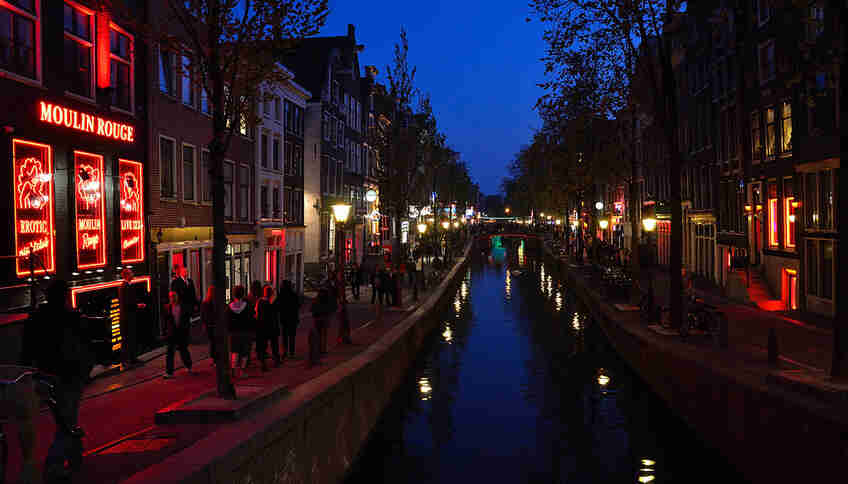
About the route: this evening walk takes you through De Wallen, Amsterdam's oldest quarter and best-known nightlife district, with stops at landmark coffeeshops, offbeat museums, Casa Rosso, and a hidden church museum. The route is about 2 km and easy to cover in one evening.
Updated for 2026: De Wallen is more tightly managed than its old anything-goes reputation suggests, so check opening hours, follow local rules, and treat the neighborhood as a lived-in part of the city.
How and when to go: start at Amsterdam Centraal and head in after dark, when the canals and neon reflections make the neighborhood feel most atmospheric. One rule matters above all: never photograph people in the windows, and be respectful of residents and workers.
What is important to know: De Wallen is not just nightlife. It is one of the oldest parts of Amsterdam, with medieval lanes, crooked canal houses, and striking old churches. The area is usually busy and well lit, but normal big-city caution still applies at night.

Flickr, karlobrien_timeout
'Green House' is one of Amsterdam's best-known coffeeshop brands — the kind of place people visit for the city's cannabis culture as much as for coffee or a snack. Its flagship near De Wallen sits in a prime spot between Dam Square and the old center, and the name is famous for multiple Cannabis Cup wins. In short: it is popular, polished, and usually priced accordingly.
The mood is mellow and dimly lit, with celebrity photos on the walls and tucked-away corners if you want a little privacy. Regulars often say the same thing: come here because you actually want the coffeeshop experience, not just because it is on the checklist.
Hash, Marihuana & Hemp Museum

liveinternet.ru, ma_zaika
Cannabis museums exist in several countries, but Amsterdam's Hash Marihuana & Hemp Museum is still the best known. Founded in 1991 around the collection of cannabis entrepreneur Ben Dronkers, it looks at the plant from several angles: history, cultivation, medicine, culture, and industrial hemp. One of the most talked-about parts is the live growing setup, and the museum shop carries the theme through to the exit.
alisternoorm.com
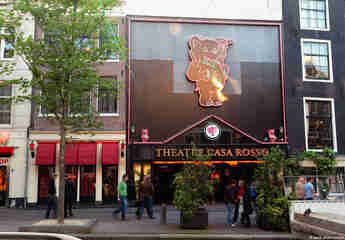
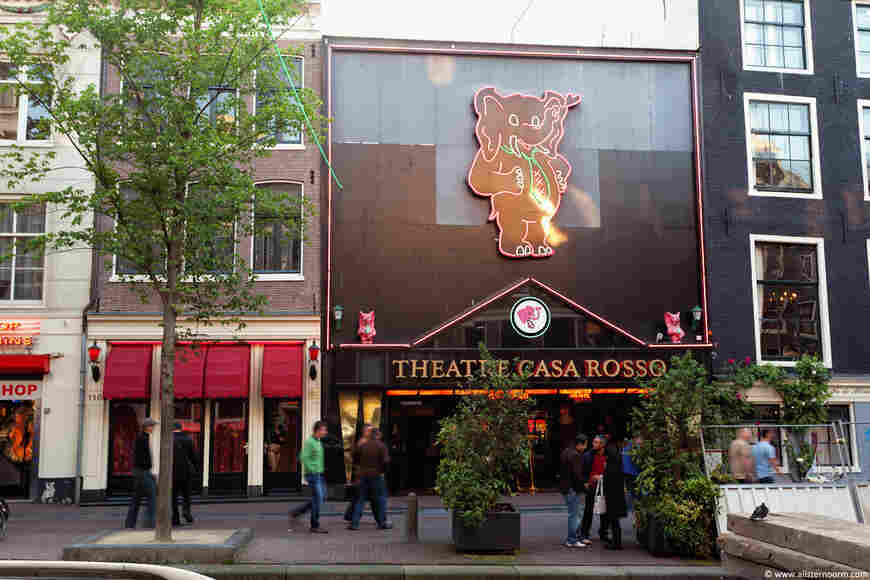
Casa Rosso is De Wallen's best-known erotic theater, instantly recognizable by the giant pink elephant on its facade. People come as much for the curiosity factor as for the show itself: live adult cabaret staged right in the middle of Amsterdam's most notorious district.
Reactions are mixed. Some visitors find it more campy than shocking, more tourist spectacle than must-see nightlife. The program is usually built around a series of short acts, so it is best approached as a slice of Amsterdam after-dark folklore rather than a guaranteed highlight.
Even so, the queue outside is often part of the scene, especially later in the evening. If you are curious, Casa Rosso remains one of the neighborhood's classic names — just go in with realistic expectations.

Flickr, Éole
The Red Light District, known locally as De Wallen, is the part of Amsterdam most associated with window prostitution, sex shops, bars, and after-dark tourism. It is also one of the city's oldest neighborhoods, with canals, leaning houses, and narrow lanes that long predate its nightlife reputation.
Erotic Museum

Flickr, fotoquindisono
Amsterdam has no shortage of respectable pleasures — art, canal houses, markets, old churches — but De Wallen has always attracted a different kind of curiosity too. If you want context for that side of the city, the Erotic Museum is one of the easiest places to start.
After a full day of classic sightseeing, this is the kind of stop that shifts the mood of the evening. It leans into Amsterdam's anything-goes mythology without pretending to be high culture.
The museum focuses heavily on the story of De Wallen and Amsterdam's long relationship with sex tourism. Among the displays is a reconstruction of a window booth, complete with a wax figure behind the glass.
Beyond the local angle, the collection ranges across erotic art, fetish culture, voyeurism, bondage, and other corners of sexual history. Expect a mix of figurines, photographs, mannequins, and video installations rather than a polished museum narrative.
And yes, the gift section stays on theme all the way to the door.
Flickr, Tina Monumentalia
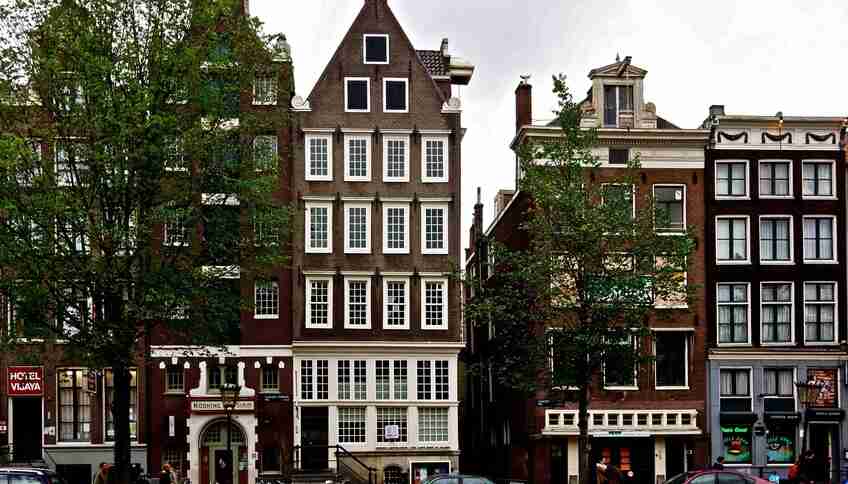
The Amstelkring Museum, better known as Our Lord in the Attic, is one of Amsterdam's most memorable small museums. Hidden in the Red Light District, it occupies a 17th-century canal house bought in 1661 by the Catholic merchant Jan Hartman.
After Amsterdam's Protestant takeover in 1578, Catholic worship was officially restricted. Public services disappeared, but private tolerance had its limits, so Hartman turned the upper floors of his home into a clandestine church for local believers.
That church remained in use for more than two centuries. Today you can still see the altar, organ, and beautifully preserved period rooms, including living quarters and a kitchen that make the whole place feel more like a time capsule than a conventional museum.

Flickr, Abariltur
At first glance, Baba looks like just another De Wallen coffeeshop, but its long-running reputation and laid-back, slightly eccentric interior keep it busy with both regulars and first-timers. Surrounded by bars, sex shops, and constant foot traffic, it is the sort of place people duck into when they want a breather from the street.
The location is undeniably convenient: right around Warmoesstraat and close to Damrak, so it slips easily into an evening walk from Central Station through the old center.
The staff is known for being patient with newcomers, which helps in a city where coffeeshop etiquette can feel confusing at first. If you are curious but inexperienced, this is the sort of place where asking questions does not feel awkward.
Alongside the usual menu, you may also find edibles such as space cake, so not everyone here is coming to smoke.

Flickr, bestbib&tucker
The Dutch approach to sex has long been more pragmatic than scandalized, so it is no surprise Amsterdam ended up with not one but two sex-themed museums. This one is the Sex Museum, not the Erotic Museum — related territory, different collection.
Also known as the Temple of Venus, it sits close to Central Station behind the facade of a narrow old Amsterdam building.
Inside, the rooms connect like a small maze. During renovations, workers reportedly found a few decidedly on-theme historical objects hidden in the building, which only reinforced the feeling that the museum had found the right home. Since opening, it has become one of the city's enduring tourist curiosities.
What began in 1985 as a modest collection of 19th-century objects has grown into a broad survey of erotic art and sexual history across centuries. Expect everything from prints and photographs to sculptures, curiosities, early devices, and the sort of material that turns embarrassment into anthropological interest.