Jaffa Gate

TravelMe, Alina Kovalevich
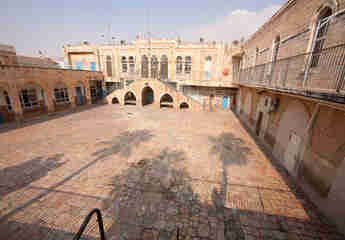
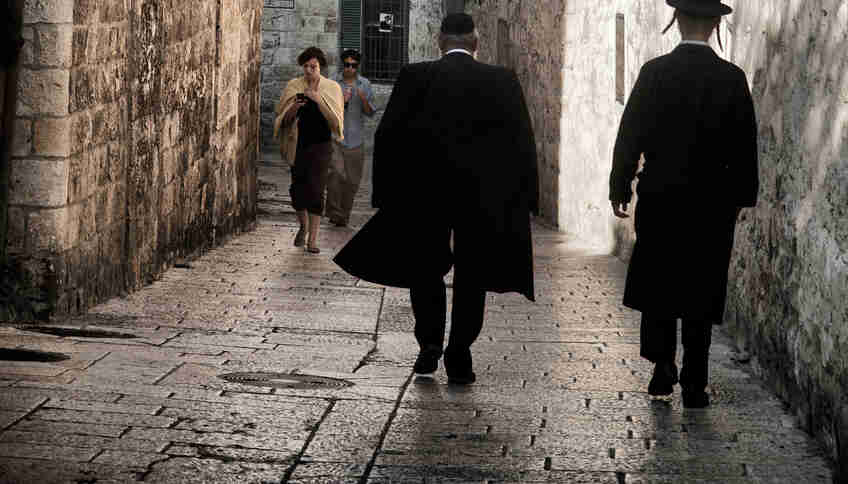
Jaffa Gate (Heb. שער יפו, Sha'ar Yafo; Arab. باب الخليل, Bab al-Khalil — Hebron Gate) is the main gate of the Christian and Armenian quarters of the Old City of Jerusalem, the only gate facing west, toward the Mediterranean Sea. It was built in 1538 by order of the ruler of the Ottoman Empire, Suleiman the Magnificent, on the site of a gate from an earlier period. During the Crusader era, the gate was called David's Gate, after the nearby citadel (Tower of David). It is located in the western part of the Old City at the most important intersection of the western road leading to the port of Jaffa and the southern road leading to Bethlehem and Hebron. These two roads remain Jerusalem's central arteries to this day. During Kaiser Wilhelm II's visit to Jerusalem in 1898, the Ottoman authorities decided to demolish part of the fortress wall at Jaffa Gate and fill in part of the moat at the Tower of David so that the emperor could enter the city unhindered in his carriage.
You will find even more interesting places and walking routes by downloading the audio guide to Jerusalem in the Ever.Travel mobile app.

Flickr, Derek N Winterburn
The Jerusalem History Museum, housed in the Tower of David, is located in the very center of the city near Jaffa Gate. This is an ancient fortress with a centuries-old history, and the museum inside it was founded in 1989. Many of its exhibits are more than 3000 years old! There is also an archaeological park on the museum grounds, where visitors can see with their own eyes the ruins of ancient structures erected in different eras. The museum also features a model of the city, vividly depicting Jerusalem in biblical times. In addition, there are many drawings, models, maps, holograms, and videos telling the story of the ancient city in different periods and under different rulers.
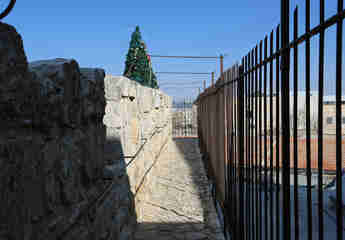
Tourists can see the Old and New Jerusalem from the observation deck located on the fortress wall. It offers a magnificent panoramic view.
Temporary exhibitions are often held at the museum, as well as academic seminars, concerts, and other cultural events. And in the evenings, the "Night Spectacular" begins — a unique light show with no equal anywhere in the world. To beautiful music, images telling of the distant past are projected onto the ancient fortress walls. The performance lasts 45 minutes and takes place under the open sky. Anyone can buy a ticket for a daytime tour of the museum with the right to attend the evening show.

smugmug.com, eschorn
Since the times of Ancient Rome, the "Cardo" has been called the city's central street. It always runs from north to south and lies perpendicular to Decumanus Street ("West – East"). What remained of the Roman Cardo in Jerusalem was discovered only in 1948, when the Jewish Quarter was being reconstructed after the destruction inflicted by the Jordanians.
Cardo Street ran along the Temple Mount. Today there is an archaeological park here, better known as the Davidson Center. An interesting fact: in 2001, a meeting was supposed to take place there between the then Prime Minister of Israel, Ariel Sharon, and the leader of the French-Jewish community. For this occasion, unprecedented security measures were taken: the site was surrounded by a triple security cordon, and the main security service headquarters was located right on Cardo Street. And what was the guards' surprise when two Arab teenagers climbed out of a well right under their noses!
The fact is that a sewer tunnel runs beneath Cardo Street, built by the ancient Romans 19 centuries ago. Israeli police officers went through it and ended up several hundred meters from that well — in the depths of the Arab village of Silwan. Because of this incident, the prime minister's meeting was moved to a less historic and more predictable place. And this tunnel, like many other tunnels of Jerusalem, was blocked off with iron grilles and equipped with surveillance sensors.
Hurva Synagogue

Flickr, Pastor Sam
Observation Deck

Panaramio, ClaudiaViajera
Western Wall

TravelMe, Alina Kovalevich
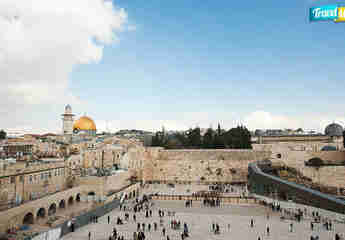
The Western Wall, Wailing Wall, or HaKotel (Heb. הַכֹּתֶל הַמַעֲרָבִי, ha-Kotel ha-Ma'aravi, Ashkenazi pronunciation: Kosel) is a part (485 m long) of the ancient wall around the western slope of the Temple Mount in the Old City of Jerusalem that survived the destruction of the Second Temple by the Romans in 70 CE. It is the greatest shrine of Judaism outside the Temple Mount itself. For many centuries it has been a symbol of faith and hope for many generations of Jews, a place of pilgrimage and prayer. The earliest source linking Jews with the Wall dates to the 4th century. With the beginning of the Zionist movement in the early 20th century, the Wall became one of the causes of friction between the Jewish community and Muslim religious leaders. Early Jewish texts mention the "western wall of the Temple" — however, there is doubt whether these texts refer to the present Western Wall or another wall that stood inside the Temple complex.

TravelMe, Alina Kovalevich
The present Western Wall is only one of the four walls that once enclosed the city. Only the western wall has survived to this day, and in fact we see only part of its structure, 15 meters high — another 12 meters of the wall are hidden underground. Along it and beneath the buildings of the Old City runs an underground tunnel, which archaeologists discovered quite recently. Presumably, it was used to secretly leave the city in the event of an attack by invaders. In addition, a large drain was found in the northern part of the tunnel — further evidence of how well thought out the construction was, and how advanced the civilization was. In the event of flooding, the city was not threatened, since the water simply flowed downward and was carried away through the drain.
In width and height the tunnel is very uneven. In some places the passage is so narrow that only one person can fit, while elsewhere there is an entire hall, spacious and with high ceilings. One of the attractions of this passage is a gigantic stone (length 13.6 m, approximate width — from 3.5 m to 4.5 m). It weighs 517 tons — almost 35 times more than the heaviest stone of the Egyptian pyramid! What is amazing is that the stone is monolithic, its surface is astonishingly even, and it is hard even to imagine that 2.5 thousand years ago people moved it without special equipment.