Acropolis Museum

Flickr, Mikhail Tikhonov
The New Acropolis Museum was founded in Athens on December 22, 2003 and officially opened on June 20, 2009[2]. On the occasion of the Museum's opening, an official ceremony was held headed by the President of Greece Karolos Papoulias, attended by the President of the EU and leaders of foreign countries. Antonis Samaras, who at that time held the post of Minister of Culture, handed over a fragment of a Parthenon metope returned to Greece by the Vatican Museum, symbolizing with this gesture the Greek people's plea for the reunification of the marble fragments taken out of the country with those remaining in their homeland - now in the New Acropolis Museum. The head of the museum creation organization was Dimitrios Pandermalis, professor of archaeology at Aristotle University in Thessaloniki. The museum project was designed by Swiss architect Bernard Tschumi. The first Acropolis Museum was built in 1874.

strofi.gr
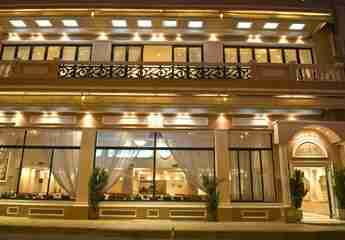
Since its opening in 1975, Restaurant 'Strofi' has been a favorite of Greek and foreign celebrities of every kind. Honored guests here have included, for example, Rudolf Nureyev, Mikhail Baryshnikov, and Mikhail Gorbachev.
For decades, this restaurant at the foot of the sacred Acropolis has remained a model to emulate thanks to its unbeatable combination of traditional cuisine and a modern approach to service.
Guests have three floors and an open rooftop terrace at their disposal, where they can enjoy not only dinner but also a picturesque panorama of the surroundings. The extensive menu offers many Mediterranean appetizers and salads, as well as various grilled meats, fish, seafood, and vegetables. Among the main dishes are kid goat with cheese in parchment or tomato sauce with cumin, pork in lemon sauce or stuffed with sun-dried tomatoes, veal stewed in onion sauce or cooked in a clay pot with potatoes and cheese, lamb in vine leaves, and rooster in wine.
The excellent quality of the ingredients and the skill of the chefs make it possible to prepare wonderfully tasty and aromatic dishes from fairly simple traditional recipes. It is better to reserve a table in advance: good cuisine, a convenient location, and moderate prices ensure the restaurant great popularity.
Pnyx

Flickr, Dann Bleeker Pedersen
Pnyx (Greek Πνὐξ) is a low and small rocky hill in the center of Athens, located near the western slope of the Acropolis hill. Beginning in 507 BC, public assemblies of Athenian citizens were held here — the ecclesia, the first democratic governing body in human history. All citizens of Ancient Athens gathered on the Pnyx. The quorum usually amounted to 5—6 thousand citizens, but when matters of great importance were decided, up to 15 thousand citizens could take part in the assembly. At the same time, the terrace could hold up to 10 thousand people, which is where the hill got its name: translated from Greek, Πνὐξ literally means "crush." From the rostrum of the Pnyx, which has survived to this day, spoke all the most famous ancient Greek orators, among them Pericles, Themistocles, Aristides, Nicias, and Alcibiades. It was here that Demosthenes denounced King Philip II of Macedon in his "Philippics." The Pnyx as such was the embodiment of the democratic principle of "isegoria" (Greek.
Areopagus

Flickr, etnobofin
Areopagus (ancient Greek Ἄρειος πάγος, literally — "hill of Ares") was a governing body in Ancient Athens. It got its name from the place where it met, on the Hill of Ares near the Acropolis. According to legend, on this hill the god Ares was tried for shedding the blood of Poseidon's son[1]. Aeschylus advances a version according to which the hill was named in honor of the Amazons, who set up camp on it during the siege of Athens. It arose in the era of the clan-tribal system as a council of elders. It consisted of life members, replenished from former archons, the candidates for whom were nominated and elected by the areopagus. It possessed broad political, judicial, supervisory, and religious power. It included 9 archons. The Areopagus was a bulwark of aristocracy, later of oligarchy. The main functions of the areopagus were oversight of compliance with the laws and trials in cases related to murders. The restriction of the power of the areopagus began with the development of Athenian slave-owning democracy. The reform of Ephialtes (462 BC.
Athenian Agora

Flickr, MarcProudfoot
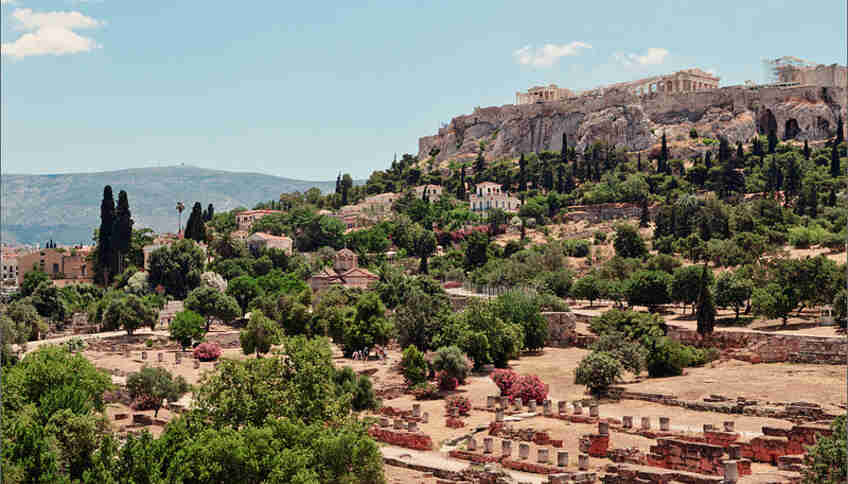
The Athenian Agora is the city square of Athens, occupying an area of approximately 5 hectares and located on a gentle slope to the northwest of the Acropolis. The Greek word agora (ancient Greek ἀγορά) comes from a verb meaning "to gather, to summon." This corresponds to the purpose of the Agora as the main meeting place in the city. In antiquity, the Athenian Agora became the center of secular and public life, civic administration and the courts, the most important place of trade and enterprise, a theatrical stage for Greek drama, a venue for athletic competitions, and a favorite place for intellectual discussions. Since 1931, archaeological excavations have been carried out throughout the Agora by the American School of Classical Studies under the direction of Leslie Shear. Today the Agora has become a favorite place for tourists wishing to get acquainted with the history of ancient Athens.
Temple of Hephaestus

Flickr, dlobachev
The Temple of Hephaestus, or Hephaisteion (Greek Ναός Ηφαίστου), on the northwestern side of the Athenian Agora, is the best-preserved temple of ancient Athens. The Doric-order temple was built in the period 449—415 BC and was dedicated to the god Hephaestus. The architect is unknown, but in all likelihood it was the same builder who constructed the temple at Cape Sounion and the Temple of Ares on the Agora. From the 7th century until 1834, the Temple of Hephaestus was used as the Orthodox Church of St. George (Greek Ἀγιος Γεώργιος Ακαμάτης), after which it was declared a national monument. After Greece gained independence, King Otto ordered that an exhibition of the central archaeological museum be placed in the temple. The museum moved out of the temple in 1874.
Stoa of Attalos

Flickr, koorosh.nozad
The Stoa of Attalos, or Attalos, is a stoa located on the Athenian Agora. It was built and named in honor of the Pergamene king Attalos II, who ruled in 159—138 BC. Belonging to the Hellenistic era, the stoa is much larger and more magnificent than other earlier buildings in Athens. The dimensions of the stoa are 115x20 meters. Pentelic marble and limestone were used as building materials. Several architectural orders were used in the monument. The outer colonnade of the stoa's base is in the Doric order, while the inner one is Ionic. The first tier includes the Ionic order and a Pergamene interior. Each of the two tiers has two aisles. And along the western wall there are 21 rooms. Each of them has door and window openings. From each pediment of the stoa, one can climb to the upper tier by stairs.
Archaeological Museum of the Athenian Agora

Flickr, hlectronio
The Archaeological Museum of the Athenian Agora is an archaeological museum in Athens located on the site of the Athenian Agora in the reconstructed Stoa of Attalos, originally dated to around 150 BC. A characteristic feature of the Museum of the Athenian Agora is that most of its exhibits are closely connected with Athenian democracy, since the Agora served as the center of public life in Ancient Athens. The Stoa of Attalos was discovered during excavations conducted by the Greek Archaeological Society in the period between 1859 and 1902. In 1953-1956, the original appearance of the stoa was reconstructed specifically so that a collection of finds from the Agora could be housed in its premises. In 1957, the Greek state assumed responsibility for the management and security of the museum, as well as for further archaeological excavations.
Tower of the Winds

Panoramio, rymalis
The Tower of the Winds is the oldest meteorological monument in Athens, 12 meters high and about 8 meters in diameter. The construction of this octagonal tower of Pentelic marble on the Roman Agora is attributed to the astronomer Andronicus of Cyrrhus. Traditionally, this event is dated to the middle of the 1st century BC, although an earlier date cannot be ruled out. In antiquity, the tower was crowned by a weather vane in the form of Triton. The frieze encircling the top of the tower with allegorical depictions of the eight winds has survived — Boreas (north), Kaikias (northeast), Apeliotes (east), Eurus (southeast), Notus (south), Lips (southwest), Zephyrus (west), and Skiron (northwest). Inside the tower there was a clepsydra, which was fed by waters from the Acropolis. In the Middle Ages, the tower was adapted as a church bell tower. At the beginning of the 19th century, it was freed from centuries of accretions. It served as the prototype for the Radcliffe Observatory in Oxford (1794) and the tower of the same name in Sevastopol (1849).

Flickr, Eleanna Kounoupa (Melissa)
The Roman Agora is an architectural complex in the center of Athens, between the Acropolis and Monastiraki, including buildings from different eras. Functionally, the agora was a center of the city's public, economic, political, and cultural life, a place for meetings and gatherings.
The oldest part — the market square, surrounded around the perimeter by shops and storerooms, was built at the beginning of the 1st century, during the period of Roman rule, from donations by Julius Caesar and his associates.
In 15 BC, a public library and a huge 1000-seat concert hall appeared here — a gift to the townspeople from the imperial family. Nearby were the Tholos (the building of the Athenian government) and the Royal Stoa (the residence of the chief judge), as well as several temples and altars.
Only parts of the colonnade of the inner courtyard, the portico (covered gallery) dedicated to Athena Archegetis, and the Tower of the Winds — the oldest weather station — have survived from the ancient structures. Also part of the complex is the Fethiye-Jami mosque, built in 1458 on the ruins of an early Christian basilica — a valuable architectural monument and one of the few material testimonies of the Turkish era in Greece.

Flickr, Christiane Silva Salomoni
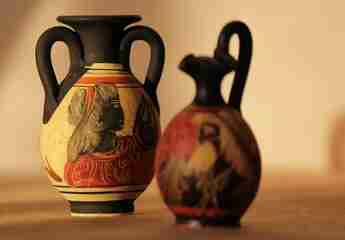
The shop 'Greece Mythos' is akin to a museum: the antique armor and weapons put up for sale, although they are modern copies, are in a sense works of art.
The price tags, it must be said, match — most visitors prefer to gaze at the exhibits rather than buy them. Under the sign "Photography prohibited," one doubly wants to capture the magnificent swords, shields, helmets, and cuirasses — however, one can rely only on one's own visual memory.
Still, if you are ready to spend 150-200 euros on an original souvenir from Greece, do it here: it will be hard to find something similar in beauty and quality of workmanship.
Budget-conscious tourists are advised to pay attention to the discs with Greek music, which are quite inexpensive and will remind you of the trip for a very long time.
Those who do not want to buy anything except postcards and magnets should linger in 'Greece Mythos' a little longer: it is far more interesting to study the history of the development of weapon-making and the evolution of armor from exact copies made with great attention and love than from dry scholarly works.
Finding the legendary shop is easy; it is located not far from Monastiraki metro station.