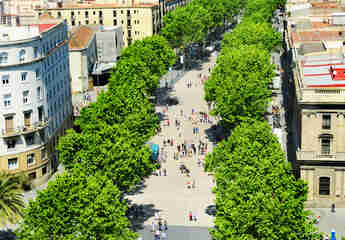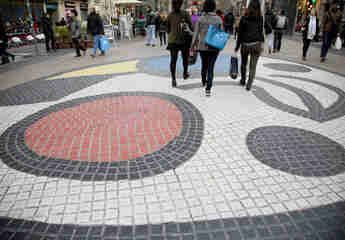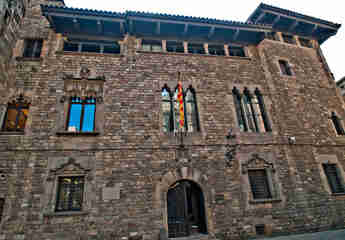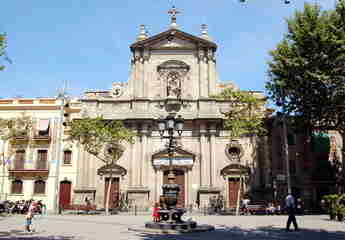
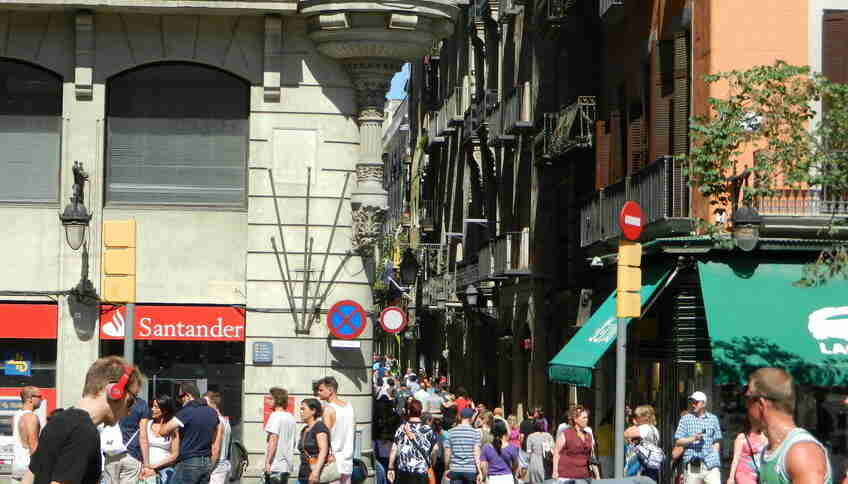
Boqueria pedestrian street, one of the oldest in the city, is located in the famous Gothic Quarter, not far from La Rambla boulevard, the Liceu Theatre, and the metro station of the same name. Narrow and winding, it perfectly conveys the atmosphere of medieval Barcelona, or Barcino, as it was then called.
Legend links this street with the name of Saint Eulalia, patron saint of the Catalan capital. At the beginning of the 4th century, these lands belonged to the Roman Empire, whose rulers cruelly persecuted Christians, including Eulalia's family. Not wishing to put up with the persecutions or betray her faith, the 14-year-old girl began openly and boldly speaking out against the emperor and his governor in Spain. Bursting into a pagan temple, she launched into an angry tirade and threw a handful of earth onto the altar, for which she was flogged and thrown into prison. However, that same night angels descending from heaven healed her wounds and eased the pain.
Seeing this, the governor ordered the punishment to be repeated — and the angels again came to the aid of the innocent Eulalia. This happened thirteen times, and each time the tortures became ever more painful, humiliating, and terrible, yet the girl did not doubt her faith and did not renounce it. Finally, the enraged ruler sentenced her to death.
It was along Boqueria Street that the mangled body of the martyr was carried, and, they say, since then not a single ray of sunshine has fallen on the pavement.