Trip to Tallinn
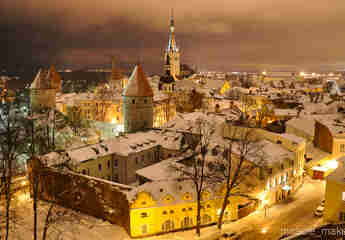
Over its thousand-year history, Tallinn has been ruled by Danes, Germans, Swedes, and Russians, and as a result it has developed a truly distinctive character in which military austerity blends with rustic simplicity, and history with modernity.

The medieval fortress walls recall the times when battles for the city were constant, while the home-style food in its restaurants brings to mind a grandmother’s hospitality. Here you can walk along old cobblestones to a modern art museum, stroll past the palaces of Russian emperors and then browse fashionable shops, feed squirrels in a park, and have lunch in a stylish restaurant. A trip to Tallinn – a crossroads of cultures and eras – leaves no one indifferent. Its Old Town, by the way, is on the UNESCO World Heritage List.
How to Get to Tallinn?
Residents of St. Petersburg and nearby regions are lucky: they can reach Tallinn by bus quite cheaply and fairly quickly. More than ten comfortable buses leave St. Petersburg’s bus stations every day, taking passengers to the Estonian capital in just 6–7 hours. The St. Petersburg–Tallinn train also takes about seven hours. A direct Aeroflot or Estonian Air flight, meanwhile, gets you there in just 55 minutes.

From Moscow, it is still more convenient to fly, especially since a direct Aeroflot or Estonian Air flight takes only an hour and a half. Finnair, airBaltic, and other airlines also fly to Tallinn with one connection. Prefer trains? Head to Leningradsky Station: board in the Russian capital in the evening and step out in the Estonian capital early the next morning. You can also go by bus, though you will spend at least 12 hours on the road. Even so, that option is quite popular with travelers looking to save a little on transport costs.
From Ukraine, the easiest way to reach Estonia is by plane. A direct Estonian Air flight from Kyiv to Tallinn takes less than two hours. airBaltic, Aeroflot, and LOT also offer connecting flights.
The cheapest flights to Tallinn can be found on Aviasales.ru. On this site, you can see dozens of offers from different airlines and agencies in real time, and easily use filters to choose those that suit your budget, dates, and departure times. To learn how to use this service to best advantage, read Ever.Travel’s review.
Where to Stay in Tallinn?
Tallinn is fairly small compared with other European capitals. Its historic center – the Old Town – is even smaller, compactly laid out on a tiny patch of land just about one by one and a half kilometers. This is exactly where Tallinn’s main sights are located.
Surprising but true: in the city center you can find both upscale hotels and quite budget-friendly hostels. So don’t hesitate – stay right in the center so you do not waste extra time or money on transport.

Map of Tallinn’s Districts
Old Town
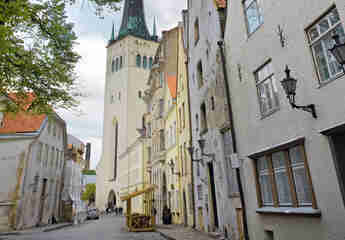
Tallinn’s historic heart, the Vanalinn district, is on the UNESCO World Heritage List and protected by the state. That means owners are not allowed to radically change the exterior or interior appearance of the buildings. So you can stay in a genuine medieval hotel, where suits of armor stand in the corridors and the rooms are decorated in a rustic style rich in stone and wood. Some buildings already served as inns in the 16th–17th centuries, and their restaurants still serve simple, hearty national dishes today.

The Three Sisters Boutique Hotel is located in the historic part of Tallinn, in a beautiful 14th-century building.
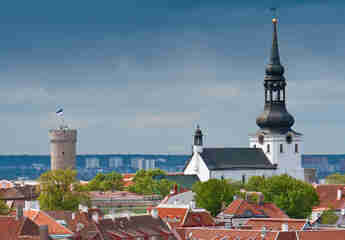
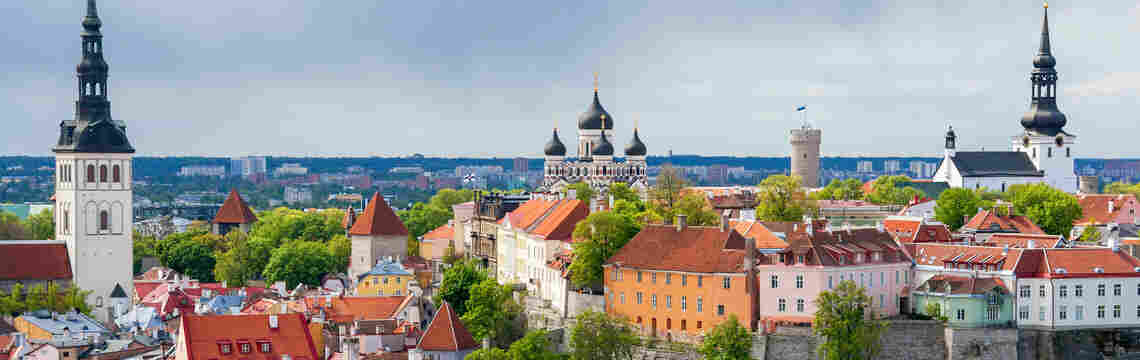
By staying in the center, you will enjoy magnificent views of tiled roofs and ancient cathedrals, and you will easily be able to explore the entire Old Town on foot. For those who are not bothered by the noise of tourist crowds outside the windows, a hotel around Town Hall Square is ideal. A few minutes’ walk in different directions will take you to most of the interesting buildings and streets in central Tallinn: the Town Hall and Town Hall Pharmacy, the Church of the Holy Spirit and the Great Guild, Vene Street and St. Catherine’s Passage, where the city’s best souvenirs are made. Walk a little farther and you will see the famous Long Hermann Tower, the Danish King’s Garden, and Long Leg and Short Leg Streets. It is also worth making a separate visit to Toompea: see Alexander Nevsky Cathedral, stroll along the Street of the Drunken Knight, and step out onto the Kohtu and Patkuli viewing platforms.

Schlössle Hotel is in the center of the Old Town, in buildings dating from the 13th and 14th centuries.
If you are looking for a quieter place, pay attention to hotels hidden away on winding little streets. Altogether, the Old Town has more than a hundred hotels and hostels in different price ranges. Beyond the historic center, meanwhile, there are also many hotels arranged almost in a ring around it that are well worth your attention.

Hotel L'Ermitage is located 300 meters from historic Toompea Castle and a 5-minute walk from Town Hall Square.
If you are traveling to Tallinn in the ‘high season’ – in summer and from December to January – it is best to arrange your accommodation in advance. Booking.com is an excellent site for this, with all kinds of offers collected in one place, from hostels and apartments to the best hotels and inns. With this service, you can instantly check whether the room you want is available for your dates, see photos, and read reviews from guests who have already stayed there. For more on how to book a hotel on Booking.com, read our review.
Visa for Estonia
The process of obtaining an Estonian visa on your own differs little from getting visas for other Schengen countries. But the consular fee and the list of required documents change from time to time, so we advise checking the latest information on the official website of the Estonian Visa Application Centre in Russia. Citizens of Ukraine can contact the Consular Section of the Estonian Embassy in Kyiv.

To save you from dealing with documents, trips to the visa center, and other bureaucratic complications, there is the VisaToHome service. The staff of this company fill out all the necessary forms for you, come to collect your passport, take it to the consulate, and bring it back. You receive the finished document with the coveted stamp without leaving home!
How to Get from Tallinn Airport to the City
Lennart Meri Airport (Est. Lennart Meri Tallinna lennujaam, also Ülemiste lennujaam) is located just 4 km from central Tallinn. The most convenient way to get to the city is bus No. 90, with Airport-City Centre written on the side. Its route passes most popular hotels.

If you are just passing through Tallinn, it is better to take bus No. 2. It goes via the bus station, the Old Town, and the passenger seaport – that is, practically all possible transfer points. Both routes leave every half hour, the fare is 2–3 euros, and you can buy a ticket directly from the driver.
Since the airport is practically within the city limits, you can get to central Tallinn in just 20 minutes. But how do you find your chosen hotel among the maze of narrow streets? The most reliable way to get to your destination quickly and comfortably is a KiwiTaxi transfer. Thanks to this service, you can order a taxi while still at home, know exactly how much it will cost, and be sure you will be met at the airport.
Car Rental in Tallinn
If you are planning not only to walk around Tallinn but also to visit Tartu or Pärnu, it is best to rent a car so you do not depend on urban and suburban transport. An excellent selection of cars from different agencies can be found on RentalCars.com. The rating and review system will help you find your bearings easily, and we will show you how to find the best deals on RentalCars.com!
Public Transport in Tallinn
Tallinn has trams and trolleybuses, but buses are the main form of public transport. They run from 6:00 to 23:00 on almost 70 routes. Tickets can be bought from the driver (1.6 euros) or at a kiosk (1.1 euros). You can also buy passes for unlimited travel for 24 hours (3 euros), 72 hours (5 euros), and 150 hours (6 euros). Schoolchildren and students with an ISIC card get a 50% discount.
Taxis in Tallinn are fairly affordable. There is no single tariff, but a price list should be posted on the right rear door of every car. The approximate initial fare is 2–5 euros, and each kilometer costs 0.5 euros by day and 1 euro at night. There should also be a white plastic card in the center of the dashboard with the driver’s photo and name.
Tallinn Card Tourist Pass

The Tallinn Card gives you free admission to 40 museums, travel on public transport, a sightseeing tour, and even a night-club visit, and it also offers discounts at the water park, in shops, cafés, and restaurants. The card costs 29 euros for 24 hours, 43 euros for 48 hours, and 52 euros for 72 hours; for children under 14 it is half price. Please note that many Tallinn museums are closed on Mondays and Tuesdays.
Tours in Tallinn
Figuring out what to see in Tallinn is easy with the help of an interactive attractions map. Just mark the places you would like to see, spread them across several days of your trip, and turn them into ready-made walking routes. Then download the free Ever.Travel mobile app and log in with the same account you use on the website. Voilà – your plans sync between the web version and your smartphone! To learn more about how it works, read our review.

If you want ready-made ideas, we recommend exploring our Tallinn guides:

You can walk around the Estonian capital for endlessly long hours, enjoying its views, but sometimes you want someone to tell you all the city’s secrets and mysteries in person. That is exactly what Excursiopedia is for. It is a site that brings together the best offers from professional guides in Tallinn. Here are just a few examples:
Mobile Service and Internet in Estonia
In Tallinn, you will easily find free Wi-Fi in cafés, restaurants, shopping centers, and other public places. Local mobile operators also offer fairly attractive rates for mobile internet. For example, Tele2 has a prepaid Smart internet card: for 2.9 euros you get 10 GB of traffic for 7 days.
You can also buy a 1-euro Elisa or EMT ‘talk card,’ on which you can activate the offer that suits you – inexpensive calls to Russia or a mobile data package.
Shopping in Tallinn
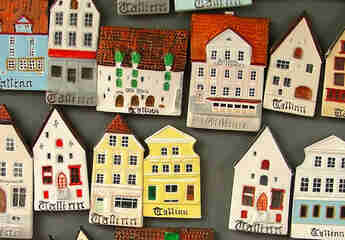
Tallinn’s main shopping street is Viru (Viru): here you will find shops of famous European brands, boutiques by Estonian designers, and of course plenty of souvenir stores. There is a large choice of handmade items in leather, glass, ceramics, wood, stone, and metal. It is hard to resist brightly knitted things such as sweaters, socks, scarves, and mittens. Also pay attention to linen goods and juniper-wood tableware.

Shop opening hours are usually 9:00 to 18:00 (some until 20:00) on weekdays and 9:00 to 15:00 (some until 18:00) on Saturdays. In the Old Town, you can shop on Sundays as well. Supermarkets and large shopping centers are usually open daily from 10:00 to 20:00–21:00.
Estonian Cuisine
The basis of Estonian cuisine is simple dishes made from quality ingredients available in a northern climate: potatoes, grains, milk, meat, and fish. Popular cold appetizers include marinated sprats, smoked Baltic herring, herring with sour cream and potatoes, bacon, ham, and sült (aspic) with bread.

By the way, Estonia has dozens of kinds of bread – grey bread (seppik), rye, barley, sweet-and-sour, honey, and potato bread. At Christmas they bake piparkoogid – traditional festive spiced cookies.
Be sure to try the national hot dishes: kartuliporss – ‘potato piglets,’ pork baked in mashed potatoes, mulgikapsad – pork stewed with sauerkraut and pearl barley, or mulgipuder – mashed potatoes with pearl barley porridge. To warm up after long walks, try the famous herbal liqueur ‘Vana Tallinn.’
History of Tallinn
The settlement of Kolyvan, located on the site of modern Tallinn, is first mentioned in 1154. In 1219, the Danish king Valdemar II captured the town and ordered a fortress to be built here: these lands were of interest to both the Estonians and the German Order of the Sword, which already controlled the surrounding territory at that time.
The city, then known as Reval, changed hands many times until it was sold to the knights of the Teutonic Order. In the 15th–16th centuries, the city joined the Hanseatic trading league and grew noticeably wealthier. During this period, strong city walls, many new houses, and churches appeared here. However, the outbreak of the Livonian War and the weakening of the order’s position undermined that prosperity.

In 1561, Reval voluntarily swore allegiance to the Swedish crown and became the kingdom’s largest city, surpassing Stockholm in size and trade volume. It was besieged in turn by Poles, Danes, and Russians, and then a plague epidemic broke out, bringing trade – and with it the whole city – into decline. In the 17th century, growth began again: new military fortifications, manufactories, a printing house, and schools appeared.
In 1710, during the Great Northern War, Reval was conquered by the Russian Empire and became one of the main bases of the Baltic Fleet. A park was laid out and a palace was built in the city’s surroundings. In 1871, after the Baltic Railway was completed, industry and trade began to develop rapidly.
After the First World War, Estonia proclaimed its independence, and Tallinn received its modern name. In 1940, Estonia became part of the USSR. During the Second World War, the city suffered heavily from bombing – up to 40% of its buildings were destroyed. After the war, the city’s boundaries expanded significantly and new residential districts were built. In 1991, Tallinn became the capital of independent Estonia. Today it is the country’s administrative, cultural, and tourist center.

Important to Know:

Public holidays and non-working days:
– January 1 – New Year’s Day
– February 24 – Estonian Independence Day
– Good Friday and Easter
– May 1 – Spring Day
– Pentecost
– June 23 – Victory Day
– June 24 – St. John’s Day (Midsummer Day)
– August 20 – Restoration of Independence Day
– December 24 – Christmas Eve
– December 25 – Christmas Day
– December 26 – Boxing Day. Christmastide.
Our overview is complete, and you can start preparing for your trip to Tallinn with the interactive attractions map. The plan you create there syncs easily with the free Ever.Travel mobile app, which will become your personal guide to the Estonian capital. Travel light, but with a solid baggage of knowledge!
Photo credits: Shutterstock, Booking.com, Flickr: U. Heinze, sloopjonb 1, Miss Mandarina, Tikiman n Tikimum, TOTORORO.RORO.
Also read: