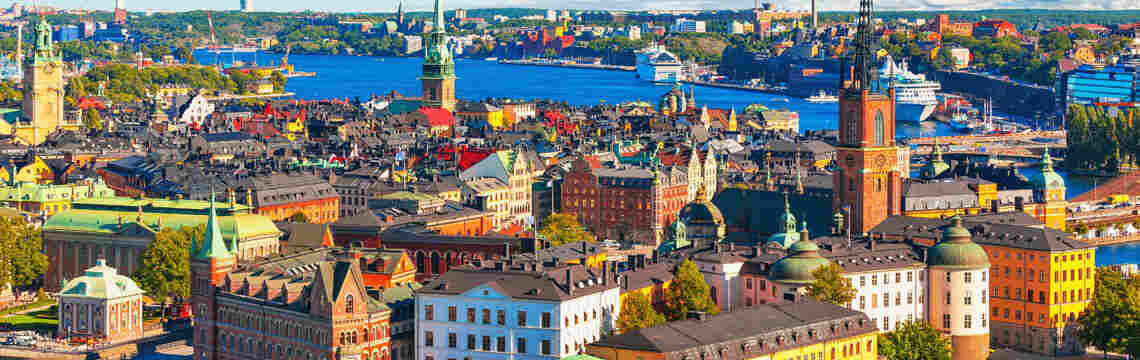
Top sights in Stockholm
1. Gamla Stan
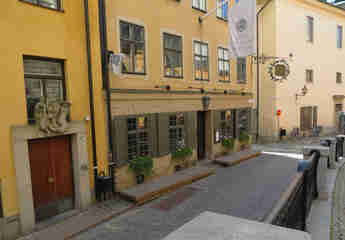
This district on the island of Stadsholmen is the oldest part of the city. Stockholm began to grow from here back in the 13th century. Its cobbled lanes and old houses still preserve a true medieval atmosphere. The island is also packed with sights: the Royal Palace, the Nobel Museum, St. Nicholas Church, the narrowest alley and the city's tiniest monument…

Flickr, mad_ruth
2. The Royal Palace
Swedish monarchs have lived in this lavish palace for centuries. It was built at the end of the 17th century on the site of a wooden castle that had burned down and once housed the royal chambers. The palace is still an official residence of the royal family, although it is open to visitors every day. With an admission ticket you can tour the royal apartments, the treasury and the antiquities museum. Entry to the chapel is free.

FLICKR, JAWRR
Remember the illustrations from a children's book or cartoon about Karlsson? The houses there were always slightly elongated and topped with round stepped roofs. The same kind of buildings still surround Stortorget Square in Stockholm's Old Town. Their façades are decorated with ornate lanterns and decorative brackets that help historians identify the era in which they were built. In the evenings – especially around Christmas – the square looks truly magical.

Flickr, andtor
4. The Vasa
Only in Stockholm can you see the world's only surviving 17th-century warship. This sailing vessel was built as the flagship of the Swedish fleet, but because of design mistakes it sank on its very first voyage out of the harbour. The ship went down without any battle damage, although it carried 64 bronze cannons. The guns were recovered, but the vessel itself was forgotten for many years… Yet what was a great loss in 1628 became an extraordinary treasure for the modern age. In 1956 the Vasa was found and raised from the seabed, and five years later a museum was built around it – one of Stockholm's most popular attractions to this day.

simsontour.wordpress.com
5. Riddarholmen
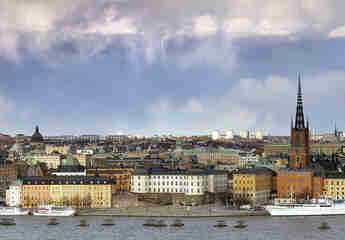
This small island next to Gamla Stan is called the “knights' island” because in the 17th century King Gustav Vasa granted its land to wealthy nobles for the construction of mansions. Before that only Franciscan monks lived here. Today the main reminder of that era is Riddarholmen Church with its tall openwork spire. Built in the 13th century, it is considered Stockholm's oldest church. The temple stands on a very beautiful square named after the city's founder, Birger Jarl.

Flickr, AnyMotion
6. Skansen
In essence, this is an open-air ethnographic museum where you can see all of Sweden in miniature. It features traditional homes and estates from different eras. You can discover how Swedes lived, what crafts they practised and what clothes they wore. Skansen also has a small zoo, cafés serving national dishes, and plenty of souvenir shops and workshops. In summer there are often concerts with folk dancing and games.

cookingintongues.com
7. City Hall
From the waterfront of Riddarholmen you get a wonderful view of the opposite bank, where City Hall stands – a symbol of the Swedish capital. This is where the Nobel Prize banquet is held every year. By tradition it takes place in the Blue Hall, which was originally meant to have blue enamelled walls, but the architect changed his mind while the name stuck. The famous Golden Hall, meanwhile, fully lives up to its name: its walls are covered with pieces of gilded mosaic. After touring the building, be sure to climb to the observation deck at the top of the tower. The view is spectacular!

Flickr, Salvatore Carta
This is definitely not one of those museums where you shuffle from display to display to the monotone muttering of a guide. It is far more engaging than that. You can take part in real scientific experiments, watch films about famous physicists and chemists, and learn plenty about Alfred Nobel and how he invented dynamite.

Flickr, hellorice
9. Drottningholm
This palace was built in the 17th century for Queen Catherine Jagiellon. Today it is a residence of the royal family, who occupy a separate wing, but the building is still open to visitors. Among the most impressive interiors are Queen Hedvig Eleonora's state bedchamber and the Rococo library. In the palace grounds you will also find the Chinese Pavilion and the Court Theatre. The latter still preserves 18th-century stage machinery, so it is fascinating to see how effects like rain and thunder were once created during performances.

Flickr, PriscillaBurcher
10. The ABBA Museum
This interactive museum will delight not only ABBA fans but anyone who loves good music. You can see the band members' stage costumes, dressing rooms and recording studio, play musical instruments yourself and even sing along with holograms of the performers. One of the rooms also contains a red telephone. They say it is magical, because it sometimes rings even though only four people ever knew the number – and you can probably guess who they are ;)

cntraveller.com