
An Independent Trip to Rome
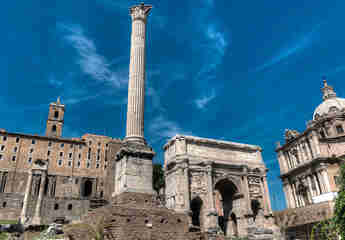
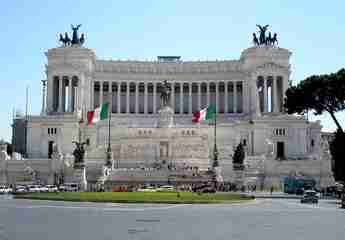
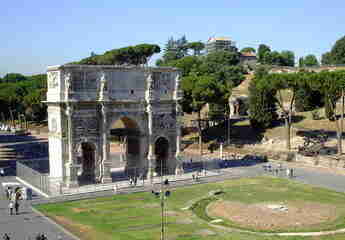
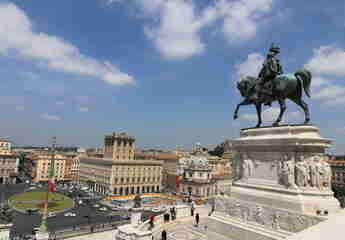
The capital of Italy has stood on its famous seven hills for nearly three thousand years. The city, called eternal since before our era, has seen a great deal and can still astonish. Nowhere else will you find such a mix of eras and styles – in Rome, monuments of antiquity, early Christianity, the Middle Ages, Baroque, and Renaissance have survived not just as individual objects, but as entire ensembles. A trip to Rome is therefore a genuine journey into the past.
In this article we will explain in detail how to plan an independent trip to Rome.
We are travel experts and know how much time and effort goes into planning every trip. That is why we created the “Travel Planner & Guide” mobile app for iPhone and Android. All landmarks, guides, and ready-made routes are part of our free mobile app. Offline maps and GPS come as a bonus. So let’s go!
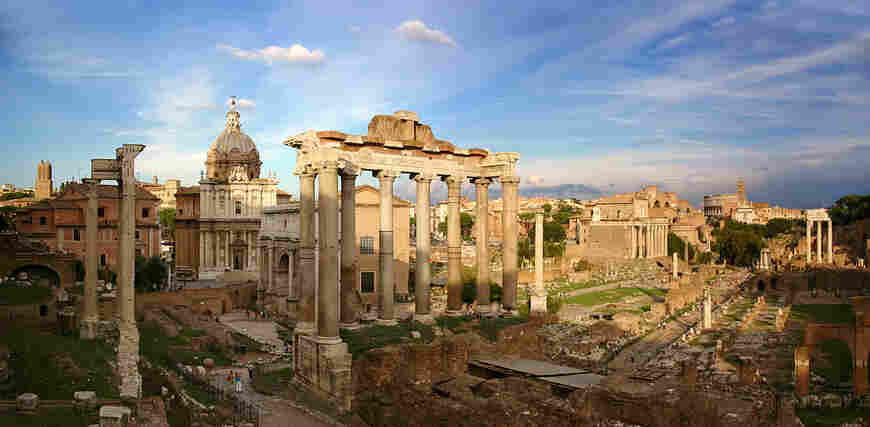
Here every street, every building breathes history. Unlike many European cities, Rome was barely damaged during the 20th-century world wars and has preserved its authentic architecture. Masterpieces of Italian painting and sculpture have also survived magnificently and are on display in numerous museums, churches, and palaces.
No other world capital can rival Rome for sheer number of unique attractions. But that doesn’t mean the city is buried under the dust of ages and lives only in the past. It has everything you need to enjoy life in the here and now: quiet picturesque parks and bustling modern streets, fashionable shops and magical antique stores, delicious food and excellent coffee, and above all a special atmosphere that makes all roads lead here.
How to Get to Rome
The easiest way to reach the Italian capital from Russia, Ukraine, or other CIS countries is by plane. Many airlines offer flights at various prices and conditions. From Moscow and St. Petersburg the most convenient option is a direct Transaero, Aeroflot, or Alitalia flight – the journey takes no more than 5 hours. From Kyiv, only Ukraine International Airlines operates direct flights, getting you to Rome in just 3 hours.

Connecting flights are available from many other carriers – Lufthansa, SwissAir, AirBerlin, Turkish Airlines, WizzAir, SAS, KLM, and Brussels Airlines, among others. If a longer travel time is not a deal-breaker, a connecting flight can save you a lot of money.
To navigate the labyrinth of airfare prices and find the most convenient flight, Ever.Travel recommends using Aviasales. It helps you quickly find the cheapest tickets. The site’s navigation is extremely simple: you can filter by date, departure time, airline, and transfer options. Aviasales aggregates offers from hundreds of airlines and ticket agencies, so you’ll easily find a suitable flight. In the Ever.Travel tips section we explain in detail how to buy cheap plane tickets with Aviasales.
Where to Stay in Rome
Rome is a fairly large city, so choosing the right area to stay in is worth some thought. A hotel, apartment, or hostel in the right neighbourhood guarantees that you’ll have time for every landmark on your list without spending hours getting there. Each district of the Eternal City has its own appeal, so it pays to invest a little time in choosing your base – and then your Roman holiday will be both productive and enjoyable.

Map of Rome’s Districts
Every time you book hotels on Booking.com through our site, you help us describe one more place, create one more route, or develop one more city. Thank you for that!
banner booking
Historic Centre
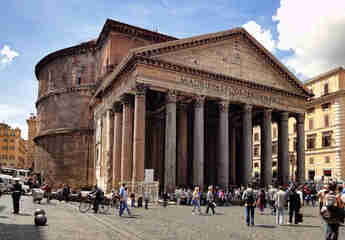
This area undoubtedly has the highest concentration of sights that every traveller wants to see, especially on a first visit to Rome. Piazza Navona, the Pantheon, the Trevi Fountain, and the Spanish Steps are all here – the names alone fire up the imagination!
All of these sights are within walking distance of one another, so you won’t even need to worry about transport. On top of that, there are shopping quarters with the most luxurious boutiques, plus countless cafés, bars, and restaurants. It’s always teeming with tourists and almost always quite noisy.
Prices for the most modest hotel start at €120–130 per night. It’s clearly not the cheapest option, but living in the very heart of the Eternal City is worth every cent!

Navona Palace Residenze Di Charme is housed in a 17th-century building in the historic centre of Rome, 150 metres from Piazza Navona.
Termini
One of Rome’s most popular areas for accommodation is the neighbourhood around Termini railway station. It’s very close to the historic centre and literally packed with hotels – you’ll easily find lodging to suit any taste and budget, with the Colosseum and the Roman Forum just a stone’s throw away! There are also masses of shops and shopping centres here.
The flipside of these advantages is the station’s proximity. The Termini area has its share of unlicensed street vendors, homeless people, pickpockets, and other petty-crime risks. We therefore recommend reading hotel reviews carefully, keeping an eye on your belongings during walks, and avoiding dubious side streets at night.

Palazzo Montemartini is located in the centre of Rome, 500 metres from the Baths of Diocletian and Termini station.
Trastevere
In recent years the district on the west bank of the Tiber has become increasingly popular with tourists. Although it is somewhat removed from the main landmarks, here you’ll be immersed in the atmosphere of the real Rome – narrow medieval lanes and centuries-old buildings.
That said, there are plenty of interesting sights here too – for example, the Basilica di Santa Maria in Trastevere, the Basilica di Santa Cecilia in Trastevere, the Portico of Octavia, and the Great Synagogue. We’ve gathered these and other landmarks into one self-guided walking route.
Hotels in Trastevere are already a bit cheaper, but finding a vacancy is not always easy. Locals cherish the peace and cosiness of this neighbourhood not least because of its many authentic cafés, pizzerias, and trattorias where Romans themselves love to spend their evenings.

Domus 78 is located in Trastevere, a 5-minute walk from the Basilica di Santa Maria in Trastevere and Piazza Trilussa.
Prati
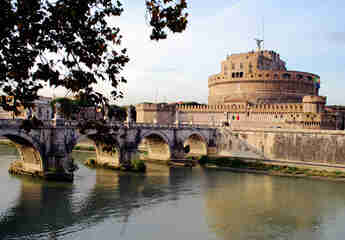
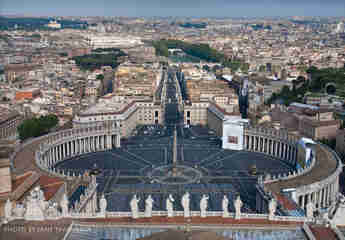
The Prati district near the Vatican is often underestimated by tourists. The assumption is that beyond St. Peter’s Basilica, the Vatican Museums, and Castel Sant’Angelo there’s nothing. But honestly – isn’t that already quite a lot?
Prati looks nothing like Rome’s historic centre. Instead of narrow cobblestone lanes you’ll find fairly wide streets and even boulevards; smart restaurants outnumber tiny pizzerias, and mid-range shops are more common than designer boutiques.
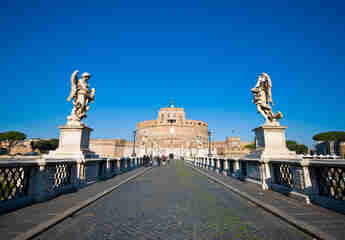
Accommodation prices in this area are quite affordable, and you won’t encounter the hustle and bustle of the Termini or Piazza Navona neighbourhoods. At the same time, a 15-minute stroll across the gorgeous Ponte Sant’Angelo brings you right into the heart of the Eternal City’s tourist scene.

St. Peter Guest House is just steps from Ottaviano metro station and a few minutes’ walk from the Vatican.
The easiest way to decide which neighbourhood to stay in is with Booking.com. The site lists virtually every hotel in Rome. You can search as a list with filters, or on a map, armed with everything we’ve just told you. On Booking.com you’ll easily find a hotel, browse its photos, and read reviews from previous guests.
Every time you book hotels on Booking.com through our site, you help us describe one more place, create one more route, or develop one more city. Thank you for that!
If exclusivity matters to you as much as price, we recommend an article by our travel expert Anatoly Selyaninov, who picked 5 truly unforgettable hotels in Rome.
Italian Visa
To enter Italy, citizens of Russia and CIS countries must obtain a Schengen visa. It is usually issued for six months, during which you may stay abroad for up to 90 days. There is a possibility of extending the visa to one year on a repeat application, or even 2–3 years if you previously held a one-year visa.
The standard processing time for an Italian visa is 5 days, but during peak tourist season it may take up to a week and a half, so we recommend getting all your paperwork in order well in advance.

Since prices, processing times, documentation requirements, and other conditions for Schengen visas change from time to time, we recommend checking the latest information on the official website of the Italian Visa Centre in Moscow or St. Petersburg. Ukrainian citizens can contact the Italian Visa Centre in their region for further details.
Getting from Rome’s Airport to the City
Leonardo da Vinci International Airport (Fiumicino Airport) is about 30 km from Rome. There are several ways to get from here to the city centre:

Budget airlines fly into Ciampino Airport, which is even closer to the capital and connected to it by rail, bus, and metro. A taxi from here costs €30–40.
Car Rental in Rome
Drop all stereotypes and forget about group tours – you can explore all of Italy on your own, not just Rome, simply by renting a car. Hiring a vehicle in Rome through RentalCars is a tried-and-tested way to get the most out of Italy’s beauty. You’ll be amazed at how many wonderful places await in small provincial towns and major cities alike – Florence, Milan, Venice… And remember, other countries are just a few hours’ drive away: France, Switzerland, Austria – all reachable on your own schedule. Treat yourself to the freedom of the open road! Read more about RentalCars in our review.
Public Transport in Rome
A universal travel pass covers all forms of public transport – metro, bus, tram, and one trolleybus route. You can buy it at metro-entrance ticket offices, at stops, and at newspaper and tobacco kiosks. After 21:00 bus drivers also sell tickets, but at 1.5 times the normal price.

Rome metro map in higher resolution and on the official website
Don’t forget to validate your tickets in the yellow machines! Note that tickets in Rome are not valid for 24 hours from validation but by calendar day, until 23:59.
The bus is considered the most convenient way to get around the city, with an extensive route network including night services and short headways. To board, you need to flag down the driver at the stop; to alight, press one of the buttons inside the bus. At the ATAC information kiosk in front of Termini station you can pick up a full bus-route map.
ROMA PASS Tourist Card
Costs €38.50 and is valid for three days. Available on the official website, at metro ticket offices (not all stations), at tourist information points (Punti Informativi Turistici / PIT), in museums, and at archaeological sites. It entitles you to:
Self-Guided Tours of Rome
The most budget-friendly way to get to know the city is to plan your own walks. That’s exactly why we created the "Travel Planner & Guide" mobile app for iPhone and Android – ready-made routes and walks, hundreds of landmarks, an offline map, and GPS – everything you need to explore a new city.
Ready-Made Routes and Walks in Rome
You can also see the city’s main sights aboard hop-on-hop-off sightseeing buses. Tickets are usually valid for unlimited rides within 24 or 48 hours. A 48-hour pass costs €15–30. Rome also has sightseeing trams and boats.

Mobile Phone and Internet in Italy
The most popular carriers are Vodafone, TIM, and Wind. A SIM card costs around €15–25, most of which goes onto your balance. Tariffs are roughly the same, and there are special offers for tourists. PosteMobile offers cheap calls and can be activated at any post office. By law you must show your passport when purchasing a SIM. Sometimes cards do not activate in foreign phones – in that case just ask the seller for help.
Take note of the Digit Roma municipal project, which provides free internet access for 4 hours a day via a network of hotspots. Registration requires an Italian SIM card.
Shopping in Rome
Rome’s shops are generally open from 9:00 to 19:00 or 19:30, with a 2–3 hour midday break (roughly 13:00 to 16:00); Sundays are usually a day off.
Twice a year, sales with discounts of up to 70% take place: winter sales in January–February and summer sales in July–August. Prices in Italy are considered among the lowest in Europe. Especially good bargains can be found at Rome’s outlet malls.

The most expensive shops are clustered around Piazza di Spagna, while more affordable ones line Via del Corso. Another popular shopping street, Via Nazionale, stretches from Termini station. The Esquilino food market is famous for delicious goods from around the world. At weekends, flea markets pop up in various neighbourhoods.
Roman Cuisine
Roman cuisine is rooted in simple, hearty working-class food. The best-known example is pasta carbonara, always with a raw egg. Classic dishes include “Saltimbocca alla romana” – veal slices wrapped in Parma ham and braised with sage in white wine, and “Trippa alla romana” – braised beef tripe with spices.

Only in Rome can you try “Coda alla Vaccinara” (oxtail stew) and “Rigatoni alla Pajata” (pasta with calf intestines). Those not ready to experiment can enjoy the exquisite taste of braised artichokes (carciofi), as well as various sweets – for instance, cream-filled buns (Maritozzo con la panna).
Restaurants often include a service charge (servizio) of up to 15% in the bill. But if you leave a few extra euros on top, nobody will mind.
By the way, all over Rome you’ll find small public drinking fountains. Don’t hesitate to drink from them and fill up your water bottles.
History of Rome
Rome was founded in 753 BC, and by the beginning of the Common Era had become the capital of the Roman Empire, which conquered almost all of Europe and the Mediterranean. In the 4th century AD the city became the centre of the Christian world, and its ruler – the Pope – the most powerful person in Europe. In the 5th century barbarian invasions brought Rome into decline, but by the 9th century it had restored its standing as the capital of the Holy Roman Empire.

The deeply religious Middle Ages left the city a legacy of magnificent churches and cathedrals. By the 15th century Renaissance ideas swept through Rome, drawing the greatest artists of the age in search of inspiration and recognition. In 1870 it became the capital of a reunified Italy and began actively developing and building new districts.
Good to Know

Holidays and public days off:
– 1 January – New Year’s Day (Capodanno)
– 6 January – Epiphany (Epifania di N.S.)
– 25 April – Liberation Day (Anniversario della Liberazione)
– 1 May – Labour Day (Festa del Lavoro)
– 2 June – Republic Day (Festa della Repubblica)
– 15 August – Assumption of the Blessed Virgin Mary (Ferragosto)
– 1 November – All Saints’ Day (Tutti i Santi)
– 8 December – Immaculate Conception (Immacolata Concezione)
– 24–25 December – Christmas (Natale)
– Easter Sunday and Easter Monday (Pasqua)

We think we’ve covered the essentials about Rome – now it’s time for the most important part: planning your trip. You can build your itinerary and use ready-made routes by downloading our free mobile app for iPhone and Android.
Photos by Evgeniya Tsvankina, Shutterstock, Booking.com, Flickr: jp.marottta, cherui, So Cal Metro, emanuele75.
Read Also: