A Trip to Paris
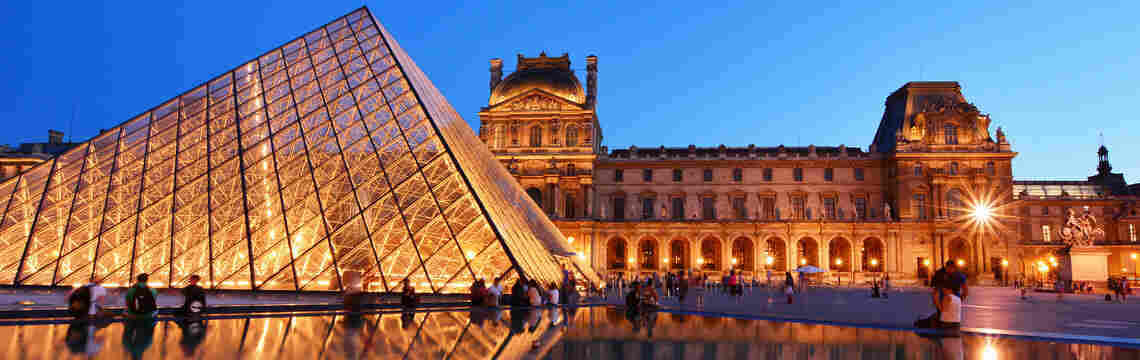
Paris is the city people dream about. World-famous landmarks are simply off the charts here – the Eiffel Tower, Notre-Dame, the Louvre, Moulin Rouge, Montmartre… Add cosy restaurants, charming narrow lanes, scenic parks, and colourful locals, and you will see why great writers and artists sought – and found – their inspiration in Paris.
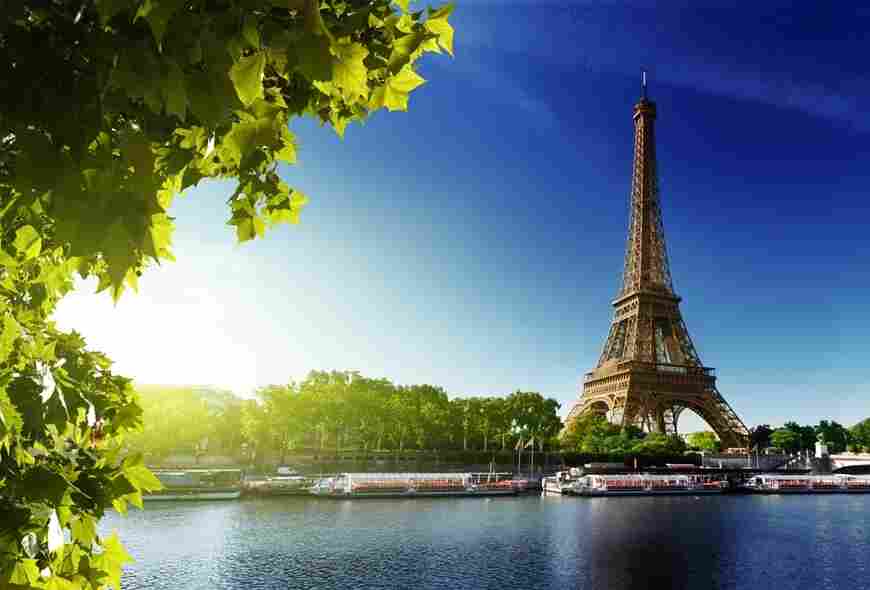
Don't forget, though, that this is a city of millions with busy traffic, vast distances, and crowds of visitors – not a movie set. A trip to Paris is full of contrasts: it is a city of grandiose palaces and shabby facades, of romantic love and brutal revolutions, of high art and simple pleasures. It may not be exactly what you imagined, but give it a chance – and Paris will win you over!
How to Get to Paris
The quickest and most convenient way to reach Paris from Moscow, Saint Petersburg, or Kyiv is by air. Several airlines offer non-stop flights, including Aeroflot, Transaero, Air France, and Aigle Azur. The flight from Moscow takes about four hours; from Saint Petersburg it is even shorter. From Kyiv, Ukraine International Airlines or Air France will get you to the French capital in roughly 3.5 hours. Many carriers also offer connecting flights that take longer but cost considerably less than direct ones.

The Aviasales service can help you find the most convenient and affordable flight faster. It offers flexible filters that let you specify departure dates and times, the number of stops, and preferred airports. Most importantly, it lets you compare prices across dozens of airlines and ticket agencies. Read our Ever.Travel review for more details.
Where to Stay in Paris
Paris is beautiful everywhere – from the tip of the Eiffel Tower to the Luxembourg Garden, from Montmartre to Montparnasse. Each of the city's 20 arrondissements has its own charm. Still, some neighbourhoods are better suited for a tourist stay, especially if you are only here for a few days and want to see as much as possible.

Map of Paris arrondissements
City Centre
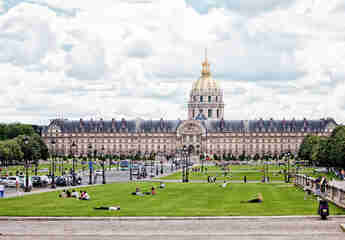
The ideal option is to find accommodation in central Paris, along the banks of the Seine. Arrondissements 1 through 7 form the historic and tourist heart of the city. Here you can visit the most famous Parisian landmarks and museums, admire the stunning architecture, and understand why this city is considered the most romantic in the world. The Louvre, Notre-Dame, Musee d'Orsay, the Tuileries Gardens, Les Invalides, the Latin Quarter, the Saint-Germain neighbourhood, and of course the Eiffel Tower – all of these will be within walking distance if you choose a hotel in central Paris.

L'Empire Paris hotel is just 300 metres from the Louvre! The Tuileries Garden and Notre-Dame Cathedral are a 10–15-minute walk away.
Champs-Elysees and Opera
The 8th and 9th arrondissements border the city centre and are home to the Champs-Elysees, the Arc de Triomphe, the Palais Garnier, plus boutiques, shops, department stores, and non-stop shopping! If you have come to the world's fashion capital not just for sightseeing but also for shopping at Au Printemps, Galeries Lafayette, or flagship stores of the world's top designers, pick a hotel close to this hub of style and French chic.

Hotel Powers is a historic private mansion decorated in traditional French style, furnished with antiques and wood panelling.
Montmartre
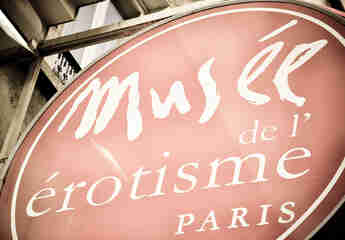
Once a sleepy outskirt, in the 19th century this neighbourhood became the epicentre of bohemian life and gave the world some of its greatest artistic and literary geniuses. Today Montmartre is anything but quiet – it buzzes with energy, especially at night, thanks to the legendary Moulin Rouge cabaret and hundreds of restaurants and cafes, including the famous La Mere Catherine and Moulin de la Galette. On Place du Tertre, where Picasso and Dali once lived and worked, Parisian artists sketch tourists, while Place Pigalle – known as Paris's red-light district – will surprise you with an erotica museum and numerous adult shops. Rising above it all is a beacon of beauty and grandeur – the snow-white Sacre-Coeur Basilica.

Hotel Montmartre Mon Amour is just 200 metres from the famous Sacre-Coeur Basilica. Moulin Rouge and Place du Tertre are a 10-minute walk away.
To find a suitable hotel in any Paris neighbourhood we recommend Booking.com. Beyond its extensive database of hotels and apartments, it is especially valuable for guest ratings left by people who have already stayed there. Their reviews help you weigh every detail – street noise, affordable cafes nearby, distance to the metro, and more. For tips on finding the best deals on Booking.com, check our Ever.Travel guide. We also recommend a review by our travel expert Anatoly Selyaninov, who curated a selection of hotels that rival the city's landmarks themselves.
Visa for France
France is part of the Schengen Area, so you will need a Schengen visa to enter the country. You must submit a set of documents to obtain one. For the exact requirements and fees, check the official websites of the French Visa Centre in your country.
Typically, on your first application you will receive a six-month visa allowing stays of up to 90 days. Subsequent applications may result in a visa valid for one or two years.

Applying for a Schengen visa can seem daunting, especially if it is your first time. All your documents must be in perfect order, because a rejection could ruin your holiday plans. If you are not confident about navigating the bureaucracy – or simply don't have the time – consider using the VisaToHome service. All you need to do is take a few photos, answer some questions on their website, and hand the paperwork to a courier; the specialists handle the rest. A few days later your passport with the coveted visa will be delivered straight to your door!
Getting from Paris Airport to the City
Paris-Charles de Gaulle Airport (L'aeroport de Paris-Charles-de-Gaulle), also known as Roissy-Charles-de-Gaulle – one of the world's largest airports, located 25 km from the capital. A trip into Paris by public transport costs between 6 and 12 euros.
RER commuter trains (Line B) connect the airport to the city centre and Gare du Nord, where you can transfer to the metro or other lines. Trains run every 12–15 minutes; the journey takes about half an hour.

Several bus routes also run from the airport to various parts of the city, including night services. The ride takes about an hour.
Taxi ranks are located at the terminal exits. A daytime taxi ride to central Paris costs roughly 60 euros; between 5 pm and 10 am, as well as on weekends and public holidays, fares are about 15 % higher. Budget airlines fly into Beauvais Airport (Aeroport de Beauvais-Tille). It is about 70 km from Paris. A shuttle bus covers the distance in 1.5 hours for 17 euros.
Arriving in Paris late at night with heavy luggage or small children, hunting for a taxi or public transport is no easy task. To avoid the stress, book a transfer from Paris airport to your hotel in advance. We recommend the KiwiTaxi service. On their website you can choose the vehicle you want and see the exact price right away. A 100 % airport meet-and-greet is guaranteed!
Car Hire in Paris
If you want to explore not just Paris but also the surrounding area – for example, Versailles, Fontainebleau, or Disneyland – consider renting a car. It costs a bit more than public transport, but imagine the freedom! With a rental you could easily take a day trip to the French Riviera or even pop into a neighbouring country. The most convenient way to rent a car is via the RentalCars service. It compares prices from several companies, letting you pick the best deal. Read our Ever.Travel review for more details.
Public Transport in Paris
Paris has an extensive bus network – including night routes – and several tram lines. However, the most popular and convenient form of transport is the metro. In fact, the very word "metropolitan" originally referred to the Parisian underground railway.

The Paris Metro holds the record for station density: no point in the city is more than 500 m from the nearest station, and the average travel time between stops is just 2 minutes. The RER commuter rail network operates within Paris much like the metro, except that stations are spaced further apart and trains run less frequently – but faster. Signage is clear – you will easily reach your destination if you follow the signs. Exits are marked “Sortie”.

Paris Metro map – higher resolution available on the official website
Conveniently, a single T+ ticket valid on all forms of public transport in Paris costs 1.90 euros. A book of 10 tickets – a “carnet” – sells for 16.90 euros, saving you money. Ticket machines with English-language menus can be found at almost every station.
Velib Bike Sharing

The city's bike-sharing network is considered part of the public transport system. It is hugely popular and easy to use. To get started, register with a credit card. A 24-hour pass costs 1.70 euros; a weekly pass is 15 euros. A 150-euro deposit is held on your card until the bike is returned. The first 30 minutes are free, after which the rate rises from 1 to 4 euros per half-hour. But nobody stops you from swapping bikes every 30 minutes – there are docking stations everywhere.
Tourist Passes for Paris

Tours and Sightseeing in Paris
Anyone can visit Paris as part of an organised group, but planning the trip yourself is far more exciting! That is exactly what the Ever.Travel website and mobile apps were built for. If you have never used our service, we recommend reading about how easy and convenient it is to plan trips with us. All you need to do is mark the places you want to see on the Paris attractions map and sync your itinerary with the free Ever.Travel mobile app.

If you prefer not to plan, you can use our ready-made Paris guides:

If you want to know absolutely everything about Paris, book a tour with a professional guide. On the Excursiopedia website you can find excellent guides offering over a hundred fascinating walks around Paris. Here are just a few examples:
Mobile and Internet in France
Finding free Wi-Fi in Paris is easy – cafes, shopping centres, squares, and parks offer over 260 hotspots, recognisable by special signs. A hotspot map is available on the official Paris website.
Major mobile carriers: Vodafone, Orange, SFR, Bouygues. Tourists can buy a SIM card for around 10 euros, with 5 euros of credit included. To register a SIM you usually need to provide a local address (your hotel will do). The same card can be used while travelling around Europe – roaming rates are virtually identical.
Shopping in Paris
It is hard to name the single best place to shop in the world's fashion capital, but one thing is certain: you can find absolutely everything here – from haute couture masterpieces to affordable youth brands, from inexpensive souvenirs to fine art. Flea markets, small designer boutiques, luxury shops, and outlet stores – there is something for every taste and budget. The Galeries Lafayette department store is even considered a standalone city attraction.

Sales with discounts of up to 60 % take place twice a year: in January–February and July–August. Most shops are open from 9:00 to 19:00, Monday through Saturday. In tourist areas (Champs-Elysees, Le Marais, Carrousel du Louvre) well-known brand boutiques also open on Sundays. Weekend mornings see numerous open-air street markets as well.
French Cuisine
The number of cafes and restaurants in Paris seems impossible to count. Locals know how to enjoy food and never pass up a culinary pleasure. Everyday fare is quite simple, yet wonderfully flavourful. Besides wine and cheese, Parisians love all sorts of soups: onion, tomato, potato, the Saint-Germain cream soup made from green peas, pot-au-feu – a hearty meat stew – and bouillabaisse with several kinds of fish. Parisian chefs excel at preparing meat and fish, accompanied by a variety of sauces. Moroccan cuisine – especially couscous – is hugely popular. Hot, fragrant crepes (Crepe), filled or plain, sold on nearly every corner, make a perfect snack while exploring the city.

According to the official Paris website, all prices already include a 15 % service charge, so tipping is not obligatory. However, if you want to thank your waiter personally, leaving 5–10 % of the bill is perfectly acceptable. As a side note, the price of food and drinks may vary depending on where you sit: indoors is cheaper, on the terrace – more expensive.
History of Paris
The French capital is believed to be named after the Parisii, a Celtic tribe who lived on the Ile de la Cite as far back as the pre-Christian era. At the dawn of the Common Era, Julius Caesar built a military outpost and town here. Until the 4th century the area was known as Gaul and belonged to the Romans – until the Frankish king Clovis I annexed it and made Paris his capital.
The 12th–13th centuries brought a period of rapid growth: new buildings went up, streets were paved, trade flourished, and a university was founded. From then on, Paris continued to develop – slowly, hampered by plague, wars, and uprisings – but steadily. Artisans and officials, scholars and artists flocked to the city. By the early 18th century its population had reached half a million.

In 1789 Paris made world headlines: under the banner of "Liberty, Equality, Fraternity," citizens stormed the Bastille, igniting the French Revolution. After several decades of terror and chaos, power passed to Napoleon I. The emperor's ten-year rule bequeathed the capital numerous masterpieces.
Napoleon III gave Paris its modern face. The rapidly growing city badly needed replanning. In the second half of the 19th century much of the dense medieval fabric was torn down to make way for wide boulevards and modern buildings. The project was led by Prefect Eugene Haussmann, who – as the story goes – had his own motives. On broad avenues the volatile Parisians could no longer build barricades, while the authorities found it much easier to disperse demonstrations.
Good to Know:

Public holidays:
– 1 January – New Year's Day
– Easter
– 1 May – Labour Day
– 8 May – Victory in Europe Day
– 14 July – Bastille Day
– 15 August – Assumption of Mary
– 1 November – All Saints' Day
– 11 November – Armistice Day
– 25 December – Christmas
Paris also celebrates:
– 14 February – Valentine's Day
– Mardi Gras (Shrove Tuesday) – the European equivalent of a pre-Lenten carnival
– 21 June – Fete de la Musique: parades and concerts take place across the country.
– Third weekend of September – European Heritage Days. Many historic buildings open their doors to the public.
– Third Thursday of November – Beaujolais Nouveau, the young-wine festival.
– First Sunday of every month – Museum Day. Admission to most museums is free.

That wraps up our overview of the French capital. The next step is yours: pick the places that interest you on the map and your walking routes, sync your Paris itinerary with the Ever.Travel mobile app, and set off to conquer this magnificent city!
Photos used in this article courtesy of Lola Pidluska, Shutterstock, Booking.com, Aidan Formigoni, trainsforever8, Fil.ippo (on vacation), caffe d'bolla, SergeK , Greg, ash.hershberger.
See Also: