About Moscow
Moscow is a truly extraordinary city that never stops surprising. Broad avenues and leafy boulevards, grand palaces and cosy squares, Stalinist towers and tiny churches tucked between high-rises form its unmistakable skyline. Museums and theatres, parks and stadiums, shopping malls and nightclubs, street food and fine dining keep every visitor entertained. A blend of cultures, European trends and Asian traditions, an eventful history and a contradictory present define the character of the capital. Hospitable yet brash, caring yet careless, pompous yet soulful – Moscow leaves no one indifferent.
A Brief History
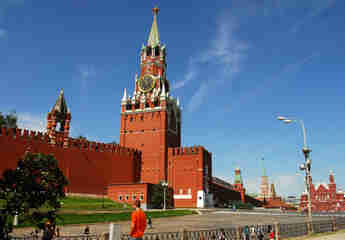
Moscow was first mentioned in the chronicles in 1147. Thanks to its favourable location at the crossroads of major trade routes, the city grew rapidly, becoming the centre of an appanage principality by the 13th century. Neither the plague nor the Mongol invasion could halt its rising economic, political, and religious power. By the late 15th century, Grand Prince Ivan III the Great had united nearly all the Russian lands around Moscow and rebuilt the citadel of power – the Kremlin. His grandson, Ivan IV the Terrible, proclaimed himself Tsar of All Russia.
After the Time of Troubles in the early 17th century, the Romanov dynasty ascended to the throne. Peter I the Great took the title of Emperor of All Russia in 1721 and moved the capital to the newly founded St Petersburg. In 1812, however, it was Moscow that bore the brunt of Napoleon Bonaparte's army. Burned but unbroken, the city became an insurmountable barrier for the previously invincible Frenchman.
After the revolution, Moscow once again became the capital – this time of the Soviet state. The city saw massive construction – new buildings, new streets, and a new way of life – accompanied by equally massive demolition of churches, monasteries, and old traditions. Industry expanded rapidly. The city grew in area, absorbing its surroundings. A network of bus and trolleybus routes appeared, and in 1935 the first metro line opened.
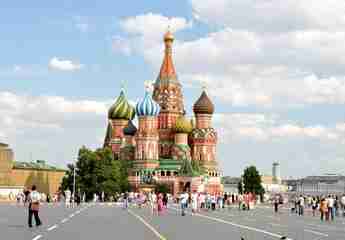
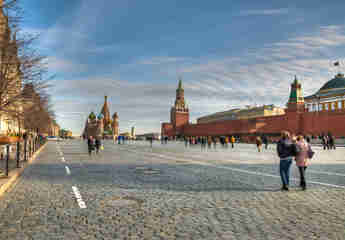
During World War II, Moscow housed the General Staff and the State Defence Committee. In the winter of 1941–42, the German army suffered its first defeat since the start of the war – in the Battle of Moscow. In June 1945, the Victory Parade was held on Red Square.
The post-war decades brought dramatic changes. In the 1950s the famous "Stalin skyscrapers" rose above the skyline; in the 1960s–70s, vast residential districts of prefabricated tower blocks sprang up, linked by wide arterial roads. In 1980 the city hosted the XXII Summer Olympic Games.
After the collapse of the Soviet Union, Moscow – now capital of the Russian Federation – continued to develop. Churches and cathedrals were restored, business centres went up, the road network expanded, and historic buildings were renovated. Today it is one of the world's most expensive cities, an enormous metropolis with a distinctive look and a rich history.
Good to Know
– 1 January – New Year (the New Year holiday break usually lasts 7–10 days)
– 7 January – Orthodox Christmas
– 23 February – Defender of the Fatherland Day
– 8 March – International Women's Day
– 1 May – Spring and Labour Day
– 9 May – Victory Day
– 12 June – Russia Day
– First Saturday of September – Moscow City Day
– 4 November – National Unity Day
Independent Travel to Moscow
Getting from Moscow's Airports to the City
Sheremetyevo Airport lies northwest of the city, Vnukovo to the southwest, and Domodedovo to the southeast. All three have international status and also handle domestic flights. They are linked to central Moscow by comfortable Aeroexpress high-speed trains. From Sheremetyevo they run to Belorussky station (05:00–00:30, 35 min), from Domodedovo to Paveletsky station (06:00–00:00, 45 min), from Vnukovo to Kievsky station (06:00–00:00, 35 min). A one-way ticket costs from 500 roubles. Given the notoriously heavy traffic leaving the capital, the Aeroexpress is considered the most reliable and fastest option.
Those who don't mind the risk of traffic jams can take buses and minibus taxis that stop at the airport terminals and run to the nearest metro stations.
Public Transport in Moscow
The Moscow Metro, one of the most beautiful in the world, carries over 9.5 million passengers daily. Every station has a unique design, and the central ones are genuine works of art. Twelve lines cover virtually the entire city and are often the fastest and simplest way to reach your destination.
Above-ground public transport is also well developed: the bus network has about 1,000 routes, including suburban ones, and the trolleybus network is considered the most extensive in the world. Boarding is through the front door, which has a turnstile. A single-journey universal ticket for all transport types costs 57 roubles; a 5-ride pass is 285 roubles. There is also a surface-transport-only ticket at 38 roubles per ride or 190 for five.
Mobile and Internet in Moscow
Free Wi-Fi is available in many cafes, restaurants, shopping centres and other public places. SIM cards from popular carriers – MTS, Beeline, MegaFon – can be purchased at numerous mobile phone shops for 150–500 roubles.
Shopping in Moscow
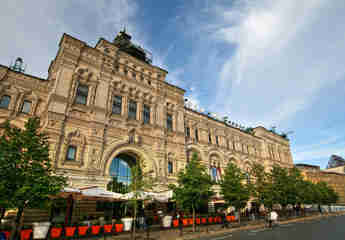
You can buy just about anything in Moscow – from inexpensive trinkets to luxury goods. High-end brands prefer to open shops on Tverskaya Street and the surrounding lanes – Petrovka, Kuznetsky Most, Bolshaya and Malaya Bronnaya. GUM on Red Square is not only an architectural landmark but also an excellent luxury department store.
The city centre also has plenty of mid-range shops and malls. Okhotny Ryad, for example, sits right by the Kremlin walls. The huge Mega malls on the outskirts can keep a shopping enthusiast busy for an entire day. Shops are typically open 9–10 am to 8–9 pm, seven days a week. Sales take place every season.
Local Cuisine
For a long time "Moscow cuisine" and "Russian cuisine" were synonymous, referring to the centuries-old culinary traditions of Rus, where most cooking was done in a wood-fired oven. The staples were various porridges (buckwheat, barley, millet, wheat) and vegetables (turnip, carrot, cabbage), plus meat, fish and game, baked or roasted in large pieces or even whole.
Today the most popular national dishes include rich, hearty soups – shchi and borscht, cutlets or fried meat with mashed potatoes, stewed vegetables (often served in a clay pot), pelmeni and vareniki. For starters – home-pickled and marinated vegetables: cabbage, tomatoes, cucumbers – and a wide variety of baked goods: blini and oladyi, pirozhki and pies, kulebyaka and rasstegai.