
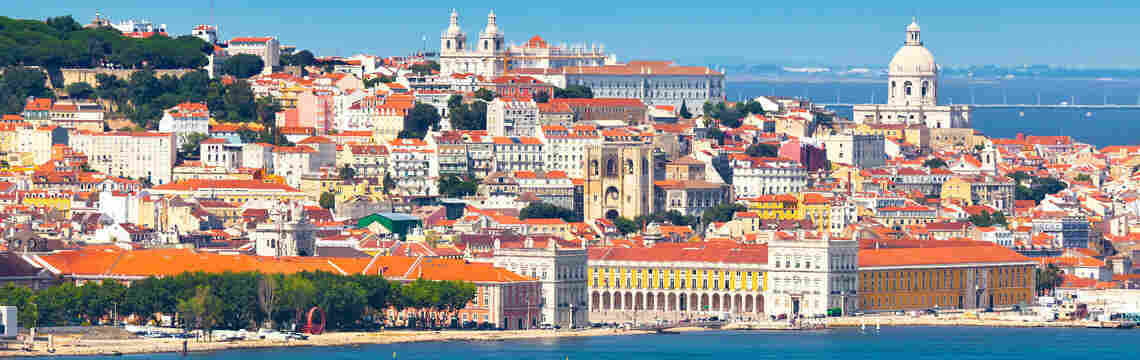
Attractions of Lisbon
1. Commerce Square
One of Lisbon's most picturesque landmarks stands before you. The Ribeira Palace – residence of the Portuguese monarchs – once stood on this site. But after the famous earthquake of 1755, not a stone of it remained. The palace was not rebuilt. Instead, a spacious square was laid out here, which not only became a lively trading place but also hosted all major city events, from public executions to military parades.

Flickr, Alida's Photos
2. Lisbon Cathedral
This is Lisbon's oldest church, built at the beginning of the 12th century. Historians say there was once an ancient temple here, then it was converted into a Christian church, and after the Arabs conquered the peninsula, a mosque was built on the site. Later it was demolished and this grand cathedral was erected. It proved so strong and monumental that it survived even the devastating earthquake of 1755. It has reached our day with minor alterations, but it is still breathtaking.

Flickr, rcoffey2
3. Rossio Square
Views of this square are the most popular subject for Lisbon postcards and fridge magnets. It is home to two beautiful fountains and a statue of the Brazilian emperor Dom Pedro IV. The traditional Portuguese wave-pattern mosaic laid here in the 19th century has also survived. Around the same time, the Dona Maria II National Theatre and the railway station building were constructed, framing the square from both sides. Today not only tourists but locals as well love to come here for a drink at a café table and a leisurely chat about the latest news.

Flickr, Loreleianne
4. Jerónimos Monastery
A true masterpiece of Manueline style and a recognized treasure of humanity! This monastery was founded at the end of the 15th century. It was here that the famous explorer Vasco da Gama prayed on the night before sailing to India. At the time there was only a small chapel, while the monastery itself was built after his triumphant return with money earned from the sale of exotic spices. Despite its great age, Jerónimos Monastery captivates travelers at first sight and still inspires seafarers to new discoveries!

Flickr, Gail at Large + Image Legacy
5. Santa Justa Lift
The oldest urban lift in Europe. Yes, you heard that right – an actual elevator designed to move residents from the low-lying Baixa district up to Chiado above. This lift is well over a hundred years old, so nowadays people come not only to ride it but also to admire it as a local landmark. The view from the top is beautiful, by the way, so tourists happily line up to combine pleasure with practicality.

Flickr, Francisco Aragão
6. Belém Tower
One of the brightest examples of how beautiful military architecture can be. Even though this tower was built as a fortification and defensive structure, the architect did not neglect decorative flourishes. Belém Tower was designed in the Manueline style, popular in Portugal during the Renaissance. For almost 500 years it has gleamed like a fairy-tale castle against the turquoise waters of the Tagus, drawing travelers with its mysteries and legends.

Flickr, dorrisd
7. Saint George's Castle
This ancient fortress is considered the “cradle of the city,” as it has been known since the days of the Roman Empire. Later Moorish conquerors who sought to seize the whole peninsula settled within its walls. But in 1147 Christians recaptured the castle during the Second Crusade. Thus Castelo de São Jorge became the chief among Portugal's castles. Monarchs lived here, the most important archives were stored here, and a military arsenal was housed here. Even after the legendary earthquake of 1755, the castle remained standing, though not without damage. Today it is one of Lisbon's must-see sights.

Flickr, John R Chandler
8. Alfama
Alfama is Lisbon's oldest and most colorful district! It lies on hills, so narrow lanes often turn into rather steep stairways, but that only makes you more curious: “What awaits us up there? What view will open up?” Walking through Alfama is pure pleasure! The locals may live quite modestly, but they are always warm and welcoming. The houses stand so close together that festive garlands and decorations can remain hanging here all year round. Some of Lisbon's most colorful photos can be taken here! Still, be careful – Alfama is considered one of the city's more crime-prone districts.

9. Rossio Station
On Rossio Square of the same name stands Portugal's most beautiful station. It was built at the end of the 19th century and remained Lisbon's main transport hub until the middle of the 20th century. Today it plays more of a decorative role, although it still handles its direct duties perfectly: suburban trains still depart from Rossio Station.

Flickr, distinction-2006
10. Christ the King Statue
Many “art experts” compare this statue to the Brazilian Christ. But if you look closely, you can see that it has many differences and stands as a fully independent work of architecture. It also carries its own profound meaning for the Portuguese. The Christ statue was erected right after the end of World War II in gratitude to God that Portugal avoided taking part in that slaughter. They say the money for the statue was collected mainly by women, since their sons, husbands, and fathers did not go to war and remained alive.

Flickr, Ludo29880