A Trip to Istanbul
Istanbul lies on two continents and for centuries has served as a bridge between East and West. The former capital of the Roman, Byzantine, Latin, and Ottoman empires has absorbed so many cultures and lived through so many eras that it became a truly unique city unlike any other.

It is amazing how naturally and effortlessly a trip to Istanbul brings together things that seem incompatible: calm family holidays and carefree youthful fun, beaches and historic sights, shopping and museum visits, exotic Asian neighborhoods and thoroughly European quarters. You can come here again and again – and discover something new, interesting, and surprising every time!
How to Get to Istanbul?
The easiest way to get to Istanbul from Russia and the CIS is by plane. Turkey is one of the most popular holiday destinations for residents of Eastern Europe, so there are many charter flights as well as regular service. From Moscow, direct flights to Istanbul are operated by Turkish Airlines, Transaero, and Aeroflot, with a flight time of about 3 hours. Flying from Saint Petersburg will take a little longer – up to 3.5 hours – and the routes are served by Aeroflot and Turkish Airlines. From Kyiv, Turkish Airlines and Ukraine International Airlines get to Istanbul in about 2 hours.
If you would like to save a little, look at connecting flights. The lowest prices are often offered by Air Moldova, Lufthansa, Austrian Airlines, and UIA.

In Ever.Travel's opinion, one of the best services for buying airline tickets online is Aviasales. It is a reliable and well-proven website where you can choose a flight to Istanbul for any date. Aviasales' main advantage is that it compares fares on different flights from several hundred airlines and ticket agencies, allowing you to choose the most attractive option. Read our overview to learn how to find the cheapest flights to Istanbul.
There are also ways to reach Istanbul by train, bus, or ferry across the Black Sea. But these options are only for true enthusiasts: there is no direct overland connection with Turkey, so you have to travel with changes, which is very tiring. The ferry is relatively convenient only for residents of southern regions of Russia and Ukraine.
Where to Stay in Istanbul?
To answer this question, it is important to understand that Istanbul is split by the Bosphorus into two continents: Europe and Asia. The European side is further divided by the Golden Horn into the Old City and the New City. That is where most tourists prefer to stay.

Map of Istanbul districts
The quarters of the Old Center are especially appealing, where countless hotels and hostels are compactly tucked in among landmarks with centuries of history. And unlike many other tourist capitals, accommodation prices here remain quite affordable despite the excellent location.
Sultanahmet
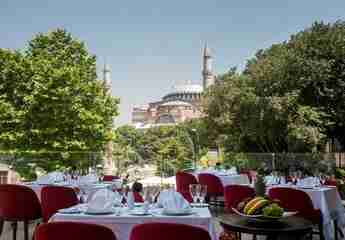
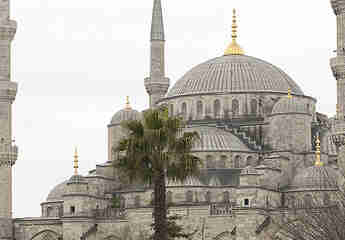
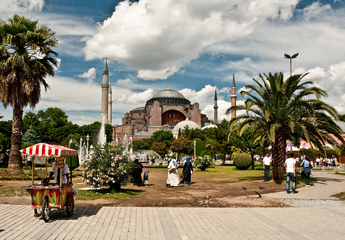
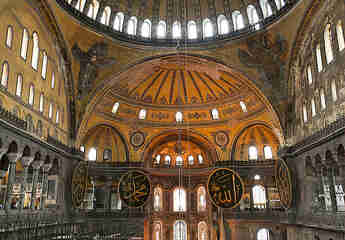
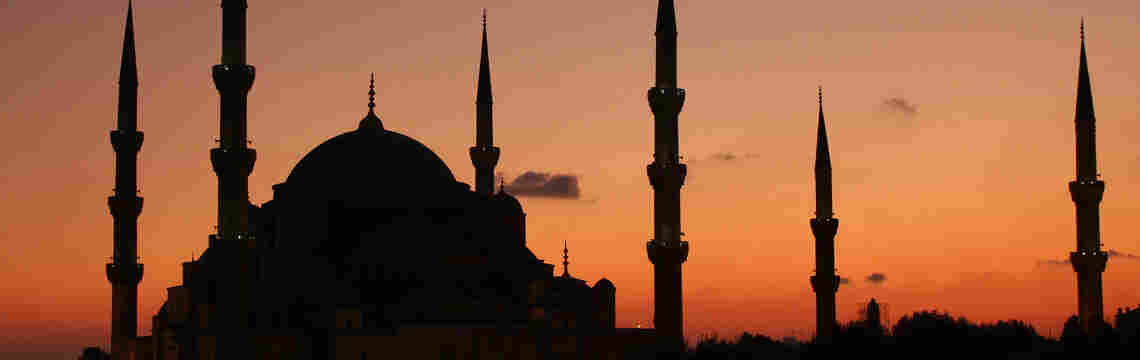
This is where Istanbul's main sights are located: Hagia Sophia, the Blue Mosque, Topkapi Palace, and the Basilica Cistern... In fact, the whole district is a landmark in itself, because its historic core is part of the UNESCO World Heritage list. Sultanahmet is full of hotels, cafes, and restaurants, its squares are lined with carts selling roasted chestnuts, and on almost every corner you can buy delicious Eastern sweets.

Sura Design Hotel & Suites is in central Istanbul, in the Sultanahmet district. The Blue Mosque and Hagia Sophia are only 100 meters away, and Topkapi Palace is 150 meters away.
The whole district is easy to explore on foot. It is a delight to stroll here, and it is especially interesting to peek into the quintessentially eastern Grand Bazaar and Spice Bazaar. All the senses sharpen here: your sense of smell revels in spices and exotic fruits, your hearing takes in the unfamiliar buzz and clamor, and your eyes race to catch the kaleidoscope of bright colors.

Darussaade Istanbul Hotel occupies a traditional wooden house on a quiet street in Istanbul's historic quarter, just a 5-minute walk from the Blue Mosque.
In short, staying in Istanbul's historic center is the best way to immerse yourself fully in the atmosphere of this great city, which has not lost its color despite the passing centuries and globalization.
Beyoğlu
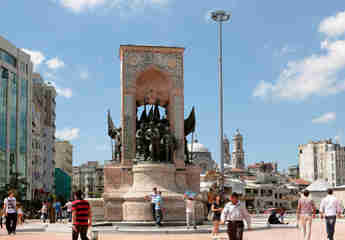
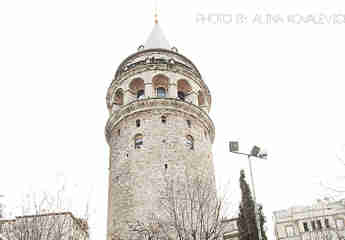
Sultanahmet lies in the southern part of Istanbul's European side. Cross the famous Galata Bridge and you reach the north, the New City, and the Beyoglu district. Staying here puts you within easy reach of the historic Galata Tower, pedestrian Istiklal Street, and famous Taksim Square.
But this area is even more popular thanks to its many cafés, bars, shops, and restaurants. This part of Istanbul feels more modern and more European, not only geographically but in everyday life as well. The streets are wider, there are fewer mosques, and the arcades, built in the French style, seem to remind you that Istanbul has always watched the trends of the Old World closely.

Nuru Ziya Suites design hotel stands on a quiet street just 100 meters from the Pera Museum and 150 meters from famous İstiklal Street.
For example, French Street is lined with summer terraces of small cozy cafes, while Istiklal Street is home to most of Istanbul's nightclubs as well as all sorts of shops, art galleries, cinemas, boutiques, and souvenir stores. Shopping in Beyoglu is a very popular pastime, because you can find major malls and stores selling clothes, shoes, and accessories made by Turkish factories for top global brands.
In theory, you can walk from Beyoglu to Istanbul's historic center, but it is much faster to take the tram. Accommodation prices here are about the same, but there are noticeably more interesting design hotels and premium properties.

Daru Sultan Hotels Galata is located in the very heart of fashionable Galata, 350 meters from Galata Tower.
Booking.com will help you choose among hundreds of hotels in Istanbul. Set the price range, district, and accommodation conditions that suit you in the search filters, and finding the right option will become much easier. Read Ever.Travel's tips for more on how to find a hotel in Istanbul with Booking.com.
A well-chosen hotel can leave as strong an impression as the city's sights themselves! Our regular author Anatoly Selyaninov put together an excellent selection of Istanbul's most interesting hotels.
Visa for Turkey
Turkey's authorities are very friendly toward tourists from Russia and Ukraine: a visa-free regime allows Russians to stay in the country for up to 60 days and Ukrainians for up to 90 days. To cross the border, you need a valid international passport, proof that you have enough money for your stay in Turkey, a return airline ticket, and confirmation of your hotel booking. The entry stamp is placed directly upon arrival at Istanbul airport.
However, conditions can change from time to time, so before traveling to Istanbul we advise checking the latest information on the website of the Turkish Ministry of Foreign Affairs.
How to Get from Istanbul Airport to the City
Atatürk Airport (Atatürk Uluslararası Havalimanı), one of the largest airports in the world, is located on the European side of the city about 25 km from the center. You can get into town:

Sabiha Gökçen International Airport (Sabiha Gökçen Uluslararası Havalimanı) is named after the world's first female military pilot. It lies on the Asian side of Istanbul about 35 km from the center and is linked to the city by bus:
A slightly more expensive but much more comfortable way to get from Istanbul airport to the city is to book a transfer. KiwiTaxi can help with that. On its website, even the day before your flight, you can book a taxi, find out how much it will cost, and stop worrying about where to look for a taxi or public transport after landing. You will be met at the airport and taken to your hotel. Read our overview for more on how KiwiTaxi works.
Car Rental in Istanbul
Have you thought about renting a car in Istanbul? It lets you drive in from the airport on your own or head out of town for a swim, where the sea is much cleaner. Finding the right option by price and features is easy with RentalCars. Using the site's filter system, you can specify how long you need a car for, in which area of the city, and what features matter to you: transmission type, number of doors, air conditioning, and so on. RentalCars' customer review system also helps you choose a truly reliable provider. See Ever.Travel's tips for details.
Istanbul Public Transport
Istanbul's public transport system is very extensive and a little confusing. Take the metro: there are three kinds here. The oldest – Tunel (Tunel) – opened in 1875 and connects only two stations over a distance of 580 meters. The light metro and the regular metro, of course, have more stops and cover longer distances. The fare is 2 lira.

Map of Istanbul transport
Trams also come in several kinds: the modern T (several unconnected routes in different parts of the city, fare 5 lira) and retro trams (one line on the European side and one on the Asian side, fare 1 lira). Good to know: tram T1 passes by almost all of Istanbul's major sights.

Another equally popular form of transport is buses. Municipal I.E.T.T. buses (green or red) and commercial buses (blue) offer many routes, including across the Bosphorus. In that case, the fare (2 lira) doubles because crossing the bridge is tolled. Metrobuses are comfortable modern buses that run along the busiest routes, and the fare is 5 lira.

Very popular too are dolmuşes – the local equivalent of shared minibuses, which run fairly short routes and do not leave until all seats are filled. The fare is fixed but depends on the distance, so it is best to ask the driver. You pay the driver directly, and only in cash. The same principle applies to minibuses, which hold 12–15 people.

You can cross the Bosphorus by water by ferry (short rides cost 2 lira) or by sea bus (longer routes, including along the strait and on the Sea of Marmara, cost 8-15 lira). You can also get to the Princes' Islands, popular with tourists, by ferry for 5 lira.

On all forms of public transport except dolmuşes and minibuses, it is convenient to use an Istanbulkart electronic card, which you tap against the validator at the turnstile. Paying this way lowers the fare by 12%. The card is sold at ticket kiosks (price 6 lira), can be topped up as needed, and may be used by several passengers at once.
Public transport runs from 6 a.m. to midnight, and on weekends until 00:30–01:00. There are no night routes.
Taxis are a fairly popular way to get around Istanbul. They are easy to spot: yellow cars with a TAKSI sign on the roof. You can call one from a hotel, restaurant, or café, or go to an official taxi stand. The starting fare is 2.95 lira, and each kilometer costs 1.83 lira plus the Bosphorus bridge toll if you cross it. From midnight to 6 a.m., the fare rises by 50%. When you get in, check that the meter is on and the correct rate is displayed: drivers sometimes cannot resist the temptation to earn a little extra. It is also wise to carry small bills – taxi drivers usually do not have change.
Istanbul Tours
Ancient Constantinople, the capital of the Ottoman Empire, crazy, romantic, delicious, and vivid Istanbul! This city will become much closer and easier to understand if you use the Ever.Travel trip planner. Choose the places you would like to see on the interactive attractions map and spread them across several days of your trip. Then download the free Ever.Travel mobile app and log in with the same account you use on the website. That way your Istanbul trip plan will sync between the web version and your smartphone. You will be able to walk around the city with a reliable helper always at hand, ready to show you where to go next to see something interesting ;)

We also recommend taking a look at our Istanbul guides:

Istanbul's diversity is astonishing. Sometimes it seems that even the locals themselves do not know all its secrets to the end. If you want to explore the city's most hidden and unusual sides, Excursiopedia can help, gathering a large number of sightseeing and author-led tours with professional Russian-speaking guides. Here are just a few vivid examples:
Mobile Service and Internet in Turkey
Free Wi-Fi is quite common in cafés, restaurants, shopping centers, and public areas. In many places the network is password-protected, and you can ask the bartender or waiter for it.
Mobile service in Turkey is considered one of the most expensive in Europe. A SIM card costs from 50–100 lira (7.6–15.2 euro), main operators — Turkcell, Avea, Vodafone. According to local laws, a SIM card must be tied to a specific phone handset. In an unregistered phone, the SIM will be blocked after a week, and you will need a passport to register it.
Shopping in Istanbul
Istanbul is a great place for shopping. In a city through which trade routes have passed for one and a half thousand years, you can buy almost anything – from clothes by popular European brands to handmade Asian carpets. Turkish textiles and ceramics are known for their high quality, while leather and sheepskin coats are known for their low prices.

Hookahs and evil-eye charms are often brought back as souvenirs, along with spices and sweets – and all of this is found in abundance at the Spice Bazaar (Mısır Çarşısı). The colorful covered Grand Bazaar (Kapalıçarşı) with its centuries-long history is undoubtedly worth a visit – not only for shopping, but for getting to know this major city sight. Here you can buy leather and suede goods (from belts and wallets to jackets and sheepskin coats), jewelry with original designs, and carpets. Do not forget that bargaining is customary in Turkish markets. Try starting a conversation with the seller and asking for a better price – he will probably even enjoy it.

Abdi İpekçi Street (Abdi İpekçi Caddesi) is lined with boutiques carrying premium European brands. In the many modern shopping centers you will find various labels of affordable and fashionable clothing. Opening hours for shops and markets can vary greatly. Small stores may close at 7 p.m., while large malls stay open until 21:00–22:00 in season.
Turkish Cuisine
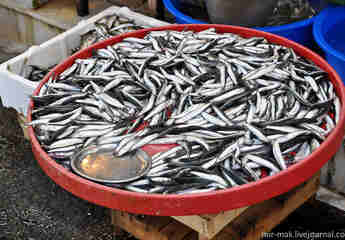
Istanbul is a port on two seas, so it is impossible to imagine the local cuisine without dishes made from fresh fish and seafood. Yet meat and vegetables are cooked wonderfully here too. There are many options for a quick snack: meat kebabs (şiş kebab, similar to shashlik, and döner kebab – pieces of meat and vegetables in flatbread) or balık ekmek – grilled fish in fresh bread.

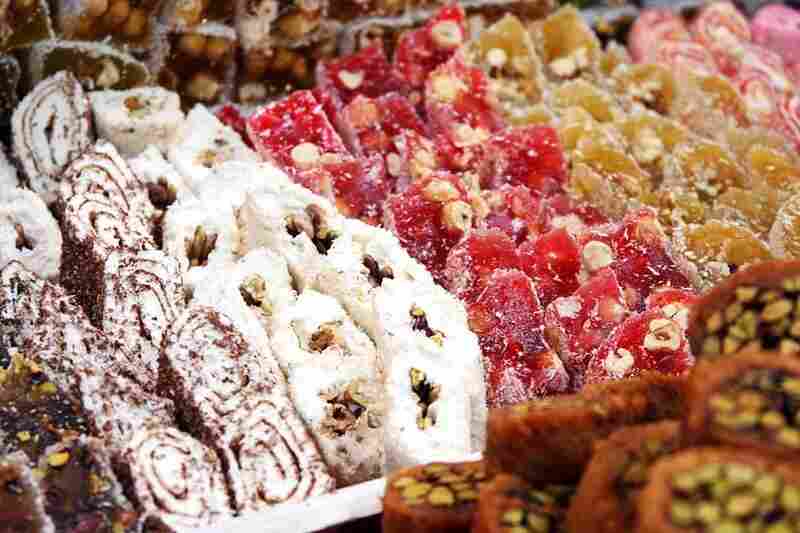
There is also a wide variety of soups – çorba – tomato, lentil, thick chicken soup, and soups with rice, egg, or noodles. Fresh cucumbers with yogurt and spices are turned into a refreshing cold cacık soup. You should definitely try pilaf – made from rice or bulgur with nuts, herbs, and dried fruit – as well as dolma, stuffed vegetables or grape leaves. One of the tastiest versions is considered to be mackerel dolma – they say the rulers of the Ottoman Empire loved it very much. For dessert, of course, there are eastern sweets: mind-blowingly delicious baklava or delicate Turkish delight.
In Istanbul it is customary to leave a tip of about 10% of the cost of a good or service, not only for waiters in bars and restaurants but also for maids, porters, and guides.
The History of Istanbul
Its highly favorable geographical position – on the route from Europe to Asia and from the Black Sea to the Mediterranean – shaped Istanbul's history. It guaranteed the city's prosperity and at the same time caused constant wars for control over it.
Founded in 667 BC, Byzantium quickly grew rich from trade and came under constant attack until it was finally seized by the Romans in 74 BC. In 330, Emperor Constantine decided to move the capital to this well-situated city and seriously devoted himself to its development. By the ruler's command, the best builders, architects, and artists, as well as numerous imperial dignitaries, were brought here.
After the Roman Empire split in 395, Constantinople became the capital of the Byzantine, or Eastern Roman, Empire and the most important center of Christianity. Even so, that did not stop a crusade from being launched against the richest city in Europe. In 1204, after a long siege, the crusaders captured Constantinople, looted it completely, and established the Latin Empire there. Sixty years later, the Byzantines managed to win back their capital and restore the empire, but they could no longer return it to its former greatness. Constant wars with the Turks gradually shrank the state's territory and weakened it.

In 1453, after a siege and fierce fighting, Constantinople fell under the assault of the Ottoman Empire. The city received a new name – Istanbul – but kept its capital status and, moreover, became the center of the Islamic world. The powerful Turks launched active construction of mosques, palaces, and of course homes. Yet this empire too gradually declined.
By the 19th century, the Turks had noticeably Europeanized: French came into fashion, along with European clothing and architecture. The regular Paris–Istanbul train – the legendary Orient Express – was launched, and the city gained trams, a metro, modern plumbing, and electricity.
In 1923, Kemal Atatürk established the Turkish Republic. The state capital moved to Ankara, but Istanbul remained a major industrial, commercial, and cultural center of the country.

Important to Know:

Public holidays and non-working days:
– January 1 – New Year's Day
– April 23 – Children's Day and Independence Day
– May 19 – Youth and Sports Day
– August 30 – Victory Day (in the 1922 War of Independence)
– October 29 – Republic Day
– Ramadan Feast – the end of the Muslim month of Ramadan
– Kurban Bayram – the Feast of Sacrifice

When planning a trip to Istanbul, do not forget about Ever.Travel ;) Create walking routes with the help of the interactive attractions map, install the mobile app on your smartphone, and you are practically ready for the journey! Read more about how to do it as quickly and efficiently as possible here...
Photos used in this guide: Andrey Shibanov, Alexey Smirnov, Shutterstock, Booking.com, Flickr: EK056, roomman, Keith Watson Photography, clarkson_lee, Lost in Anywhere, jmboyer, michael j moss.
See also: