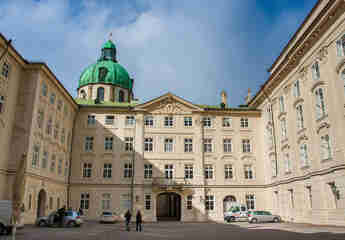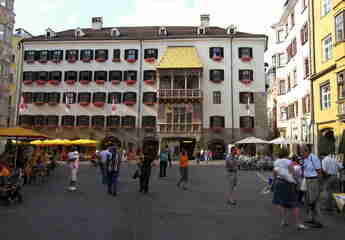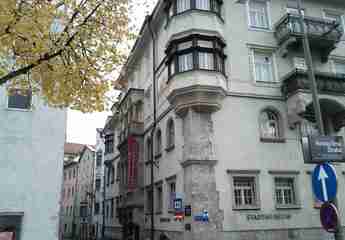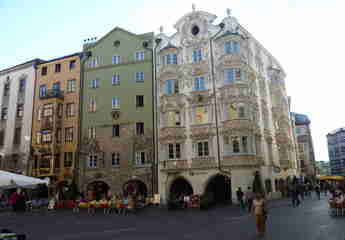
About Innsbruck
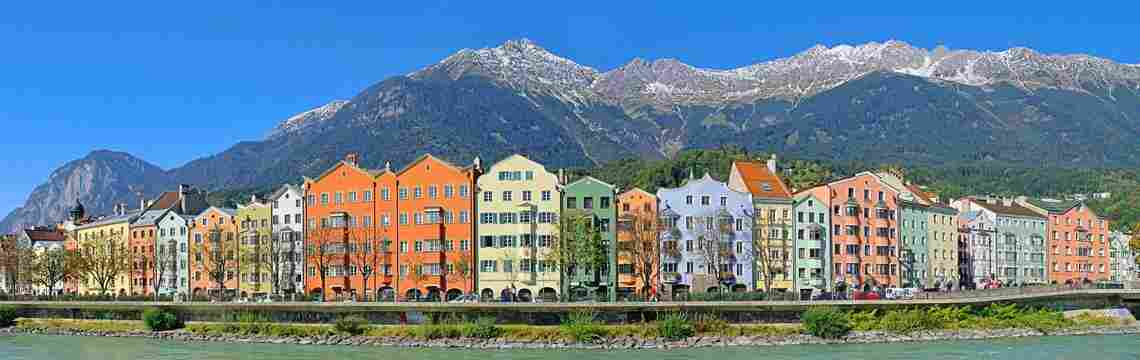
Innsbruck is known as the capital of two Winter Olympics and a center of alpine skiing. Set in the Inn River valley amid imposing mountains, this cozy town attracts winter sports lovers from around the world. Around Innsbruck there are nine ski areas – Nordkette, Patscherkofel, Axamer Lizum, Glungezer, Schlick 2000, Stubai, Mutters, Kühtai, and Rangger Köpfl – each with its own distinctive slopes and special highlights.
Innsbruck offers excellent infrastructure, clean mountain air, and a wonderful climate. Fans of noisy parties and wild nightlife may be a little bored here, but those looking for an active break in the fresh air will be absolutely delighted.
A Bit of History
Tyrol, whose capital is Innsbruck, was conquered by ancient Roman troops around 15 BC. This region was important for trade between north and south. After the collapse of the Roman Empire it was settled by the Ostrogoths and later by the ancestors of today's Bavarians. In this way the whole region came under the authority of the Duchy of Bavaria.
The city of Innsbruck itself was founded in 1234, gradually gained significant privileges, and even became the capital of the independent state of Tyrol under Habsburg rule. In the 15th century the first thaler was minted here – a coin that would later become known across Europe.
In 1504, craftsmen and artisans were forcibly resettled in Innsbruck, turning the city into one of Europe's largest industrial centers specializing in arms production. Soon Emperor Maximilian I was crowned, and under his rule Innsbruck also became one of the continent's leading political and cultural centers. The Church Reformation that spread across Europe in the 16th century did not take hold in the region thanks to the efforts of the ruler, the Jesuits, and the Capuchins.
In 1665, power over Tyrol and Innsbruck passed to the Viennese branch of the Habsburgs. The territory's independence was now in the past, but active construction began in the city and a university was founded.
After the war between France and Austria, the region was handed over to Bavaria. This decision sparked the Tyroleans' war of liberation under the leadership of the shepherd Andreas Hofer. Only in the fourth battle did Napoleon manage to defeat the rebels and execute their leader. Tyrol was then transferred again to Bavaria and later to Austria.
Good to Know:
– January 1 – New Year's Day
– January 6 – Epiphany
– Good Friday, Easter, and Easter Monday
– May 1 – Labour Day
– Ascension Day (39 days after Easter)
– Trinity (50 days after Easter)
– Corpus Christi (60 days after Easter)
– August 15 – Assumption of the Virgin Mary
– October 26 – National Day of the Austrian Republic
– November 1 – All Saints' Day
– November 15 – St. Leopold's Day, patron saint of Austria
– December 8 – Feast of the Immaculate Conception
– December 25 – Christmas
– December 26 – St. Stephen's Day
An Independent Trip to Innsbruck
How to Get from Innsbruck Airport to the City
Tyrol's largest airport – Innsbruck Kranebitten International Airport – lies about 4 km from the city center. Because of the mountainous terrain, it cannot handle large aircraft and mostly serves seasonal flights.
You can get from the airport to Innsbruck Central Station in about 20 minutes by train or city bus (route F). A single ticket costs €5.1 if bought in advance or €2 from the driver. Innsbruck is also connected by rail to Munich International Airport, which is 140 km away.
Getting Around Innsbruck
Innsbruck has an excellent network of tram and bus routes. If you buy at ticket offices or machines, a single ride ticket (with transfers allowed within 30 minutes) costs €2.5–3, a 4-ride ticket €6, a 24-hour pass €4.4, and a weekly pass €13.9. In addition, Tyrol's S-Bahn trains leave from West Station and connect the city with resorts across the region.
Innsbruck Card Tourist Pass
The Innsbruck Card covers all kinds of public transport, free admission to all museums in the Innsbruck region, one ascent and descent on any cable car, funicular, or lift, free transfers to sights, free bicycle rental for 5 hours, and numerous discounts and bonuses. The Innsbruck Card costs €43 for 24 hours, €50 for 48 hours, and €59 for 72 hours.
Mobile Service and Internet in Austria
Free Wi-Fi exists, but not as often as you might like. To stay connected, you may need to rely on internet cafés or mobile internet. For €7–15 you can buy a SIM card from one of the local operators – T-Mobile, A1, Drei (3), or Orange. Despite the rugged terrain, mobile coverage is available across almost all of Innsbruck.
Shopping in Innsbruck
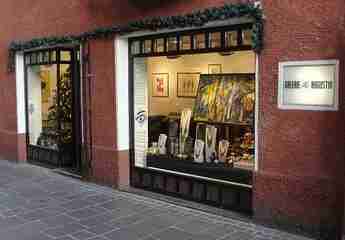
In Innsbruck's main pedestrian street, Maria-Theresien-Strasse, there are plenty of shops, but shoppers will also be interested in the region's biggest malls – “Tyrol” and “Rathaus Galerien”. Anichstrasse, Franziskanerplatz, and Sparkassenplatz are also considered good places to shop. For souvenirs, you can bring home something traditional – pieces of national costume, handicrafts, or herbal liqueur. And of course, no one should leave Tyrol without Swarovski crystals, which are made here.
Local Cuisine
Tyrolean cuisine is a blend of Austrian, Italian, and German culinary traditions. Meat is prepared beautifully here – especially Wiener schnitzel and breaded chicken. The most popular soup is broth with noodles and liver dumplings.
Be sure to try Gröstl – fried potatoes cooked in lard with meat, tomatoes, and spices. Innsbruck Gröstl is traditionally made with veal, though other versions use blood sausage, beef, or pork belly.
Austrian desserts are famous all over the world. Alongside Viennese strudel, be sure to try Tyrolean doughnuts made from potato flour and caramel apples.