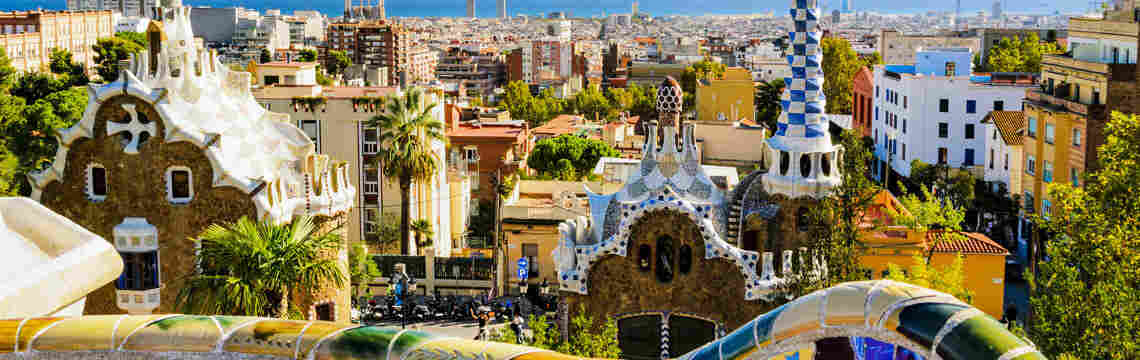
A Trip to Barcelona
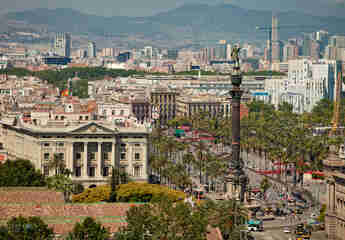
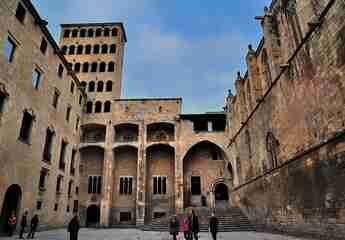
According to legend, Barcelona was founded in ancient times by Hercules himself – the one who completed the twelve labours. Having weathered millennia of rises and falls, Barcelona is today Spain's second-largest city, the capital of the autonomous region of Catalonia, and the biggest tourist hub on the Mediterranean coast.

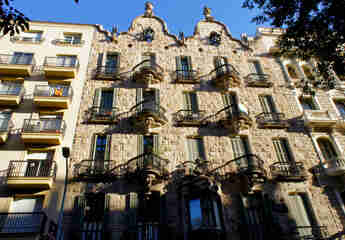
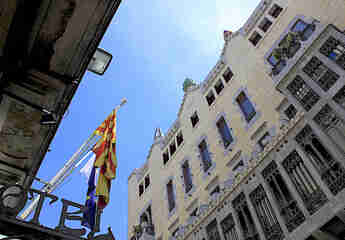
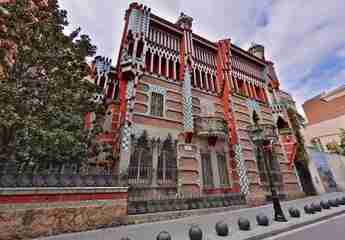
Nobody knows quite why – perhaps it is the abundance of sunshine and the nearness of the sea, perhaps the passionate Catalan temperament, or perhaps the city's mythological past – but Barcelona's residents have always excelled in the arts. Painters Pablo Picasso, Salvador Dalí, Antonio Saura, and Juan Villafuerte all worked here; opera legends José Carreras and Montserrat Caballé still call the city home. And, of course, Barcelona was the canvas of the great Antoni Gaudí, who turned architecture on its head and gave the city its utterly unmistakable look. We are 100 % certain that a trip to Barcelona will earn a proud spot on your travel résumé.
Before you start planning your trip, download our mobile app – the Travel Planner for iPhone or Android. It lets you browse hundreds of attractions, follow ready-made itineraries, use offline maps and GPS, and put together your entire Barcelona trip.
How to Get to Barcelona
From Russia, the CIS countries, and the Baltics, the most convenient way to reach Barcelona is by air. Direct flights from Moscow and Saint Petersburg are operated by Vueling, Iberia, Aeroflot, Transaero, Rossiya, Vim-Avia, and Ural Airlines, with a flight time of about 4.5 hours. Direct flights from Kyiv to Barcelona are available via Iberia and Ukraine International Airlines, taking around 3.5 hours. Connecting flights are offered by many other European carriers: Lufthansa, Finnair, airBaltic, SAS, Swiss, Turkish Airlines, and more.

A tip the Ever.Travel team has verified many times over: the cheapest flights are on Aviasales.ru. This aggregator displays fares from multiple airlines and agencies at once, so you can pick the best deal. You can filter results by price, departure date and time, airport, number of connections, and many other criteria. For more on finding the cheapest airfare, check out the Ever.Travel travel tips.
Where to Stay in Barcelona
To save time on commuting and money on public transport, we recommend looking for accommodation in central Barcelona. Don't assume that only expensive hotels are available there – in virtually every neighbourhood, even the historic centre, you can find hotels, apartments, or hostels to suit every taste and budget. So let's focus on the areas where you would truly love to stay.

Map of Barcelona's neighbourhoods
Old Town (Ciutat Vella)
The capital of Catalonia's central district is home to some of the city's most famous landmarks: the Gothic Quarter, La Rambla boulevard, the Liceu Theatre, the Columbus Monument, the Picasso Museum, the Cathedral of the Holy Cross and Saint Eulalia, La Boqueria market, Palau Güell, and many other points of interest. There is no shortage of cafés, bars, restaurants, boutiques, and department stores either. In short, if you want to be right at the heart of the tourist action, choose Barcelona's historic centre!

Aparthotel Arai 4* Superior is located in the heart of the Gothic Quarter and features an outdoor pool, a gym with sauna, and a rooftop terrace.
Eixample District
Head inland from the sea and you will find yourself in Eixample, the second most popular district among Barcelona's visitors. Staying here lets you get a closer look at everyday Catalan life, since the area is less touristy than the historic centre. That said, it is home to equally renowned landmarks such as Sagrada Família, Casa Milà, Casa Batlló, and Park Güell. So if you are a fan of Art Nouveau and Antoni Gaudí's architecture, you won't find a better base in Barcelona!

Majestic Hotel & Spa Barcelona GL sits on Passeig de Gràcia. Casa Batlló, designed by Gaudí, is just 100 metres from the hotel.
Montjuïc
South of the historic centre and Eixample rises Montjuïc hill. You are unlikely to find hotels on the hill itself, but the surrounding neighbourhood of Poble Sec is well worth considering. It is quiet, cosy, and within easy reach of Plaça d'Espanya, the Magic Fountain, the National Art Museum of Catalonia, Poble Espanyol, and the famous Montjuïc Castle. Needless to say, this part of the city also offers stunning views of Barcelona. :)

The Habitat Apartments ADN complex is just a 5-minute walk from Plaça d'Espanya, the Magic Fountain, and the National Art Museum of Catalonia.
If you are wondering where to stay in Barcelona, we recommend searching for a hotel on Booking.com. You are unlikely to find a more comprehensive accommodation database anywhere else. Besides a huge selection, a user-friendly interface, and a 100 % booking guarantee, Booking.com frequently offers special deals and extra discounts for loyal customers. Read more in our Ever.Travel review.
Don't put off choosing your hotel – Barcelona is one of Europe's most popular destinations, and the best deals sell out fast!
Visa for Spain
Spain is a Schengen-area country, so citizens of Russia and the CIS need a Schengen visa to enter. The list of required documents, the consular fee, and the visa cost change from time to time, so we recommend checking the latest information on the official website of the Spain Visa Centre in your country.
For a tourist trip, a multiple-entry visa valid for 6 months is typically issued (maximum stay – 90 days in every 180-day period). If your passport already contains previously issued Schengen visas, the Spanish consulate will often grant a multiple-entry visa valid for 1–2 years.

Processing a tourist visa for Spain usually takes 4–5 business days, though it can take longer in some cases. You should start the process no later than two weeks before your trip to Barcelona – and during peak summer season, around the New Year holidays, or the May holidays, at least a month in advance.
If you would rather not deal with the intricacies of obtaining a Spanish visa, consider using the VisaToHome service. You won't even have to leave your home! Just answer a few questions and the specialists will handle the rest: a courier picks up your documents, managers fill in the application, submit it to the consulate, and even deliver the passport with your shiny new visa right to your door. No more queues at the embassy, no trips back because of missing paperwork, and no stress while waiting for the decision. Leave it to the professionals – getting a visa is easy!
Getting from Barcelona Airport to the City
Barcelona–El Prat Airport (Aeropuerto de Barcelona-El Prat) is the largest in Catalonia and the second-busiest in Spain. You can reach the city centre by train or city bus, but the most convenient option is the Aerobús express coaches. They run from 5:30 a.m. to 1:00 a.m. and stop at Plaça d’Espanya, Gran Via Corts Catalanes, Pl. Universitat, and Pl. Catalunya. Travel time is 30–40 minutes; a one-way ticket costs €5.90, return – €10.20 (valid for 15 days).

At night, bus routes N16 and N17 run every 20 minutes from 10 p.m. to 5 a.m. to Plaça de Catalunya.
That said, if you are arriving with small children, elderly relatives, or oversized luggage, it is far more convenient to book a transfer from Barcelona Airport. KiwiTaxi makes this easy: a user-friendly interface, ready-made options, and guaranteed airport pickup are just a few of the perks. Travel in comfort!
Car Hire in Barcelona
Experienced independent travellers may want to consider an even more appealing option – hiring a car in Barcelona through RentalCars. This gives you maximum freedom: pick up the car right at El Prat Airport, drive to your hotel in comfort, then roam around Barcelona at will, head out to Valencia, Madrid, Figueres, or maybe even France or Italy. The world is your oyster!
Barcelona Public Transport
Barcelona's transport system is extensive, branching, and not always easy to navigate. The city and its surroundings are divided into fare zones, though most of the sights are concentrated in Zone 1.
The Barcelona Metro has 11 lines and 164 stations. Operating hours: Monday–Thursday 5:00 a.m. to 11:00 p.m.; Friday, Saturday, and public holidays 5:00 a.m. to 2:00 a.m.; Sunday 6:00 a.m. to midnight.

Barcelona Metro map – higher resolution available on the official website
Barcelona has 109 bus routes, including night services, so the network covers the entire city and its suburbs. To get a bus to stop, signal with your hand at the bus stop or press the button inside the vehicle. Barcelona's trams also link outlying neighbourhoods with the centre.
A single integrated ticket valid on all transport costs €2 and allows a transfer within 30 minutes of validation. Buying a 10-trip card saves you a good deal: it costs €9.80 and can be shared among several passengers. There is also an unlimited 1-day pass for Zone 1 priced at €7.25.
Tourist Cards in Barcelona
Tours and Excursions in Barcelona
The easiest way to explore Barcelona is with the Ever.Travel trip planner! Plan your trip in advance by choosing the places you would love to see on the Barcelona attractions map. Spread the sights across several days, discuss your plans with friends, and then simply sync the trip with the free Ever.Travel mobile app. It really is quick, easy, and convenient! This kind of guide opens up far more possibilities than traditional paper guidebooks and maps. Give it a try – we are sure you will love it!

Check out our Barcelona city guides as well. With these, you don't even need to plan – we have put together ready-made walking itineraries just for you:

If you would rather explore the city in the company of people than gadgets, take a look at Excursiopedia. You will find plenty of fascinating Barcelona tours led by professional guides. Here are a couple of irresistible options to whet your appetite:
Mobile Connectivity and Internet in Spain
Barcelona has a municipal free Wi-Fi network with 444 hotspots. Look for the blue sign with a “W” on it. Many cafés, restaurants, and shopping centres also offer free Wi-Fi.
Mobile operators offer special tourist plans. For instance, an Orange SIM-holidays card charges 8 cents per minute for international calls and 30 cents per 10 MB of data. Movistar sells a SIM with 75 minutes of talk time and 1 GB of data for €9. If you pick up several Lebara Movil or Happy Movil SIMs, you can call each other at very low rates – or even for free.
Shopping in Barcelona
Like any major city, Barcelona has modern shopping centres, designer boutiques, and high-street brands. The main shopping avenue is Passeig de Gràcia. Spanish fashion labels line the parallel street Rambla de Catalunya, while affordable brands cluster on Carrer de Pelai. For souvenirs, head to La Rambla; for gourmet delights – cheese, jamón, wine – try La Boqueria or Sant Antoni markets.

If you want everything under one roof, head to the big malls – L’Illa, Maremagnum, Bulevard Rosa, El Corte Inglés. Monday to Saturday, shops are open from 9:30 a.m. to 1:30 p.m., then close for siesta, and reopen from 4:30 p.m. to 10:00 p.m. Sundays are usually days off. Large shopping centres keep hours from 10:00 a.m. to 10:00 p.m. Barcelona’s sales season – Rebajas – happens twice a year: January–February and July–August.

Catalan Cuisine
During decades of repression, Catalonia's rich culinary tradition was all but lost and painstakingly revived at a special chefs' congress in 1996. The foundation of Catalan cuisine is meat, seafood, and vegetables – with tomatoes, onions, red peppers, aubergines, artichokes, and mushrooms being especially popular.

The simplest and most traditional snacks are toasted bread rubbed with garlic, drizzled with olive oil, tomato and salt (pa amb tomaquet), and grilled spring onions served on a clay tile.
No meal is complete without the four signature sauces: sofrito (garlic, onion, tomatoes, peppers and herbs), samfaina (tomatoes, peppers and aubergines), picada (garlic, herbs and toasted almonds) and ali-oli (garlic with olive oil).

Various sausages are very popular – grilled ones are usually served with a side of white beans (botifarra amb mongetes), while cured varieties are eaten on their own. Look out for “Mar i Muntanya”, meaning “sea and mountains” – a whole family of Catalan dishes combining meat and seafood. Be sure to try a real paella too – for instance, the black “arros negre” with cuttlefish.
Tipping in Barcelona is restrained – it's not obligatory but rather a reward for good service. The usual amount is 5%, rising to 10% in exceptional cases; in cafes and bars you can simply round up the bill. Keep in mind that at many places, sitting at an outdoor terrace table costs 5–10% more than dining inside.
История Барселоны
Достоверной информации о времени основания Барселоны нет. Известно, что возраст города превышает две тысячи лет, и за свою историю он не раз подвергался набегам и захватам. Около 15 года до н.э. на одном из холмов было построено древнеримское укрепление, внутри которого начал довольно быстро расти город Барсино — спасибо удачному расположению и удобной гавани.
В начале V века его захватили вестготы, в начале VIII века — мавры. Во время мусульманского владычества Барселона практически не развивалась. Зато когда в 801 году сын императора Карла Великого Людовик Благочестивый отбил эти земли у арабов, город стал столицей Испанской марки — буферной зоны между Францией и мавританскими владениями. В X-XI веках каталонские графы добились реальной независимости от франков, и в 1162 году Альфонсо II взошел на трон Арагонского королевства.

В 1469 году брак Изабеллы Кастильской и Фердинанда Арагонского положил начало объединению Испании — и упадку Барселоны. Многочисленные осады, захваты и грабежи разоряли город, а развитие новых морских торговых путей усугубляло ситуацию.
Только в XIX веке Барселона смогла восстановиться, став крупным промышленным центром. Средневековые стены пришлось снести, чтобы дать городу возможность расти вширь. Вместе с экономическим развитием активизировалось и национальное движение: каталонские активисты требовали автономии региона. Ответом испанского правительства стали культурные и политические репрессии, в частности, запрет на использование каталанского языка. Лишь в 70-х годах прошлого века Каталония получила право развивать свой язык и культуру.
Важно знать:

Праздники и нерабочие дни:
— 1 января — Новый год
— 6 января — Богоявление
— Страстная пятница и Пасха
— 23 апреля — Праздник Святого Георгия, покровителя Каталонии
— 1 мая — День труда
— 15 августа — Вознесение Девы Марии
— 11 сентября — Национальный день Каталонии
— 12 октября — Национальный день Испании
— 1 ноября — День всех святых
— 6 декабря — День конституции Испании
— 8 декабря — Непорочное зачатие Девы Марии
— 25 декабря — Рождество

Ну что, кажется, практически все организационные нюансы мы вам рассказали, самое время переходить к десерту – решать, что посмотреть! Прочитайте, как легко это сделать на сайте Ever.Travel, спланируйте поездку в Барселону на интерактивной карте города, синхронизируйте её с мобильным приложением Ever.Travel и наслаждайтесь путешествием!
В обзоре использованы фото Лолы Пидлуской, Алины Ковалевич, Shutterstock, Booking.com, Flickr: Guillaume Besnard Aviation Photography, Jeff Harris of Baltimore, Yeagov C, vdbdc, FloRei, *vlad*.
Read also: