Trip to Amsterdam
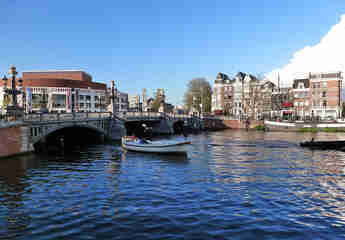
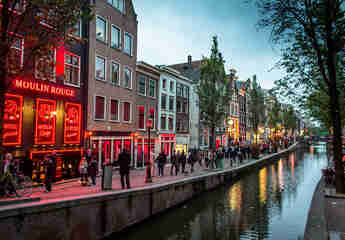
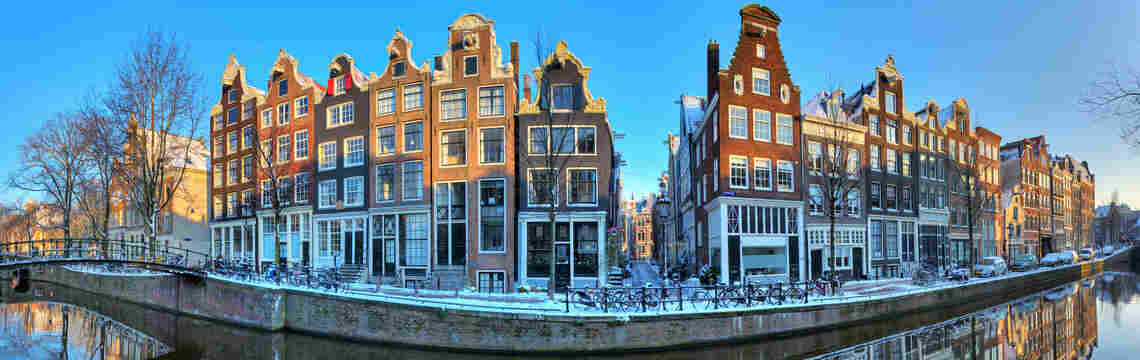
Amsterdam has a reputation as a city of permissive pleasures – the Red Light District, coffeeshops, and smart shops draw plenty of curiosity seekers. But that is hardly the main reason to come. In this picturesque city, where there may be even more canals than in Venice, you can spend hours wandering on foot, admiring the views and ticking off the sights.

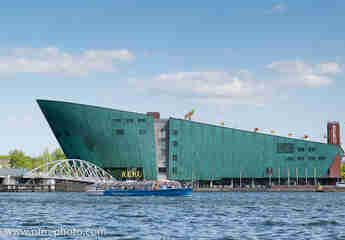
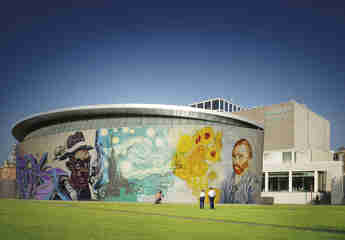
The Rijksmuseum with Rembrandt's canvases, the Van Gogh Museum, the NEMO Science Museum, and the Anne Frank House – that is only a short list of places genuinely worth visiting. Amsterdam is not merely a risqué tourist attraction, but a distinctive city with proud traditions and a rich history. It is no accident that three St. Andrew's crosses appear on its flag – symbols of valor, steadfastness, and mercy. A trip to Amsterdam surprises and leaves warm memories with nearly everyone who visits.
How to get to Amsterdam?
The fastest way to reach Amsterdam from Russia, Ukraine, and other CIS countries is by air. From Moscow and St. Petersburg, Aeroflot and KLM operate direct flights. Flight time is 3–3.5 hours. From Kyiv, you can fly with KLM and Ukraine International Airlines and land in Amsterdam in about 3.5 hours. Connecting flights take longer, but they are usually much cheaper. To save money, look at AirBaltic, Estonian Air, LOT, SAS, or Finnair.

Finding the lowest fares to Amsterdam is easiest on Aviasales. This site shows real-time prices by comparing offers from dozens of airlines and agencies. The interface is very straightforward, and tickets can be purchased in just a few clicks. For tips on how to spot the most attractive flight deals, read Ever.Travel's advice.
Where to stay in Amsterdam?
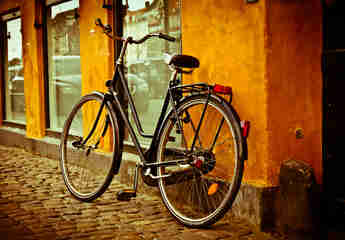
Choosing where to stay in Amsterdam is not difficult. Compared with other European capitals, the city is compact and not especially expensive. Hotel rates climb mainly around Dam Square. Elsewhere, prices are fairly similar across districts, so we recommend staying near the sights you most want to see first. Getting around is no problem: use the excellent public transport or, better yet, do as the locals do – ride a bike.

Map of Amsterdam districts
Old Town (Oudezijde)
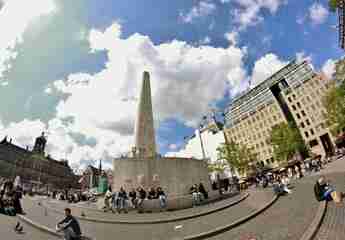
We probably do not need to explain the pros and cons of staying in the city center. It is obvious enough that from here the main sights of Amsterdam are just a short walk away: the Royal Palace, Dam Square, the NEMO Museum, the Red Light District... The last of these is worth keeping in mind if you are traveling to Amsterdam with children. No, the women of the world's second-oldest profession do not stroll openly through the central streets, but there is never a shortage of tourists eager to gawk at them, usually after stopping by a few bars and coffeeshops. Hotel prices in the Old Town start at 65 euros per night and average 150–200 euros per room.

Herengracht Suites Amsterdam is in the "9 Streets" district, 500 m from Dam Square and 900 m from Leidseplein.
Jordaan
In the western part of the center lies Jordaan. In the past, it was home to laborers and the poor, but today it is beloved by bohemians and hipsters. There are countless cafes, bars, restaurants, salons, and shops here. Narrow street mazes, cozy courtyards, a lively atmosphere... Prices are more affordable than in the Old Town.

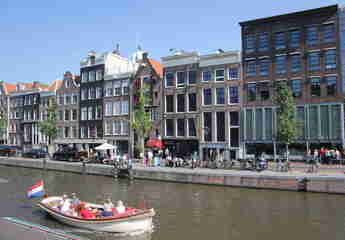
ME apartment is in the historic Jordaan district. The famous Noordermarkt is 50 meters from the hotel. The Anne Frank House is an 8-minute walk away.
Grachtengordel (Canal Ring)
Grachtengordel translates as "canal ring" because the district is formed by three parallel canals – Herengracht, Keizersgracht, and Prinsengracht. It is quiet, beautiful, and immensely pleasant. Not long ago, the area was added to the UNESCO World Heritage List. No wonder Grachtengordel is considered one of the city's most attractive places to stay. The Canal Ring links the lively Old Town with the quieter Jordaan and Museum Quarter. Prices here, unfortunately, are fairly high.

Andaz Amsterdam Prinsengracht is right in the heart of the canal district. Each room was individually designed by Marcel Wanders.
Oud-Zuid
One of the city's most elegant districts is also popular with visitors. The Museum Quarter is here, including the Rijksmuseum, the Stedelijk, and the Van Gogh Museum. Staying here costs more than in other parts of Amsterdam, but you will be within easy reach of the famous collections, Vondelpark, and the city center. The infrastructure is excellent, and walking around is pleasant and perfectly safe.

The stylish Conservatorium Hotel is 200 meters from famous Vondelpark and Museumplein. The shopping street Hooftstraat is 100 meters from the hotel.
De Pijp
Budget-friendly and full of character, De Pijp is a great fit for younger travelers. For 50 euros, you can still find a decent hotel room here. But it is worth understanding that this is a colorful district in the most literal sense: over recent decades, many migrants have settled here. De Pijp has only benefited – you will not find a more multicultural place anywhere else in the city. Numerous cafes, bars, and clubs complete the mood of this youthful, bohemian, informal neighborhood.

Colours in de Pijp is right in the heart of the popular De Pijp district, next to the Albert Cuyp Market.
The Booking.com website will help you make sense of Amsterdam's huge hotel scene. It is a vast database of guesthouses, hotels, and hostels with detailed descriptions, photos, and visitor reviews. Easy navigation makes it simple to find and book the right option. In our dedicated review, we explain how to do it as quickly and profitably as possible.
Visa to the Netherlands
For a trip to the Netherlands, citizens of Russia and Ukraine need a Schengen visa. Officially it takes 4 days to issue, but in summer and before the New Year or May holidays this period can grow significantly, so it is better to apply 3–4 weeks before your trip to Amsterdam. As a rule, it is issued for six months and allows stays in the Schengen Area for up to 90 days.
Since the consular fee and the document package required for a visa change from time to time, we recommend checking the latest information on the website of the Netherlands Visa Application Centre in Russia. Citizens of Ukraine should contact their own visa center for current guidance.

If you would rather not deal with the nuances of arranging a Netherlands visa on your own, use VisaToHome. On this site, you can have your visa delivered to your home – it is almost as easy as ordering pizza. You only need to answer a couple of questions and hand your documents to a courier. Specialists will fill in the forms for you, visit the visa center, and then bring your passport with the precious stamp right to your door. There is already plenty to think about before a trip, so let the experts handle at least part of it quickly, clearly, and efficiently.
How to get from Amsterdam Airport to the city
Amsterdam Schiphol Airport (Luchthaven Schiphol) is connected with the city center by:

Getting from Amsterdam Airport to the city quickly and comfortably is easy with KiwiTaxi. Using it, you can book a private transfer to your hotel before your trip, so you do not have to wander the terminal looking for a bus or taxi after landing. You will be met on arrival and taken straight to the address you need for a fixed price. Travel in greater comfort.
Car rental in Amsterdam
As a rule, a visit to Amsterdam is never limited to seeing just one city. Amsterdam is part of the Randstad conurbation, which also includes Rotterdam, Utrecht, and The Hague – the country's largest cities, together forming a kind of circle about 60 kilometers across. By our standards that is not much at all, and if you rent a car and drive through these regions on your own, you will come away with far more impressions than from the capital alone.
The easiest way to rent a car in Amsterdam is with RentalCars.com. On this site, you can compare offers from several providers and choose the option that suits you best by price and features. For tips on getting the most value from RentalCars.com, read the Ever.Travel review.
Public transport in Amsterdam
Trams are ideal for getting around the city center. The best way to reach outlying districts is the Amsterdam Metro, whose lines radiate from Central Station. A dense bus network lets you get from almost anywhere to almost anywhere, including at night.

Amsterdam metro map in higher resolution and on the official website
One ticket works across all modes of transport – the OV-chipkaart. A single ticket is valid for 90 minutes and costs 2.8 euros. You can also buy a travel pass for 24 hours (8 euros), 48 hours (13.50 euros), and so on up to 168 hours (7 days, 37 euros). Remember to validate your ticket every time when boarding and when getting off.
Bike rental in Amsterdam

Amsterdam is a city of cyclists, with excellent infrastructure for two-wheeled travel. There is no centralized rental system, though. You can rent a bike from many companies, for example MacBike Amsterdam, StarBikes Rentals, Bike City. Prices are similar across the board.
I amsterdam City Card

The I amsterdam City Card gives you free travel on all city public transport, free entry to 38 top museums, substantial discounts at others, a free canal cruise, and a detailed city map. The card costs 65 euros for 24 hours, 85 euros for 48 hours, and 105 euros for 72 hours.
Tours in Amsterdam
The Ever.Travel team has put together a great option for you – a free trip planner for anywhere in the world, including the Netherlands. Using the interactive attraction map, you can decide for yourself what you want to see and when, without missing anything worthwhile. Your finished Amsterdam itinerary syncs easily with the free Ever.Travel mobile app. Your personal guidebook adds no extra weight to your luggage and is always at hand when you need it. For more on planning an independent trip with Ever.Travel, read the dedicated post.

And to make things even easier, we have created several ready-made walks around Amsterdam. You can do them on foot or by bike:

Amsterdam is like an old pirate's chest that no one has opened for ages – full of secrets and surprises. To truly appreciate the beauty and uniqueness of the Dutch capital, book an original guided tour with Excursiopedia. The site gathers offers from local professional Russian-speaking guides who can tell you, in engaging fashion, about all kinds of facets of Amsterdam's history, walk you through its streets and squares, and show you the sights and venues that interest you most. The list of tours is extensive, so it is easy to find an adventure that suits your taste. Here are a few we'd recommend for first-time and seasoned travelers alike:
Mobile service and internet in the Netherlands
There are quite a few free internet access points around the city – in cafes, restaurants, shopping centers, and so on. Those who want to stay connected at all times can buy a SIM card from one of the popular local operators – KPN, Vodafone and T-Mobile – for 10–15 euros.
Shopping in Amsterdam
As in any world capital, Amsterdam has shops for popular European brands from mass market to luxury – concentrated around Nieuwedijk, Kalverstraat and P.C. Hooftstraat.
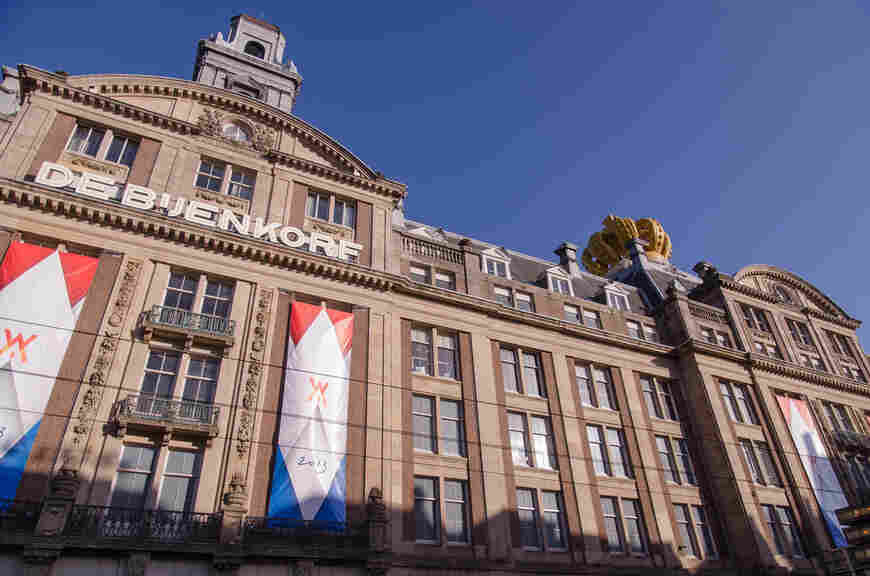
On Dam Square stands the city's largest department store, De Bijenkorf, with more than 600 brands under one roof.
At the same time, "alternative" shopping thrives in Amsterdam – numerous avant-garde designer boutiques, themed stores, vintage shops, and antique dealers are clustered in the "Nine Streets" area (De Negen Straatjes) in Jordaan. It is the place to shop for unusual clothes, extraordinary shoes, bold accessories, and one-of-a-kind souvenirs.
Shops usually open from 9:00 to 18:00, on Thursdays until 21:00, and on Saturdays until 17:00. Large supermarkets on weekdays stay open until 20:00 or 21:00. On Sundays, shopping hours are 12:00 to 17:00.
Dutch cuisine
Everyday staples include sandwiches with all kinds of fillings and fries, which you can buy at virtually any hour on almost every corner. Dinner is often stamppot – a mashed mix of potatoes, carrots, onions, and cabbage – served with sausage or meatballs, along with boiled or braised beef and hearty meat stews with vegetables.

Fish and seafood are held in high esteem by the Dutch – plaice, eel, halibut, oysters, mussels – but the true queen of Dutch cuisine is herring, fried, baked, smoked, or preserved. Pickled herring is often eaten right on the street, held by the tail and chased with chopped onions, or tucked into a fresh bun.
A perfect edible souvenir is authentic Dutch cheese (Edam, Gouda, Maasdam, Leiden) and stroopwafels (thin waffles with a caramel filling).
History of Amsterdam
The city on the Amstel is first mentioned in chronicles in 1275. In 1317, Amsterdam joined the County of Holland and received privileges – the right to trade duty-free. In less than two centuries, a small fishing village turned into the largest port and an important economic center. By the end of the 15th century, the Hanseatic League granted the city free-trade rights in the Baltic, and Amsterdam handled up to 70% of all Baltic Sea shipping.
After Amsterdam's main rival Antwerp was captured and devastated by the Spanish in 1585, the city's wealth and power doubled. Fleeing the excesses of the Inquisition, Antwerp merchants and craftsmen – especially Jews – arrived here in large numbers. They brought diamond-cutting techniques to the Dutch capital, boosting jewelry making and the gem trade.
By 1658, Amsterdam's area had quadrupled. A thoughtful development concept – the "three canals plan" – provided infrastructure equal to its time and won the city renown as one of Europe's most beautiful.

The colonial era, together with new lands, vast markets, and imports of exotic goods, made Amsterdam even more powerful. The creation of the East India and West India companies, followed by the opening of the world's first stock exchange, greatly strengthened the city's economic and political position.
However, from the second half of the 18th century Amsterdam's prosperity began to deteriorate because of the French occupation and the Continental Blockade. From 1810 to 1814 the Netherlands became part of the French Empire, and the city temporarily lost its capital status. Even so, Napoleon considered it the third city of Europe after only Paris and Rome.
By 1900 Amsterdam's population had passed half a million. Rapid industrialization and the revival of the trading port led to overcrowding. The housing problem was difficult to solve.

The First World War, in which the Netherlands remained neutral, did not significantly affect the city's life. During the Second World War, the population of the capital – especially its large Jewish community – suffered heavily.
In the postwar years, Amsterdam's economy shifted away from unprofitable industries toward trade, tourism, and services. Today the city hosts the headquarters of major international corporations, as well as Greenpeace's main office.
Today Amsterdam is a prosperous city, famous for its liberal legislation on sensitive issues, its abundance of subcultures, and excellent conditions for cyclists.

Good to know:

Annual events, holidays, and public days off:
– 1 January – New Year's Day
– March–April – Good Friday and Easter
– 27 April – King's Day
– 4 May – Remembrance Day
– 5 May – Liberation Day
– 40 days after Easter – Ascension Day
– 7 weeks after Easter – Whit Sunday
– 25 and 26 December – Christmas

Well then, now you know the essentials about the Dutch capital, so it is time for the best part – planning your trip to Amsterdam. Mark the places you want to see on the interactive map of attractions, sync your ready-made plan with the free mobile app, and enjoy the trip. Read more about how easy and convenient it is to travel with Ever.Travel.
Photo credits for this guide: Shutterstock, Booking.com, nieuwsbrief.atcb.nl, Flickr: Tim de Groot - AirTeamImages, Chris GBNL, BartdeG, davidkosmos.
Further reading: