Lantau Island

Flickr, James Warwood
Lanthau, Lantau (Cant. trad. 爛頭, simpl. 烂头 , Jyutping: Laan6tau4, Cant.-Rus.: La:nythau, Engl. Lantau) is an island located at the mouth of the Pearl River, the largest in Hong Kong. Its modern Chinese name is Taiyusan, or Dayushan (Cant. trad. 大嶼山, simpl. 大屿山 , Jyutping: Daai6jyu4 saan1, Cant.-Rus.: Ta:yusa:n, pinyin: Dàyǔ shān, Palladius: Dayushan, literally 'big mountain-island'). The area is 146,38 km². It has a relatively small population (45 thousand inhabitants) and until recently lagged far behind Hong Kong Island in development. The island is home to the international airport and Disneyland. Owing to its advantageous strategic position, the island became the last stronghold of the Song dynasty and the place of death of two child emperors. Intending to make it their long-term base after two years of movement by sea, the Song command built about 30 palace buildings and 3000 army barracks on the island. In the Ming era, several memorial temples were built on the island.

disneyandmore.blogspot.ru
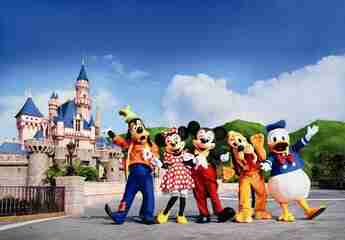
One of the five Disneylands in the world is located on Lantau Island in Hong Kong. The park is divided into seven themed zones – after walking just a couple of meters, you feel as if you have moved from one world to another.
Main Street, U.S.A. recreates the atmosphere of an American small town of the early 20th century – with saloons, retro cars, and wooden houses. On this street you will meet Mickey and Donald, who will happily take a photo with you, and you can also try a genuine American hot dog in one of the street cafes. Near the station, from which an old steam train sets off around the park, is the Animation Academy – be sure to stop by, here they will show you how Disney himself created animation and teach you to draw cartoon animals.
In Fantasyland live the heroes of beloved cartoons – princesses, mermaids, Winnie the Pooh with friends, and every single Disney character. Here there is also a 3D movie theater that will transport you into a realistic fairy-tale world.
Adventureland gives guests exciting adventures: tree climbing, waterfall descents, and a volcanic eruption.
Tomorrowland will show you the future as it is seen in Disney's world: spaceships, charming aliens, laser swords, and blasters that will help you defeat evil robots.
In Grizzly Gulch your breath will be taken away by the steep roller coasters, in Mystic Manor you will get goosebumps from mysterious sounds and flashing ghosts, and in Toy Story Land an exciting play zone with rides and entertainment awaits you.
Ngong Ping 360 Cable Car

Flickr, Jacky Chan JC
Ngong Ping 360 (Ngong Ping 360) is a cable car in Hong Kong on Lantau Island. Ngong Ping 360 connects the Tung Chung area located on the northern coast of Lantau Island with the Ngong Ping area situated on the hills in the center of the island. This area is home to Po Lin Monastery and the Tian Tan Buddha — the most important tourist attractions of Lantau Island. Before the cable car was created, the only ways to reach the Buddha statue and the monastery were a mountain footpath and a bus. Ngong Ping 360 belongs to the MTR corporation.

Flickr, adams.co.tt
On the largest of Hong Kong's islands — Lantau — stands the magnificent Po Lin Monastery, whose name translates as 'Precious Lotus.' This monastery, founded in 1906 by three monks, holds true treasures of Buddhist religious art.
Several temples stand on the monastery grounds, and their halls are decorated with beautiful frescoes and skillful stone carving. In the Main Temple you can admire the golden statues of the Buddhas of the three worlds and carved stone columns, the Skanda Temple is known for its luxurious altars and depictions of deities, and the Temple of the Ten Thousand Buddhas houses famous relics and a library of ancient manuscripts.
Fantastic statues and monuments are placed in the gardens surrounding the temples. The main alley, for example, is guarded by 12 stone generals, each of whom symbolizes a particular year of the Chinese 12-year calendar. It is believed that if you make a wish beside the symbol of your year, it will surely come true.
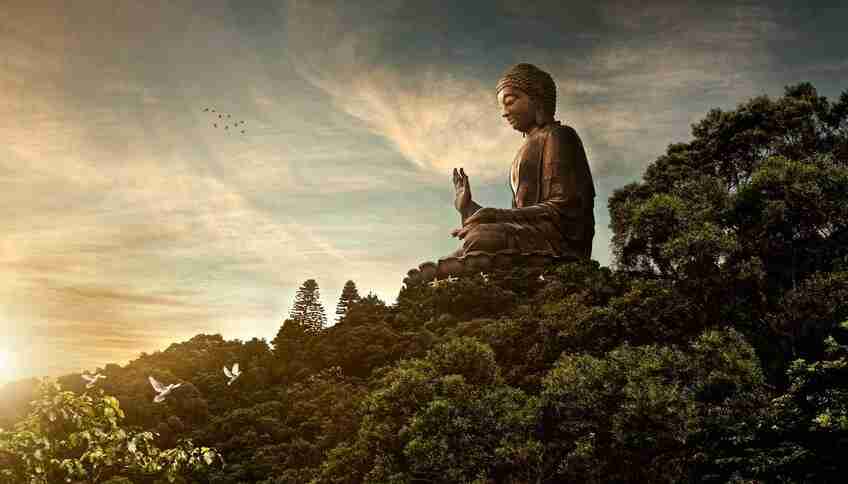
The most important statue for which most tourists come here is, of course, the Big Buddha, rising above the island and smiling gently at the world. This Buddha, 34 meters high and weighing 250 tons, sits on the top of a hill on a lotus-flower throne, facing north, and seems to bless all Chinese lands. To worship the Big Buddha, pilgrims must climb 268 steps. At the top they will find an observation deck with a beautiful panorama of the monastery and the islands.
Big Buddha

Flickr, Shaw Horton
Tian Tan Buddha, also known as the Big Buddha (Chinese trad. 天壇大佛, simpl. 天坛大佛) is a large bronze statue of Buddha located in Hong Kong, on Lantau Island, near Po Lin Monastery. It symbolizes harmony in the relationship between people and nature, between people and religion. It is an important center of Buddhism in Hong Kong, and also a popular tourist attraction[1]. The height of the statue is 34 meters (112 feet), the weight is 250 tons, which made the Big Buddha the tallest bronze Buddha statue until 2007. To reach the statue, visitors must climb a staircase of 268 steps, although there is also a small winding road leading to the Buddha. The Big Buddha faces north, which is unique, as all large Buddha statues face south. Construction of the statue began in 1990 and was completed on December 29, 1993. Monks from all over the world were invited to the opening ceremony.

Flickr, johnlsl
Relatively small in area, Hong Kong manages to be very diverse. If you are used to thinking that this city is an ultra-modern metropolis with skyscrapers, neon advertisements, and busy streets and nothing more, then we recommend that you visit, for example, Tai O Village and plunge into the archaic world of wooden buildings and untouched nature.
Tai O Village is located on the river of the same name on Lantau Island. The first settlers officially mentioned in the chronicles were Chinese fishermen of the Tanka people, who seven centuries ago built their homes directly over the water using stilts.
'Hong Kong Venice,' although not as luxurious as the one in Italy, is interesting in its own way. There is almost no land for getting around here; everyone travels from house to house by little boats. Local residents are mainly engaged in fishing, so the village has many shops offering seafood and eating places where it is always a fish day. In addition, you can try various exotic delicacies and herbal infusions.
A walk around the island is a breath of fresh air, a hike into the mountains, and a trip out to the open sea, if you wish. There are also small clean beaches here, but most tourists are eager to visit the forests, the hills, and the rivers. Camping is especially popular here.

Flickr, kelvintkn
This small dumbbell-shaped island lies half an hour away from Hong Kong Island. Hong Kong residents who are tired of the bustle of the huge metropolis, the noise of traffic, and the other delights of progress come here by ferry. Cheung Chau offers you a pastoral rural atmosphere with a touch of Chinese flavor.
There are only a few vehicles on the whole island — an ambulance, a police vehicle, and a fire engine; all other residents get around on bicycles or funny hybrids of a bicycle and a motorcycle with a sidecar. The narrow streets of the old fishing village were not made for cars, but life of simple island folk is in full swing on them.
23 thousand people live in an area of only 2,5 square kilometers, so Cheung Chau is quite densely populated. Even so, the island is very clean and has preserved its natural beauty. There are no high-rise buildings here, and the beaches look the same as they did several centuries ago.
It is precisely for the clean air and wild beaches that streams of vacationers head here on weekends. Among the sights here are several interesting old temples, and in spring the Bun Festival is held, dedicated to the deity of the sea and fishermen.
Cheung Chau was one of the first settled among the region's more than 200 islands. Locals believe that the fishing village was founded back in the days of the Ming dynasty. The island's history is shrouded in numerous legends, one of which is connected with the famous Chinese pirate, the terror of the southern seas of the 18th century, named Cheung Po Tsai. They say that before entering the royal navy, he hid his treasures in a cave on Cheung Chau. Both locals and tourists have been scouring the island for two hundred years in search of the pirate's treasure. Be sure to look into the Cheung Po Tsai Cave — who knows, perhaps you will be the one to find a coin that fell out of the treasure chest?