
About Saint Petersburg
Saint Petersburg stands apart from other Russian cities. Raised literally in the middle of swamps, it played a special role in the country's history, first becoming a 'window to Europe' and then the 'cradle of three revolutions'. Yet that is not the real reason people long to return again and again. Despite the cloudy weather and gloomy skies overhead, you fall in love with Saint Petersburg immediately and forever. Straight streets and spacious squares, rivers and canals, bridges and embankments, lavish Baroque palaces, strict Classical buildings, famous courtyard wells, and gardens and parks framed by ornate railings create the unforgettable image of Russia's northern capital.
A Bit of History
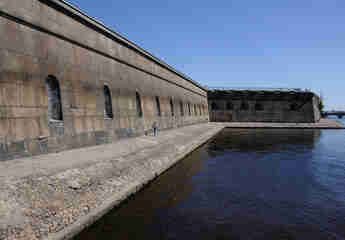
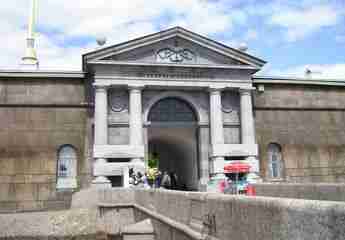
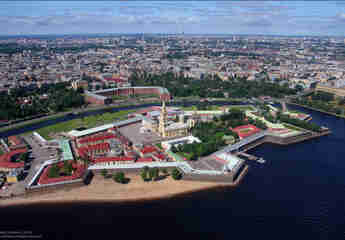
On May 16, 1703, Peter I founded the Saint Petersburg fortress on land taken from the Swedes in the Great Northern War. The city that grew around it received the same name and soon became the capital of Russia. In 1712 the imperial court moved here from Moscow, followed by state institutions; the Academic University and the Academy of Sciences were also established.
The city was built literally on empty ground, and not according to Russian traditions but to progressive European models, with Venice and Amsterdam in mind. The best architects designed palaces, gardens, and straight, wide streets. By the end of the 18th century, Saint Petersburg had truly come into its own: during the reign of Empress Catherine II, the Admiralty, the Fontanka and Moika embankments, Nevsky Prospekt, and the Winter Palace appeared here.
The city grew and prospered. After the Russian Empire's victory in the Patriotic War of 1812, several more outstanding architectural landmarks appeared here, including Saint Isaac's Cathedral. Industry developed rapidly: by the end of the 19th century, Saint Petersburg produced everything from textiles to ships. In 1837 a railway connected the capital with its suburbs (Tsarskoye Selo and Pavlovsk), and in 1851 with Moscow. In 1907 trams began running in the city.
In 1914, with the outbreak of World War I, Saint Petersburg was renamed Petrograd for patriotic reasons. The revolutions of 1917, besides bringing down the empire and proclaiming a new path of development for the country, also brought a new name – Leningrad. In 1918 the capital of the Soviet state moved to Moscow. In addition, the city lost one third of its inhabitants – those killed in the civil war or forced into emigration.
Despite this, Leningrad continued to develop and became an unofficial cultural center. The Russian avant-garde brought Soviet art fame around the world, and the country's first film studio, Lenfilm, made successful movies. As part of the struggle against religion, churches were destroyed or 'repurposed', while housing construction continued apace.
During World War II, the citizens endured an incredible ordeal – the 900-day siege. More than 3 million people died, but Leningrad held out and became the country's first Hero City. Restoration work and new construction began almost immediately after the war ended. In 1955 the Leningrad Metro opened.
In 1991, after the collapse of the Soviet Union, the city regained its historical name following a referendum. In 2003 Saint Petersburg magnificently celebrated its 300th anniversary. In autumn 2012, the city's five-millionth resident was born.
Important to Know:
– January 1 – New Year's Day (the New Year holiday break usually lasts 7–10 days)
– January 7 – Christmas
– February 23 – Defender of the Fatherland Day
– March 8 – International Women's Day
– May 1 – Spring and Labor Day
– May 9 – Victory Day
– May 27 – City Day
– June 12 – Russia Day
– November 4 – National Unity Day
Independent Trip to Saint Petersburg
How to Get from Saint Petersburg Airport to the City
Pulkovo Airport, Russia's third-busiest airport, got a third, completely new passenger terminal at the end of 2013. Terminal Pulkovo-1 continues to serve flights to Russian cities and neighboring countries. You can reach the nearest metro station, Moskovskaya, by city bus No. 39 or marshrutka K39. From Terminal Pulkovo-2 (international flights), city bus No. 13 and marshrutkas Nos. 3, 13, 113, and 213 run. Travel time is about half an hour, and fares are 33 and 50 rubles respectively.
Getting Around Saint Petersburg
The Saint Petersburg Metro – one of the most beautiful and the deepest in the world – has 5 lines and 67 stations. A single ride costs 36, 41, or 55 rubles (depending on the payment method), while 10 rides within 7 days cost 680 rubles. An extensive network of trams, buses, and trolleybuses covers almost the entire city and its suburbs. A single ride on surface transport costs 50 rubles. A 90-minute ticket costs 68 rubles. For easy payment and travel, we recommend getting a Podorozhnik transit card.
Mobile Connection and Internet in Saint Petersburg
Wi-Fi is available in many cafes, restaurants, shopping centers, and other public places. SIM cards from major operators – MTS, Beeline, and Megafon – can be bought in numerous mobile phone shops for 500–2,500 rubles.
Shopping in Saint Petersburg
On the city's main street – Nevsky Prospekt – many shops and large shopping centers are conveniently concentrated together, offering goods for every taste and budget. Department stores with rich histories deserve special attention: Eliseevsky, Passage, and Gostinka (Bolshoy Gostiny Dvor). Shoppers looking to go big can head to the Mega malls in the outer districts of the city.
Local Cuisine
Saint Petersburg cuisine emerged in the late 18th century as a 'European answer' to Moscow cuisine. Invited French chefs adjusted traditional Russian recipes and created entirely new ones. This is how clear meat-broth soups, the famous salads vinaigrette and Olivier, minced-meat cutlets (before that, meat was usually fried as a whole piece), various sauces, and European desserts appeared. Of course, today in Saint Petersburg you can also try traditional national dishes – borscht and shchi, pelmeni and vareniki, pirozhki and blini with sweet and savory fillings.