Attractions of Frankfurt am Main
1. Hauptwache
This famous square in central Frankfurt am Main takes its name from the Hauptwache building – literally the "main guard house" of the local police. Back in the 18th century, prisoners were even held here. Over time, however, a jail in the city centre became unnecessary, and in 1904 a café moved in. It is still open today, having become a beloved landmark and a pleasant spot for meeting friends.
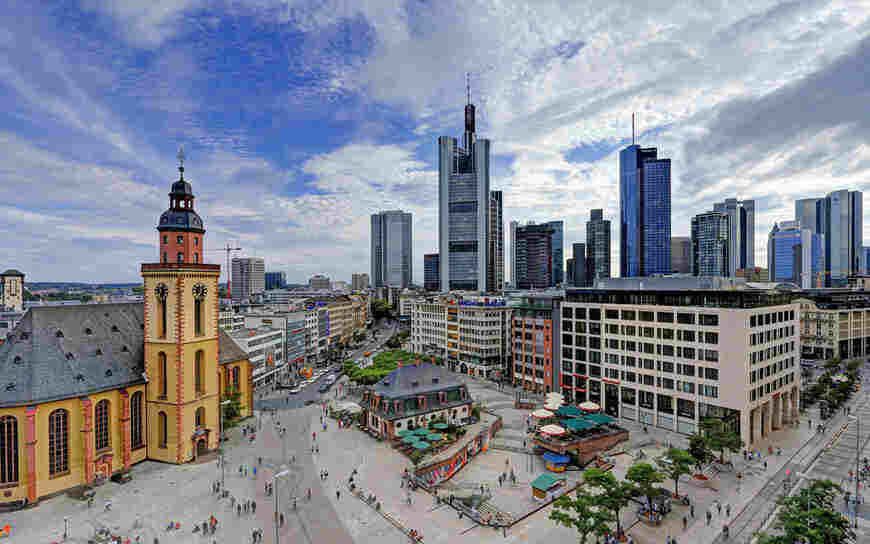
Flickr, I Prahin | www.southeastasia-images.com
2. Römer
This square lined with half-timbered houses is more than 600 years old. Its name comes from the building that houses City Hall – once known as "Haus zum Römer," or "House of the Roman." How the place came to be linked with Romans remains a mystery, but plenty of legends surround other landmarks here. For instance, the Fountain of Justice in the centre of the square is said to have once flowed with wine instead of water – in honour of a new Kaiser's coronation.

puzzlewarehouse.com
3. Frankfurt Cathedral
This is not only the largest but also the most majestic church in the city. For centuries it hosted Kaiser coronations and grand imperial celebrations. The cathedral even has its own museum, where you can see the robes and regalia used during those ceremonies. The rich interior is especially impressive – frescoes, bas-reliefs, intricate stone tracery, pointed-arch windows, and other hallmarks of early Gothic architecture.

Flickr, Stefan_68
4. St. Paul's Church (Paulskirche)
For a long time this church served as Frankfurt's main Lutheran house of worship, but today it no longer holds services – only secular events. Notably, it was the very first building in Germany to be reconstructed after the World War II bombings. Due to limited funding, no architectural flourishes were added – only the bare essentials. Nevertheless, St. Paul's Church is officially recognised as a national monument of Germany.

Flickr, Frankonius
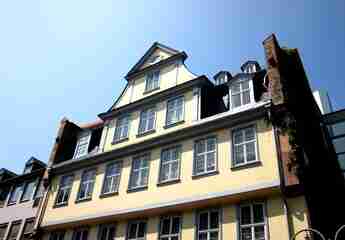
This handsome five-storey townhouse on a quiet lane in central Frankfurt once belonged to the family of the famous German poet Johann Wolfgang von Goethe. He was born and raised here. Some of Goethe's personal belongings, books, childhood toys, and original room furnishings have survived to this day. The house is a reconstruction of the building destroyed during World War II, yet after restoration it looks just as it did in the writer's childhood.

Wikimedia, Munin2005
6. Zeil
The Zeil is Frankfurt's most famous pedestrian street – the city's answer to a grand shopping boulevard. You can stroll here and indulge in flagship stores to your heart's content. From its earliest days the Zeil has been a purely commercial street, and little has changed since – except the shops have grown considerably larger. As Christmas approaches, the entire Zeil fills up with market stalls and festive garlands, becoming a top draw for tourists. It is the perfect starting point for any sightseeing tour: situated right in the centre, with a metro line running beneath it, you can reach any part of the city in minutes.
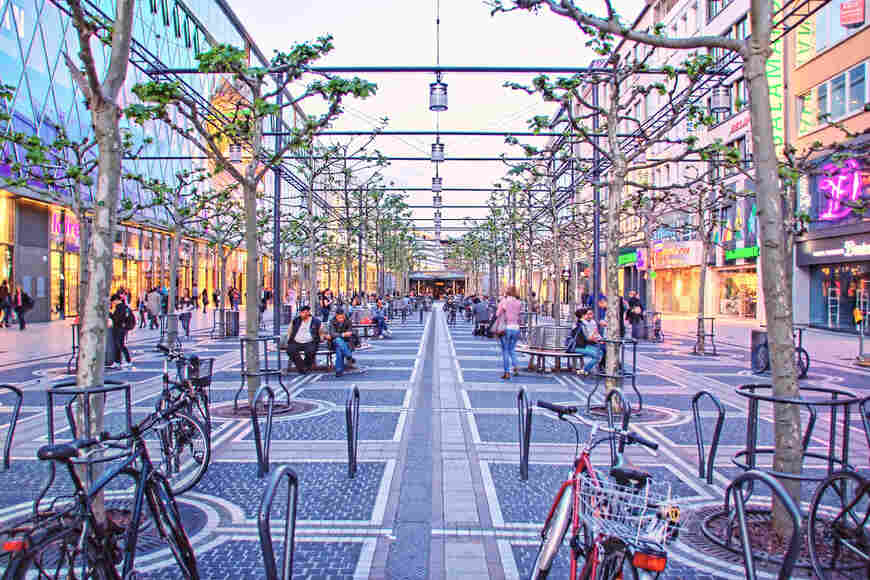
Flickr, Phil W Shirley
7. Museum Embankment (Museumsufer)
Art and culture lovers will be delighted: nearly all of Frankfurt's museums are clustered along the banks of the River Main between the Eiserner Steg and Friedensbrücke bridges. Here you will find the Icon Museum, the Museum of World Cultures, the Städel Art Institute, and many other collections well worth a visit. There is something fascinating for guests of every age and interest!

Flickr, ellenmuratovic
Hurry to snap a photo with the iconic currency symbol on the plaza in front of the European Central Bank! The Frankfurt authorities have been planning to remove this monument, now deemed unnecessary. Whether it will be demolished entirely or simply relocated remains unclear – the reason being the bank's move to a new building. The enormous blue euro sign surrounded by 12 yellow stars representing the European Union was erected in Frankfurt in 2001, as the city served as the hub for the transition to the single currency.

PANORAMIO, ❤RABUGERMANY
9. Alte Oper (Old Opera House)
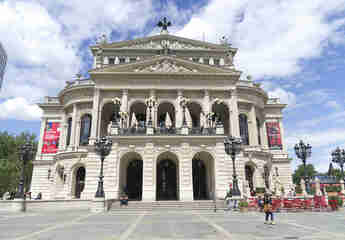
"Germany's most beautiful ruin" – that is what people called the remains of the majestic Old Opera House, built in 1880 and almost completely destroyed during World War II. For years residents and city officials could not agree on whether to demolish or restore it. In the end the building was fully reconstructed by 1981, and today it hosts concerts, galas, and other cultural events.

Flickr, Thomas Becker
10. Banking District (Bankenviertel)
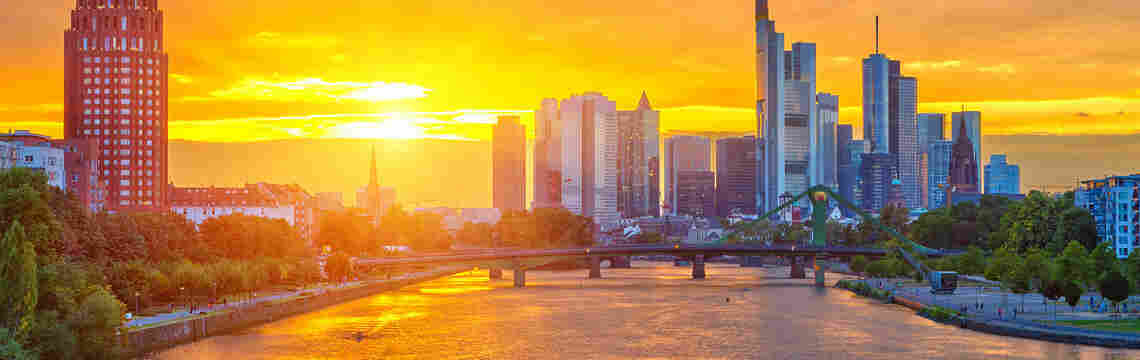
This Frankfurt landmark is arguably best photographed from a distance. The Banking District is a cluster of skyscrapers that look less photogenic up close. Still, it is worth venturing nearer: visitors can actually go inside most of the buildings. Many of them have bars, restaurants, and observation decks on their upper floors. The most famous tower is the Eurotower, home to the European Central Bank.

Flickr, AnthonyGurr